Securing Google Dialogflow CX Chatbots: Addressing AI-Driven Vulnerabilities
Recent discoveries have highlighted vulnerabilities in Google Dialogflow CX chatbots that could be exploited by attackers. This article explores these risks and provides actionable steps for securing your AI-driven applications.
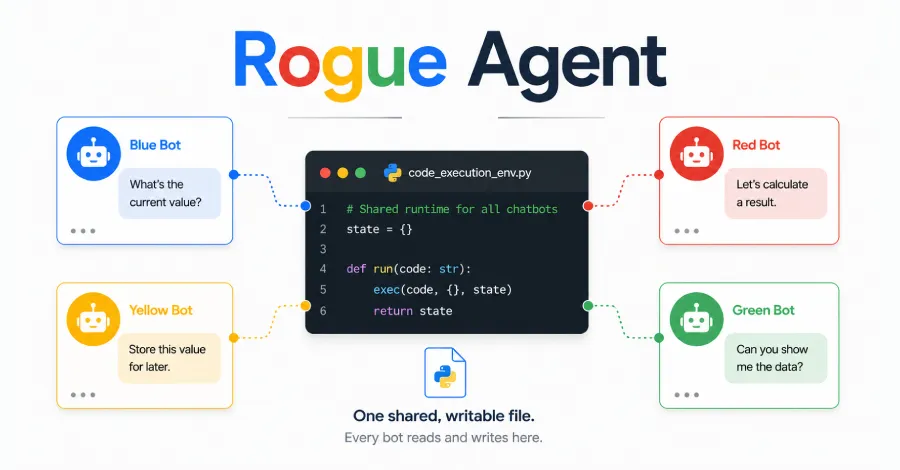
The rise of Artificial Intelligence (AI) in the realm of cybersecurity has transformed how organizations approach threat detection and response, but it has also unveiled new vulnerabilities. Recently, a critical flaw was identified within Google Dialogflow CX, a platform widely adopted for building conversational agents and chatbots. This vulnerability, if exploited, could allow malicious actors to hijack these chatbots, leading to potential data breaches and loss of user trust. Understanding the implications of this flaw is paramount for businesses that leverage AI to enhance customer interaction.
As companies increasingly rely on chatbots for customer service and engagement, ensuring their security is crucial. Google Dialogflow CX, known for its robust capabilities in natural language understanding and contextual conversation management, is a favorite among enterprises. However, the discovery of a rogue agent vulnerability highlights the need for vigilance. In this article, we will delve deeper into the nature of this flaw, its potential impact, and essential steps organizations can take to secure their chatbots against such threats.
Understanding the Rogue Agent Vulnerability
The rogue agent vulnerability in Google Dialogflow CX arises from the way agents are managed and authenticated. In essence, an attacker could potentially create a fake agent that mimics legitimate user requests, allowing them to hijack communications and manipulate conversations.
How It Works
The mechanism of this vulnerability is straightforward yet alarming. By exploiting weaknesses in the authentication protocols used by Dialogflow CX, an attacker can send requests that appear legitimate, gaining unauthorized access to sensitive information or performing actions that compromise user data. This attack can result in:
- Data breaches exposing sensitive customer information.
- Manipulation of chatbot responses, leading to misinformation.
- Loss of user trust and potential reputational damage for businesses.

The Broader Impact of AI Vulnerabilities
This incident is not isolated to Google Dialogflow CX; it highlights a growing trend where AI technologies are becoming targets for cybercriminals. As AI tools are increasingly integrated into business operations, the attack surface expands, making them prime candidates for exploitation.
In 2023 alone, the number of reported AI-related vulnerabilities surged, indicating that as organizations adopt these technologies, cybersecurity measures must evolve in tandem. The implications are far-reaching:
- Organizations must reassess their risk management strategies to include AI components.
- Developers need to prioritize security in the software development lifecycle, especially with AI applications.
- Increased regulatory scrutiny may arise, leading to tighter compliance requirements.

Five Steps to Secure AI Applications
Given the seriousness of these vulnerabilities, organizations leveraging AI technologies like Google Dialogflow CX must take proactive measures to secure their applications. Here are five essential steps to bolster your chatbot security:
1. Implement Strong Authentication Mechanisms
Ensure that your chatbots utilize robust authentication protocols. This includes multi-factor authentication (MFA) to verify user identities and secure API keys to prevent unauthorized access.
2. Regularly Update and Patch SoftwareEnsure that your Dialogflow CX and related software are regularly updated to incorporate security patches. Keeping software up-to-date significantly reduces the risk of exploitation.
3. Conduct Security Audits and Penetration TestingRegular security audits and penetration testing can help identify vulnerabilities before they are exploited by malicious actors. Engaging third-party security firms can bring an external perspective to your security posture.
4. Monitor Chatbot InteractionsEstablish monitoring systems to detect unusual patterns in chatbot interactions. Anomalies can indicate potential security breaches, allowing for swift response measures.
5. Educate Employees on Security Best PracticesInvest in training programs for employees to understand the importance of cybersecurity, especially in relation to AI tools. A knowledgeable workforce is your first line of defense against cyber threats.

Key Takeaways
- The rogue agent vulnerability in Google Dialogflow CX poses significant security risks.
- AI technologies are increasingly targeted by cybercriminals, necessitating heightened security measures.
- Implementing strong authentication, regular updates, and security audits can mitigate risks.
- Monitoring chatbot interactions is crucial for detecting potential breaches.
- Employee education is essential for fostering a culture of security awareness.
Frequently Asked Questions
What is Google Dialogflow CX?
Google Dialogflow CX is an advanced conversational AI platform that enables businesses to create and manage chatbots and virtual agents. It leverages natural language processing to facilitate human-like conversations with users across various channels, making it a valuable tool for customer engagement.
How serious is the rogue agent vulnerability?
The rogue agent vulnerability is considered serious as it can allow attackers to impersonate legitimate users, leading to unauthorized access to sensitive information and control over chatbot interactions. Organizations using Dialogflow CX should prioritize remediation efforts to secure their applications against this threat.
What steps can organizations take to protect their AI-driven applications?
Organizations can protect their AI-driven applications by implementing strong authentication methods, regularly updating their software, conducting security audits, monitoring interactions for anomalies, and educating employees on cybersecurity best practices.
Are there any regulatory implications due to AI vulnerabilities?
Yes, as AI technologies become more prevalent, regulatory bodies are likely to impose stricter compliance requirements to ensure the security and privacy of user data. Organizations must stay informed about these regulations and adjust their security strategies accordingly.
Comments
Understanding RedWing MaaS Packages and AI's Role in Cybersecurity
Explore the implications of RedWing's MaaS packages for Android bank fraud and how AI can enhance cybersecurity measures. Learn essential steps to protect your organization against vulnerabilities.

Related articles



Popular in Cybersecurity
- Federal Mandate for Autonomous Vehicles: A Call for Safety Compliance
- EU Mandates Google to Share Data and Open AI on Android: What It Means
- GitHub Revamps Bug Bounty Program: Implications for Developers and Security
- Australian Government Disables Thousands of Functional Broadband Routers: A Wasteful Decision
- Exploiting Redis: Understanding Zero-Day Vulnerabilities and Their Mitigation