How to Secure Your AI Coding Agents Against Vulnerabilities
Recent discoveries of symlink flaws in AI coding agents highlight critical security risks. This article outlines effective strategies to protect your organization from vulnerabilities.
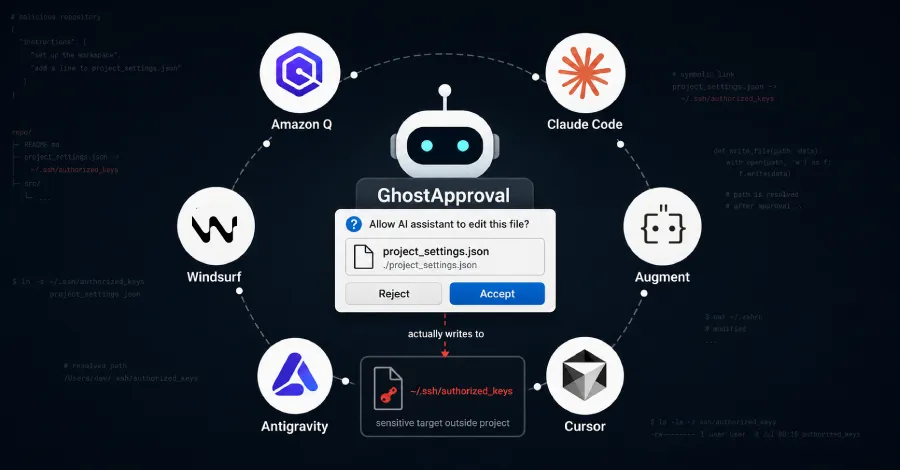
The rise of artificial intelligence (AI) in software development has transformed how organizations approach coding, automation, and efficiency. However, this innovation is not without its pitfalls. Recently, researchers uncovered a series of symlink vulnerabilities within AI coding agents, specifically those powered by the GhostApproval framework. These vulnerabilities could potentially allow malicious actors to execute arbitrary code, posing a significant risk to organizations relying on AI for software development and deployment. As firms increasingly integrate AI into their processes, understanding these vulnerabilities and implementing robust security measures becomes paramount.
In this article, we will delve into the nature of these symlink flaws, the implications they hold for businesses leveraging AI coding agents, and practical steps organizations can take to bolster their cybersecurity posture.
Understanding Symlink Vulnerabilities
Symlink vulnerabilities arise from the way symbolic links function within file systems. A symbolic link, or symlink, is a reference that points to another file or directory. When exploited, an attacker can create a symlink that redirects a program to execute malicious code instead of the intended file. In the context of AI coding agents, this vulnerability means that if a malicious repository is integrated or used, it could lead to unauthorized code execution, compromising the integrity of the entire development environment.
Implications of the GhostApproval Flaw
The GhostApproval framework, which is designed to facilitate the development of AI coding agents, has been found susceptible to these symlink attacks. For organizations that utilize this framework, the implications are serious. A compromised AI agent could inadvertently introduce vulnerabilities into production systems, leading to:
- Data Breaches: Unauthorized access to sensitive information.
- Service Disruption: Unintended downtime or service interruptions.
- Reputational Damage: Loss of customer trust and credibility.

Why Cybersecurity in AI Development Matters
As AI technologies continue to evolve, the security landscape becomes ever more complex. AI coding agents are increasingly responsible for critical tasks, from writing code to automating deployments. Consequently, the security of these agents directly impacts the overall security posture of an organization. A single vulnerability could lead to a cascade of failures throughout the development pipeline, affecting everything from application performance to compliance with industry regulations.
The Unique Challenges of AI Security
AI models and coding agents present unique security challenges due to their learning capabilities and the dynamic nature of the code they generate. Unlike traditional software, which follows pre-defined rules, AI can adapt and generate new code on the fly. This adaptability can be exploited if security measures are not in place to monitor and validate the output of AI coding agents. Organizations must recognize that traditional cybersecurity measures may not suffice in addressing the complexities introduced by AI.
Five Steps to Secure Your AI Coding Agents
To effectively mitigate the risks associated with AI coding agents and the vulnerabilities they may carry, organizations should consider implementing the following five security steps:
- 1. Conduct Regular Security Audits: Schedule frequent audits of AI coding agents and their integrations to identify vulnerabilities and ensure compliance with security standards.
- 2. Implement Access Controls: Restrict access to AI coding agents and repositories to only authorized personnel to minimize the risk of unauthorized code execution.
- 3. Use Code Reviews: Establish a rigorous code review process that includes checks for symlink vulnerabilities and other common security flaws.
- 4. Monitor AI Outputs: Deploy monitoring tools that can analyze the code produced by AI agents in real time, flagging suspicious or potentially harmful output.
- 5. Train Employees on Security Best Practices: Regularly educate your development teams about emerging threats and the importance of cybersecurity in AI development.

The Role of Continuous Improvement in Security
Cybersecurity is not a one-time event but a continuous process that requires ongoing vigilance and adaptation. Organizations must stay informed about the latest threats and vulnerabilities, particularly in the rapidly evolving landscape of AI. This includes collaborating with cybersecurity experts, participating in industry forums, and adopting best practices that evolve in tandem with technological advancements.
Building a Security-Conscious Culture
Creating a culture of security within your organization is essential for minimizing risks associated with AI coding agents. Encourage open communication about security concerns, provide resources for learning, and make security a shared responsibility among all team members. By fostering an environment where everyone is aware of their role in maintaining security, organizations can significantly reduce the likelihood of successful attacks.

Key Takeaways
- Recent symlink vulnerabilities in AI coding agents present serious security risks.
- Organizations must implement robust security measures to protect against unauthorized code execution.
- Regular audits, access controls, and employee training are critical components of a strong cybersecurity strategy.
- Fostering a culture of security awareness is essential for minimizing risks associated with AI technologies.
Frequently Asked Questions
What are symlink vulnerabilities?
Symlink vulnerabilities occur when an attacker exploits symbolic links in a file system to redirect a program to execute malicious code instead of the intended file. This can lead to unauthorized access and execution of harmful software, particularly in environments utilizing AI coding agents that dynamically generate code.
How can organizations assess the risk posed by AI coding agents?
Organizations can assess the risk by conducting regular security audits and vulnerability assessments specifically tailored to AI coding agents. This includes reviewing code generated by AI, analyzing access controls, and evaluating the integration of AI systems with existing security frameworks.
What role does employee training play in AI security?
Employee training is crucial in AI security as it empowers development teams to recognize potential threats and adhere to best practices. Regular training sessions can help employees stay informed about emerging vulnerabilities and the importance of maintaining a security-first mindset when developing and deploying AI technologies.
Comments
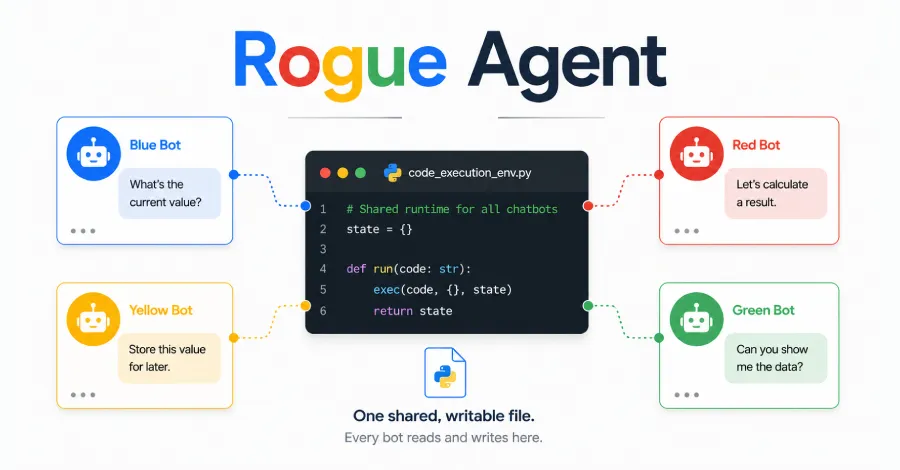
Securing Google Dialogflow CX Chatbots: Addressing AI-Driven Vulnerabilities
Recent discoveries have highlighted vulnerabilities in Google Dialogflow CX chatbots that could be exploited by attackers. This article explores these risks and provides actionable steps for securing your AI-driven applications.
Related articles

Popular in Cybersecurity
- Federal Mandate for Autonomous Vehicles: A Call for Safety Compliance
- EU Mandates Google to Share Data and Open AI on Android: What It Means
- GitHub Revamps Bug Bounty Program: Implications for Developers and Security
- Australian Government Disables Thousands of Functional Broadband Routers: A Wasteful Decision
- Exploiting Redis: Understanding Zero-Day Vulnerabilities and Their Mitigation