Old Linux SCTP Vulnerability Poses Threat to Container Security
A critical flaw in the Linux SCTP protocol could allow local users to escalate privileges and potentially gain root access, threatening container security. Understanding this vulnerability is essential for organizations leveraging Linux-based systems.

In a world where containerization has become a cornerstone of modern application development and deployment, security vulnerabilities within foundational technologies can pose substantial risks. An 18-year-old vulnerability in the Linux Stream Control Transmission Protocol (SCTP) has resurfaced as a critical concern for organizations relying on Linux-based environments. This flaw not only jeopardizes local user systems but also raises serious implications for container security, potentially allowing attackers to gain root access and escape from isolated environments.
With the rising popularity of containers—frameworks that encapsulate applications and their dependencies for consistent deployment across various environments—the need for robust security measures has never been more pressing. This particular vulnerability is a reminder of the importance of vigilance and proactive security practices in an era where cyber threats are increasingly sophisticated.
Understanding SCTP and Its Historical Context
Stream Control Transmission Protocol (SCTP) is a transport layer protocol used primarily for telecommunications and signaling. Introduced in 2005, SCTP was designed to offer features such as message-oriented communication, multi-homing support, and redundancy, making it suitable for applications requiring high availability. However, the protocol's complexity has also made it a target for vulnerabilities.
The specific flaw in question has been present for nearly two decades, highlighting a critical gap in the ongoing security assessments of legacy protocols. While it may seem benign at first glance, the implications of this vulnerability are far-reaching. It allows local users to exploit the flaw to gain elevated privileges, which can then lead to unauthorized access to sensitive data or essential system functions.

The Mechanism of Exploitation
In practical terms, the exploitation of this vulnerability hinges on a local user’s ability to craft malicious messages that the SCTP stack will improperly handle. Once a local user gains access, they can execute commands that may allow them to elevate their privileges to root level. This capability undermines the very purpose of containerization, which is to isolate applications and enforce strict boundaries between them.
Impact on Container Security
Containers are designed to encapsulate applications in a way that isolates them from the underlying host operating system. This isolation is critical for maintaining the security and integrity of applications, especially in multi-tenant environments. However, if a local user can exploit the SCTP vulnerability, they can escape from the container and impact the host system.
Such a breach not only compromises the affected container but can also extend to other containers and services running on the same host. This poses a serious risk for organizations that rely on container orchestration technologies like Kubernetes, Docker Swarm, or OpenShift, where multiple containers operate in unison.
The Legal and Market Implications
The ramifications of this vulnerability are not limited to technical concerns; they also extend to legal and regulatory considerations. Organizations that fail to address known vulnerabilities may face legal repercussions, particularly if a breach occurs that exposes sensitive data. Regulatory frameworks such as the General Data Protection Regulation (GDPR) and the Health Insurance Portability and Accountability Act (HIPAA) impose strict requirements on data protection and breach notifications.
Additionally, market confidence can be severely impacted if a major breach stemming from this vulnerability occurs. Businesses may find themselves at a competitive disadvantage if customers perceive them as negligent in protecting their systems.

Mitigation Strategies
Given the severity of the SCTP vulnerability, organizations must take immediate steps to mitigate the risks associated with it. Here are several strategies that can help safeguard systems and maintain the integrity of containerized environments:
- Patch Systems Regularly: Ensure all Linux systems are updated with the latest security patches that address the SCTP vulnerability.
- Implement Least Privilege Principles: Limit user permissions to only those necessary for their role, reducing the risk of unauthorized access.
- Enhance Monitoring and Logging: Establish robust monitoring systems to detect suspicious activities that may indicate exploitation attempts.
- Conduct Regular Security Audits: Regularly assess the security posture of your systems and applications to identify vulnerabilities before they can be exploited.
- Container Security Best Practices: Adopt container security best practices, such as using minimal base images and regularly scanning for vulnerabilities.
Key Takeaways
- The 18-year-old SCTP flaw poses a significant risk for local users and container security.
- Exploitation of this vulnerability can lead to privilege escalation and unauthorized access to system resources.
- Organizations must implement a multi-faceted approach to security, including regular patching and least privilege access.
- Legal and market implications are significant; organizations must prioritize vulnerability management.
- Container orchestration technologies are particularly vulnerable if appropriate security measures are not in place.

Frequently Asked Questions
What is the SCTP vulnerability?
The SCTP vulnerability refers to a flaw in the Linux implementation of the Stream Control Transmission Protocol that allows local users to craft malicious messages. This can enable them to escalate their privileges to root level, undermining the security of containers and the host operating system.
How does this affect container security?
This vulnerability poses a significant risk to container security as it allows local users to escape from the container environment and gain access to the host system. This compromises the isolation that containers are designed to provide, potentially allowing attackers to affect other containers or services running on the same host.
What steps can organizations take to mitigate this risk?
Organizations should regularly patch their systems, implement least privilege access controls, enhance monitoring and logging capabilities, conduct security audits, and adopt container security best practices to mitigate the risks associated with the SCTP vulnerability.
Are there any legal implications for organizations?
Yes, organizations that fail to address known vulnerabilities like the SCTP flaw may face legal repercussions, especially if a data breach occurs that exposes sensitive information. Regulatory frameworks such as GDPR and HIPAA impose strict requirements on data protection, which can result in significant penalties for non-compliance.
Comments
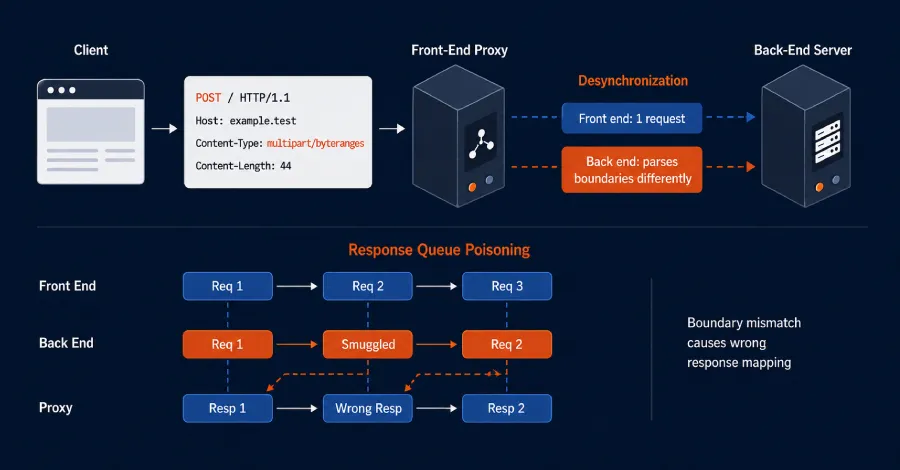
Exploring HTTP Desync Techniques and the Apache Zero-Day Threat
Recent developments in web security have unveiled alarming HTTP desynchronization techniques and a critical Apache vulnerability. This article delves into these issues and their implications for businesses.
Related articles





Popular in Cybersecurity
- Federal Mandate for Autonomous Vehicles: A Call for Safety Compliance
- EU Mandates Google to Share Data and Open AI on Android: What It Means
- GitHub Revamps Bug Bounty Program: Implications for Developers and Security
- Australian Government Disables Thousands of Functional Broadband Routers: A Wasteful Decision
- Exploiting Redis: Understanding Zero-Day Vulnerabilities and Their Mitigation