Navigating Identity Exposure: The Risks and Remedies for Businesses
Identity exposure can create significant security vulnerabilities for organizations. This article explores real-world scenarios and offers strategies to mitigate risks.

In the rapidly evolving landscape of cybersecurity, one of the most alarming threats to organizations is identity exposure. It serves as a gateway for cybercriminals, allowing them to exploit weak points in a company's defense system. As we delve into real-world stories, we unveil the often-overlooked consequences of identity exposure and provide actionable insights to help businesses fortify their security measures.
The Dark Side of Identity Exposure
Identity exposure occurs when sensitive personal information, such as usernames, passwords, or other identifiers, is unintentionally made accessible to unauthorized users. This breach can happen in various ways, from data leaks and phishing attacks to insecure application configurations. Once such information is exposed, it can be used to facilitate cross-domain privilege escalation, which allows attackers to gain higher access levels within an organization and navigate through its network undetected.
Real-World Consequences of Identity Exposure
To understand the gravity of identity exposure, let's examine several real-life cases that highlight how breaches can lead to devastating consequences. These stories reflect a broad spectrum of industries and show how any organization can fall victim to identity-related vulnerabilities.
Case Study 1: The Retail Giant
A major retail chain suffered a significant data breach when attackers exploited weak authentication protocols. The attackers gained access to customer accounts and used stolen credentials to execute fraudulent transactions. In just a few months, the company faced over $100 million in losses, including legal fees, fines, and damage to its reputation.
Case Study 2: The Financial Institution
A financial services firm encountered a severe incident when an internal employee inadvertently exposed sensitive client information through an unsecured database. Attackers capitalized on this exposure, leading to identity theft for hundreds of customers and subsequent lawsuits that cost the firm millions in settlements.
Case Study 3: The Healthcare Provider
In the healthcare sector, a hospital's system was compromised due to a phishing attack that targeted staff members. Once the attackers gained access to employee accounts, they were able to manipulate patient data and demand ransom for its release, resulting in both financial loss and erosion of patient trust.
Understanding Cross-Domain Privilege Escalation
Cross-domain privilege escalation is a critical concept in cybersecurity that involves an attacker leveraging their access to one system or domain to infiltrate another. This type of attack is particularly concerning because it can occur without triggering security alerts, making it difficult for organizations to detect.
- Access Control Vulnerabilities: Flaws in access control policy can enable attackers to move laterally within a network.
- Insecure Application Configurations: Misconfigured applications can expose sensitive data and create entry points for attackers.
- Social Engineering Attacks: Techniques such as phishing can deceive employees into revealing their credentials, providing a pathway for escalation.
Preventing Identity Exposure and Escalation
Organizations must adopt a proactive stance on identity management to mitigate risks associated with identity exposure and cross-domain privilege escalation. Here are essential strategies to consider:
1. Implement Strong Authentication Mechanisms
Utilizing multi-factor authentication (MFA) can significantly reduce the risk of unauthorized access. By requiring additional verification methods, such as SMS codes or biometric scans, organizations can add layers of protection against identity theft.
2. Regularly Monitor and Audit Access Logs
Conducting frequent audits of access logs can help organizations identify unusual patterns of behavior that may indicate a breach. Continuous monitoring allows for early detection and response to potential threats.
3. Educate Employees on Security Best Practices
Investing in employee training programs that emphasize security awareness is crucial. Employees should be informed about the latest phishing tactics and encouraged to report suspicious activities.
4. Secure Application Configurations
Ensuring that applications are properly configured and regularly updated can prevent vulnerabilities that attackers might exploit. Regular security assessments can identify weaknesses before they can be exploited.

Key Takeaways
- Identity exposure opens pathways for cybercriminals to exploit organizations.
- Real-world breaches illustrate the severe consequences of inadequate identity management.
- Cross-domain privilege escalation can occur without detection, making it a significant security threat.
- Implementing strong authentication, monitoring, and employee training can mitigate risks.
- Regular security assessments are essential for identifying and addressing vulnerabilities.
Frequently Asked Questions
What is identity exposure?
Identity exposure refers to the unintentional disclosure of sensitive personal information, such as usernames or passwords, which can be exploited by unauthorized individuals. This exposure can result from data breaches, phishing attacks, or insecure application settings.
How does cross-domain privilege escalation work?
Cross-domain privilege escalation occurs when an attacker uses their access to one domain or system to gain higher privileges in another, potentially allowing them to access sensitive data or systems without raising security alarms. This can happen through various methods, including exploiting access control vulnerabilities or leveraging stolen credentials.
What are some common examples of identity exposure?
Common examples include data breaches from compromised databases, phishing scams targeting employees, and failures in application configurations that lead to unauthorized access. Each of these scenarios can severely impact an organization's security posture and reputation.
How can organizations protect against identity exposure?
Organizations can protect against identity exposure by implementing strong authentication measures, conducting regular security audits, educating employees on security best practices, and ensuring applications are properly configured and updated. By adopting a comprehensive security strategy, organizations can significantly reduce their vulnerability to identity-related attacks.
Comments
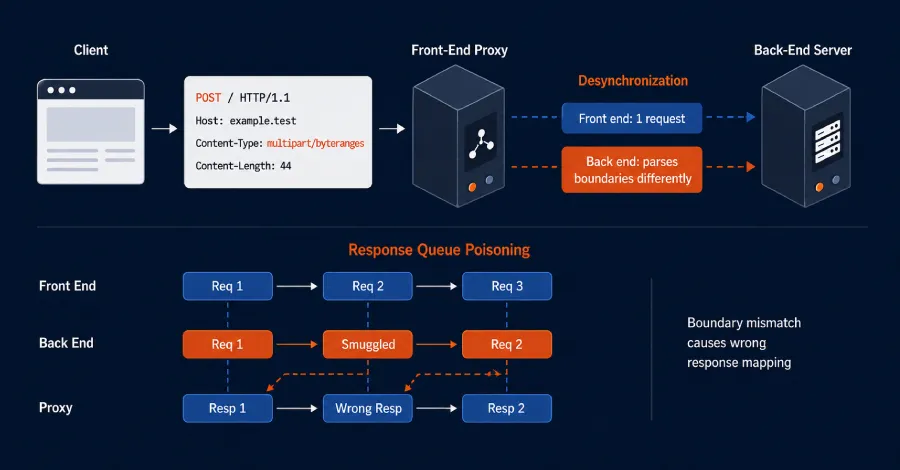
Exploring HTTP Desync Techniques and the Apache Zero-Day Threat
Recent developments in web security have unveiled alarming HTTP desynchronization techniques and a critical Apache vulnerability. This article delves into these issues and their implications for businesses.
Related articles





Popular in Cybersecurity
- Federal Mandate for Autonomous Vehicles: A Call for Safety Compliance
- EU Mandates Google to Share Data and Open AI on Android: What It Means
- GitHub Revamps Bug Bounty Program: Implications for Developers and Security
- Australian Government Disables Thousands of Functional Broadband Routers: A Wasteful Decision
- Exploiting Redis: Understanding Zero-Day Vulnerabilities and Their Mitigation