Vibe Hacking: Understanding AI's Role in Cybersecurity Breaches
The rise of AI in cybersecurity presents both opportunities and threats. Explore how identity exposure can lead to active attack paths and what companies can do to protect themselves.
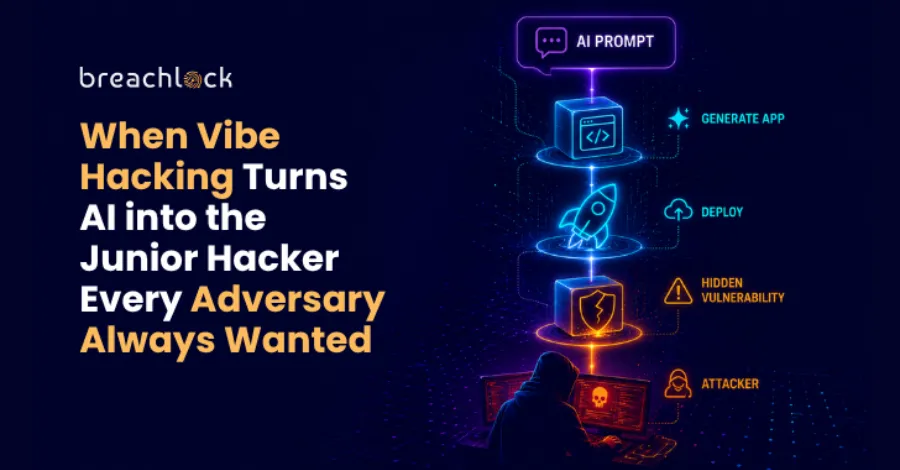
In today’s digital landscape, cybersecurity is not just a technical concern but a critical business imperative. As organizations increasingly rely on Artificial Intelligence (AI) to streamline operations, enhance customer experiences, and bolster security, they also expose themselves to new vulnerabilities. This dual-edged sword is exemplified by the phenomenon known as 'vibe hacking,' where AI systems become the junior hackers that adversaries always desired. As we delve into real stories of identity exposure and the subsequent attack paths that emerge, we uncover the intricacies of how AI can both defend and undermine cybersecurity efforts.
The Rise of AI in Cybersecurity
AI has transformed the cybersecurity landscape, enabling systems to analyze vast amounts of data for anomalies, automate responses, and predict potential threats with remarkable accuracy. However, this same technology can be exploited by malicious entities. By mimicking the behavior of legitimate users, AI can help cybercriminals navigate around security measures, making it easier for them to execute attacks.
Understanding Vibe Hacking
Vibe hacking refers to the manipulation of AI systems to exploit weaknesses in cybersecurity frameworks. This could involve tricking an AI into misclassifying a legitimate request as safe, opening the door for unauthorized access. The implications are significant; as organizations become more dependent on AI for decision-making, the risk of identity exposure increases.

Real Stories of Identity Exposure
To illustrate the dangers of vibe hacking, consider the following examples where identity exposure led to significant breaches:
- Case Study 1: A financial institution experienced a breach when an attacker used AI to replicate user behavior, gaining access to sensitive customer data.
- Case Study 2: An e-commerce platform suffered a loss of customer trust after an adversary exploited AI algorithms to bypass security checks, resulting in unauthorized transactions.
- Case Study 3: A healthcare provider faced legal action when patient information was exposed due to weak identity verification processes, which an AI system failed to flag.
These stories underscore the pressing need for organizations to understand the vulnerabilities introduced by AI systems and to adopt comprehensive strategies to mitigate risks.

Mapping Attack Paths: Cross-Domain Privilege Escalation
One of the most critical aspects of defending against vibe hacking is understanding how to map cross-domain privilege escalation. This involves identifying key choke points within an organization’s infrastructure that could serve as gateways for attackers. By analyzing user privileges across different domains, organizations can pinpoint areas of weakness that adversaries may exploit.
Strategies for Mapping and Mitigating Risks
To effectively map these attack paths, organizations should:
- Implement rigorous access controls, ensuring that users only have the privileges necessary for their roles.
- Conduct regular audits of user activity to detect anomalies that could indicate unauthorized access.
- Utilize AI-driven analytics to continuously monitor for suspicious behavior patterns that may suggest a breach attempt.
By proactively identifying and addressing these vulnerabilities, organizations can significantly reduce their risk exposure.

The Role of AI in Defense Mechanisms
While AI can facilitate breaches, it also plays a crucial role in strengthening cybersecurity defenses. Advanced machine learning algorithms can help organizations analyze historical data to predict future threats and respond in real-time. These algorithms can be trained to recognize patterns associated with cyber threats, allowing for quicker identification and mitigation of risks.
Enhancing AI with Human Oversight
To maximize the effectiveness of AI in cybersecurity, organizations should adopt a hybrid approach that combines AI capabilities with human oversight. Human experts can provide contextual understanding that AI may lack, ensuring that defenses are not solely reliant on automated systems. This approach allows for a more nuanced response to threats and enhances overall security posture.
Key Takeaways
- AI, while a powerful tool, can also be exploited by adversaries through techniques like vibe hacking.
- Identity exposure can lead to significant cybersecurity breaches, emphasizing the need for robust security measures.
- Mapping attack paths and implementing strict access controls are critical for mitigating risks.
- Combining AI capabilities with human oversight enhances cybersecurity defenses.
Frequently Asked Questions
What is vibe hacking?
Vibe hacking is the manipulation of AI systems to exploit weaknesses in cybersecurity frameworks. It allows adversaries to mimic legitimate user behavior, thereby bypassing security measures and gaining unauthorized access to sensitive data.
How can organizations protect themselves from identity exposure?
Organizations can protect themselves by implementing stringent access controls, conducting regular audits of user activity, and utilizing AI-driven analytics to monitor for suspicious behavior. These measures can help identify vulnerabilities and prevent potential breaches.
What role does AI play in enhancing cybersecurity?
AI plays a dual role in cybersecurity; it can enhance defenses by analyzing data for anomalies and predicting threats, but it can also be exploited to facilitate attacks. A balanced approach that combines AI with human oversight is essential for effective security.
Comments
The Hidden Dangers of Location Data Sharing in Android Apps
Recent findings reveal that Android app developers may unknowingly share user location data with advertisers due to default settings in third-party code. This article explores the implications for developers, users, and the industry at large.

Related articles




Popular in Cybersecurity
- Federal Mandate for Autonomous Vehicles: A Call for Safety Compliance
- EU Mandates Google to Share Data and Open AI on Android: What It Means
- GitHub Revamps Bug Bounty Program: Implications for Developers and Security
- Australian Government Disables Thousands of Functional Broadband Routers: A Wasteful Decision
- Exploiting Redis: Understanding Zero-Day Vulnerabilities and Their Mitigation