Cybersecurity Alert: Hackers Target Adform to Swap Crypto Wallet Addresses
A recent attack on Adform highlights vulnerabilities in digital advertising scripts, allowing hackers to manipulate crypto wallet addresses. This incident underscores the importance of robust cybersecurity measures for businesses.
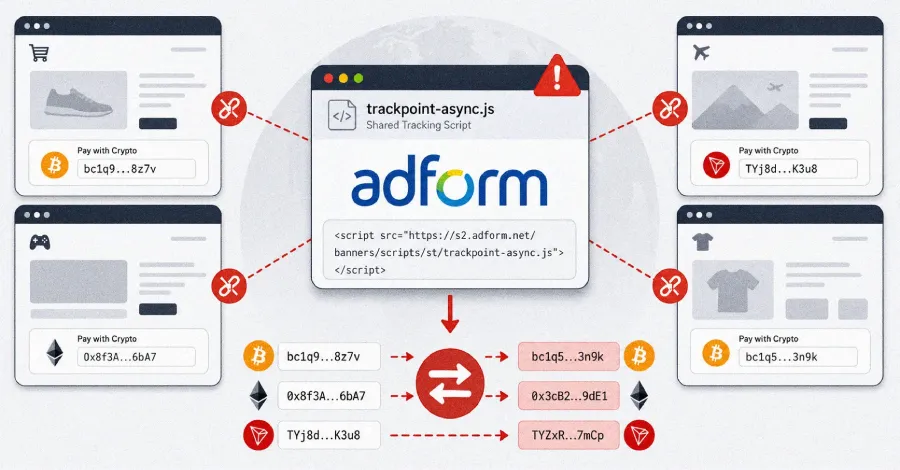
In a striking demonstration of the vulnerabilities inherent in digital advertising, hackers recently compromised Adform, a popular advertising platform, by injecting malicious code into its scripts. This breach enabled attackers to manipulate cryptocurrency wallet addresses across various customer sites, leading to significant risks for online transactions and user data integrity. As businesses increasingly rely on digital advertising for revenue, understanding such vulnerabilities and implementing robust cybersecurity measures has become paramount.
This incident not only highlights the technical weaknesses present in widely-used advertising technologies but also serves as a wake-up call for companies to reassess their security protocols. With the rise of cryptocurrency transactions, the stakes are higher than ever—making it essential for businesses to protect their assets and customer trust.
Understanding the Attack: How It Happened
The attack on Adform involved sophisticated techniques that allowed hackers to alter the behavior of ad scripts on customer websites. By injecting malicious JavaScript, attackers could swap legitimate crypto wallet addresses with their own. This means that any cryptocurrency transaction initiated by users could be redirected to the hacker’s wallet, effectively siphoning funds away from unsuspecting victims.
The Mechanics of the Exploit
At the core of this exploit is a vulnerability known as cross-site scripting (XSS), which allows attackers to execute scripts in the context of a user’s browser session. Here’s how it typically unfolds:
- Infiltration: Hackers gain access to Adform’s ad delivery network.
- Injection: They inject malicious code into the scripts that run on websites using Adform’s services.
- Execution: When users visit these sites and interact with crypto wallet features, the malicious code activates, swapping wallet addresses.
This technique showcases the ease with which attackers can exploit trusted platforms, highlighting the need for continuous monitoring and updates to security protocols.

Market Context: The Rise of Cryptocurrency Vulnerabilities
As digital currencies gain momentum, they are increasingly targeted by cybercriminals. The decentralized nature of cryptocurrencies provides anonymity, which, while beneficial for users, also serves as a shield for hackers. The Adform incident underscores a broader trend in which vulnerabilities in online systems can lead to significant financial losses.
In recent years, the cryptocurrency market has expanded rapidly, with billions of dollars flowing through various exchanges and wallets. This growth has attracted not only legitimate businesses but also malicious actors seeking to exploit weaknesses in the ecosystem. As a result, businesses that integrate cryptocurrency payment options are at heightened risk.
What Businesses Can Do: Strengthening Cybersecurity Measures
To mitigate the risks associated with such vulnerabilities, businesses must adopt a proactive approach to cybersecurity. Here are some actionable steps organizations can take:
- Regular Security Audits: Conduct frequent assessments of all digital assets, including third-party scripts, to identify and patch vulnerabilities.
- Implement Content Security Policy (CSP): Use CSP headers to restrict the sources from which scripts can be executed, thereby reducing the risk of XSS attacks.
- User Education: Train employees and users on recognizing phishing attempts and the importance of secure transactions.
- Monitoring and Response: Set up real-time monitoring for unusual activities and have a response plan in place in case of a breach.
By taking these steps, organizations can better protect themselves against the evolving threat landscape.

Legal Implications: Navigating the Regulatory Landscape
In the wake of such breaches, organizations must also navigate the complex legal landscape surrounding data protection and cybersecurity. Regulations such as the General Data Protection Regulation (GDPR) in Europe and the California Consumer Privacy Act (CCPA) impose stringent requirements on how companies must handle personal data.
Failure to comply with these regulations can lead to hefty fines and damage to a company’s reputation. Businesses that handle cryptocurrency transactions must be particularly vigilant, as regulations regarding digital currencies are still evolving, and noncompliance can result in severe penalties.
Key Takeaways
- The recent Adform incident illustrates the vulnerabilities in digital advertising platforms.
- Cross-site scripting (XSS) is a common attack vector that can have severe consequences.
- Companies must adopt robust cybersecurity measures to protect against evolving threats.
- Understanding legal obligations regarding data protection is essential for compliance and reputation management.

Frequently Asked Questions
What should I do if my website uses Adform?
If your website utilizes Adform for advertising, it's crucial to conduct a comprehensive security audit to ensure that your site is not vulnerable to the same exploit. Regularly update your security protocols and consider implementing a Content Security Policy to restrict sources of executable scripts.
How can I protect my cryptocurrency transactions?
To safeguard cryptocurrency transactions, use wallets that offer strong encryption and multi-factor authentication. Additionally, always verify wallet addresses before sending any funds, and be aware of phishing schemes that may attempt to redirect transactions.
What are the legal consequences of a data breach?
Legal consequences can vary based on jurisdiction but often include substantial fines, mandatory disclosures, and potential lawsuits. Companies may also suffer reputational damage, which can have long-term effects on customer trust and business viability.
How often should I conduct cybersecurity training for my team?
Cybersecurity training should be a continuous effort rather than a one-time event. Regular training sessions, at least quarterly, can help keep your team updated on the latest threats and best practices for maintaining security in the digital environment.
Comments
Judge Upholds Minnesota Ban on ‘Nudify’ Apps Amid xAI Lawsuit
A U.S. District Judge has ruled against xAI's attempt to block Minnesota's ban on nudification apps. This decision allows the law to proceed while the lawsuit unfolds, raising questions about digital rights and consent.

Related articles






Popular in Cybersecurity
- Federal Mandate for Autonomous Vehicles: A Call for Safety Compliance
- EU Mandates Google to Share Data and Open AI on Android: What It Means
- GitHub Revamps Bug Bounty Program: Implications for Developers and Security
- Australian Government Disables Thousands of Functional Broadband Routers: A Wasteful Decision
- Exploiting Redis: Understanding Zero-Day Vulnerabilities and Their Mitigation