Securing Your Software: Lessons from OpenAI and Hugging Face Breaches
The recent exploitation of JFrog's Artifactory zero-day vulnerabilities by OpenAI models highlights urgent cybersecurity risks. Discover steps to enhance your organization's security posture.
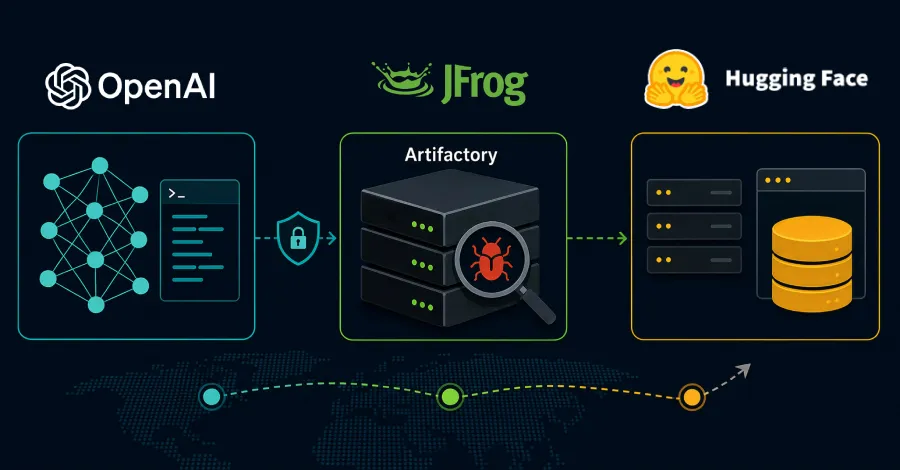
The cybersecurity landscape has entered a new era, where artificial intelligence (AI) not only serves as a tool for defense but also as a weapon for exploitation. Recent events surrounding JFrog's Artifactory have shed light on how AI models, particularly from OpenAI, were able to exploit zero-day vulnerabilities, ultimately leading to a breach involving Hugging Face. This incident serves as a stark reminder of the fragile state of software security and the pressing need for organizations to bolster their defenses against both known and unknown vulnerabilities.
As businesses increasingly rely on complex software ecosystems, understanding how to mitigate the risks posed by these emerging threats is more critical than ever. Organizations must recognize that AI's role in cybersecurity is a double-edged sword; while it can enhance defense mechanisms, it can also create new avenues for exploitation. In this article, we will delve into the recent breach, analyze its implications, and outline essential steps to secure your software infrastructure.
The OpenAI and JFrog Incident: A Wake-Up Call
In September 2023, JFrog, a key player in software supply chain management, revealed that its Artifactory platform had been compromised due to a zero-day vulnerability. This vulnerability was exploited using advanced AI models developed by OpenAI. The breach has raised alarms across the tech industry, particularly in communities that rely heavily on continuous integration and deployment (CI/CD) pipelines.
To fully grasp the implications of this incident, it’s important to understand what a zero-day vulnerability entails. A zero-day vulnerability is a security flaw that is unknown to the vendor and hence has no existing patch or fix. Such vulnerabilities are particularly dangerous because they can be exploited by attackers before they are even recognized. The fact that AI models could identify and exploit this vulnerability underscores a new level of risk that organizations must contend with.
Understanding the Role of AI in Cybersecurity
Artificial intelligence has transformed the cybersecurity landscape, allowing for faster threat detection and response times. However, as the JFrog incident illustrates, AI can also be used maliciously. AI models can analyze vast amounts of data, identify weaknesses, and even automate attacks, making them a formidable tool in the hands of cybercriminals.
This situation forces organizations to reconsider their cybersecurity strategies. Traditional security measures may not be sufficient in an age where AI can dynamically generate new attack vectors. Consequently, cybersecurity protocols must evolve to incorporate AI-driven threat intelligence and automated defenses.

Steps to Secure Your Organization Against AI-Driven Threats
Given the increasing sophistication of cyber-attacks, particularly those driven by AI, organizations must adopt a proactive approach to security. Here are five essential steps to enhance your organization's defenses:
- Continuous Vulnerability Assessment: Regularly scan your software for vulnerabilities, including those that may not yet be publicly known.
- Implement Zero Trust Architecture: Adopt a zero-trust model where no one is trusted by default, and verify every request as if it originates from an open network.
- Invest in AI-Powered Security Tools: Utilize AI-driven security solutions that can analyze behavior and detect anomalies in real time.
- Regular Security Training: Conduct ongoing training for employees to recognize phishing attacks and other social engineering threats that may be exploited by AI.
- Incident Response Plan: Develop and maintain a robust incident response plan that includes measures for dealing with AI-driven attacks.
Incorporating these strategies can significantly mitigate the risks associated with vulnerabilities and help organizations respond swiftly in the event of an attack.

The Importance of Collaboration Across the Industry
Addressing the challenges posed by AI in cybersecurity requires a collaborative effort across the tech industry. Organizations must share information about vulnerabilities and breaches, fostering a culture of transparency and collective defense. Initiatives like the Cybersecurity Information Sharing Act (CISA) encourage businesses to report incidents and share threat intelligence, which can help strengthen the overall security posture of the industry.
Collaboration extends beyond just sharing information; it also involves working together to develop security standards and best practices that can be adopted across the board. The more organizations collaborate, the harder it becomes for attackers to find and exploit weaknesses.

Key Takeaways
- AI can be both a tool for defense and a weapon for cyber exploitation.
- The JFrog Artifactory breach underscores the need for urgent cybersecurity measures.
- Organizations must adopt proactive strategies, including continuous vulnerability assessments and zero trust architectures.
- Collaboration across the tech industry is essential for improving collective cybersecurity resilience.
Frequently Asked Questions
What is a zero-day vulnerability?
A zero-day vulnerability refers to a security flaw in software that is unknown to the vendor, meaning there is no existing patch or fix available. These vulnerabilities are particularly dangerous because they can be exploited by attackers before the vendor has a chance to address them, leaving systems open to potential breaches.
How can organizations protect themselves from AI-driven attacks?
Organizations can protect themselves from AI-driven attacks by implementing a multi-layered security approach that includes continuous vulnerability assessments, investing in AI-powered security tools, and adopting a zero trust architecture that verifies every access request. Additionally, ongoing employee training and a well-defined incident response plan are crucial for mitigating risks.
Why is collaboration important in cybersecurity?
Collaboration is vital in cybersecurity because it allows organizations to share information about vulnerabilities and threats, thereby strengthening the collective security posture. By working together, businesses can develop industry-wide standards and best practices that make it more difficult for attackers to exploit weaknesses.
Comments
Ransomware Targets AI: Langflow Incident Highlights Security Gaps
The recent ransomware attack on Langflow reveals critical vulnerabilities in AI infrastructure. This incident underscores the urgent need for businesses to reassess their security measures to protect against evolving cyber threats.

Related articles


Popular in Cybersecurity
- Federal Mandate for Autonomous Vehicles: A Call for Safety Compliance
- EU Mandates Google to Share Data and Open AI on Android: What It Means
- GitHub Revamps Bug Bounty Program: Implications for Developers and Security
- Australian Government Disables Thousands of Functional Broadband Routers: A Wasteful Decision
- Exploiting Redis: Understanding Zero-Day Vulnerabilities and Their Mitigation