Mitigating Threats: GitLab RCE Vulnerability and AI's Role in Cybersecurity
A newly published proof of concept for a GitLab remote code execution vulnerability raises significant concerns for developers. Coupled with AI-driven security measures, organizations can bolster their defenses.
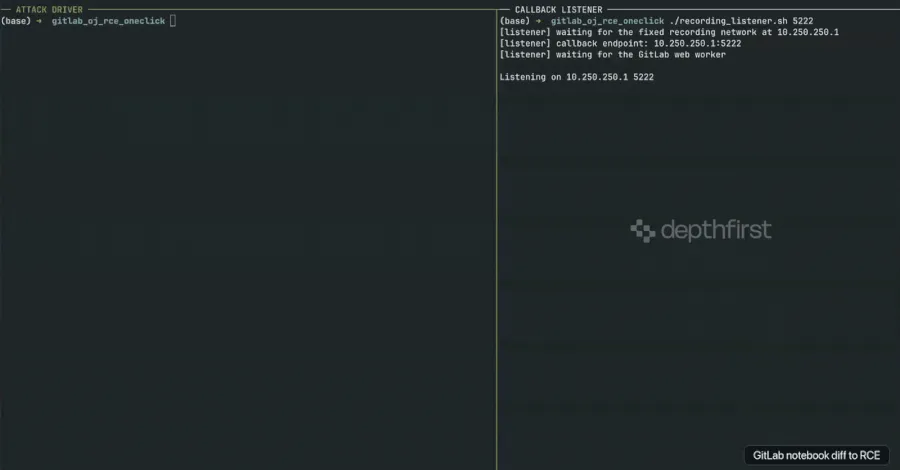
In the ever-evolving landscape of software development and cybersecurity, a recent discovery has raised alarms among GitLab users. A security researcher has published a proof of concept (PoC) demonstrating a remote code execution (RCE) vulnerability that allows authenticated users to execute commands as the Git user. This revelation underscores the critical need for robust security measures, especially as organizations increasingly rely on collaborative platforms like GitLab for version control and project management. With the integration of artificial intelligence (AI) in cybersecurity, organizations now have new tools at their disposal to safeguard against such vulnerabilities.
Understanding the GitLab RCE Vulnerability
Remote code execution vulnerabilities are among the most severe security risks a platform can face. In the case of GitLab, this specific vulnerability enables authenticated users to run arbitrary commands on the server, potentially leading to unauthorized access, data breaches, and significant operational disruption. When a malicious actor exploits this vulnerability, they can gain control over the GitLab instance, impacting not just one project but potentially all repositories hosted on that server. The implications are dire; sensitive code, intellectual property, and critical data could all be at risk.

How the Vulnerability Works
The vulnerability arises from improper input validation within GitLab's interface, allowing users to execute shell commands that the application should not permit. Once exploited, an attacker could run scripts, manipulate data, or escalate privileges to gain further access. This situation is particularly troubling for organizations that utilize GitLab for continuous integration and deployment (CI/CD), as the risk of automated deployments executing malicious code increases dramatically.
Impact on Organizations Using GitLab
The consequences of this vulnerability reach far beyond the technical realm. Businesses using GitLab must contend with potential reputational damage, regulatory compliance issues, and financial losses resulting from data breaches. A successful attack could lead to:
- Data Loss or Corruption: Critical project files may be altered or deleted.
- Service Downtime: Operations could halt as the organization scrambles to mitigate the impact.
- Legal Repercussions: GDPR and other compliance violations could lead to hefty fines.
- Loss of Customer Trust: Clients may reconsider their partnerships with organizations that suffer breaches.
Organizations must prioritize understanding and mitigating these risks. The potential fallout from a breach can be devastating, reinforcing the necessity for proactive security measures.

Leveraging AI in Cybersecurity
As organizations seek to bolster their defenses against vulnerabilities like the one recently discovered in GitLab, AI has emerged as a powerful ally in cybersecurity. AI models can analyze vast amounts of data quickly, identifying patterns that may indicate potential security threats. Here are several ways organizations can harness AI to improve their cybersecurity posture:
1. Threat Detection and Response
AI algorithms can sift through logs and network traffic to detect unusual patterns that may signify a breach. By continuously monitoring systems, AI can provide real-time alerts, allowing security teams to respond swiftly to potential threats.
2. Vulnerability Management
AI can assist in identifying and prioritizing vulnerabilities across an organization’s software stack. By analyzing code repositories, AI tools can flag potential weaknesses before they can be exploited, enabling teams to patch vulnerabilities proactively.
3. User Behavior Analytics
AI can track user behavior, establishing baselines for normal activity. If an authenticated user suddenly begins executing commands outside their typical behavior, AI can flag this activity for further investigation.
Five Steps to Secure Against Vulnerabilities
To mitigate the risks associated with the GitLab RCE vulnerability and similar threats, organizations should take the following proactive steps:
- Conduct Regular Security Audits: Regularly assess your GitLab configuration and usage to identify potential vulnerabilities.
- Implement Least Privilege Access: Ensure that users have only the permissions necessary to perform their jobs, minimizing the risk of exploitation.
- Utilize AI Tools: Leverage AI-driven security solutions to enhance threat detection and vulnerability management.
- Stay Informed: Keep abreast of security advisories from GitLab and other relevant platforms to ensure timely updates and patches.
- Educate Your Team: Provide ongoing training for developers and administrators on secure coding practices and awareness of potential threats.
By taking these steps, organizations can create a more resilient security framework that not only protects against current vulnerabilities but also prepares for future threats.

Key Takeaways
- The newly discovered GitLab RCE vulnerability poses a significant risk to organizations using the platform.
- Exploiting this vulnerability can lead to data breaches, service downtime, and reputational damage.
- AI tools can enhance cybersecurity by improving threat detection and vulnerability management.
- Proactive measures, including regular audits and user education, are essential for safeguarding against vulnerabilities.
Frequently Asked Questions
What is remote code execution (RCE)?
Remote code execution (RCE) is a type of security vulnerability that allows an attacker to execute arbitrary code on a remote server. This can lead to unauthorized access, data theft, and significant damage to the affected systems. RCE vulnerabilities are particularly concerning as they can be exploited by authenticated users, making them harder to detect and mitigate.
How can organizations detect RCE vulnerabilities in their applications?
Organizations can detect RCE vulnerabilities through a combination of manual code reviews, automated security testing tools, and regular vulnerability assessments. Utilizing AI-driven tools can enhance these efforts by identifying patterns and anomalies that may indicate a vulnerability. It's crucial for organizations to adopt a comprehensive security strategy that includes ongoing monitoring and testing.
What role does AI play in modern cybersecurity?
AI plays a significant role in modern cybersecurity by enabling organizations to analyze vast data sets and detect threats that may not be apparent to human analysts. AI can automate threat detection, provide insights into potential vulnerabilities, and improve response times to incidents. By leveraging AI, organizations can enhance their overall security posture and reduce the risk of breaches.
Comments
Protecting Your Business from Cl0p Ransomware Attacks: A Guide
The Cl0p ransomware group has recently targeted vulnerabilities in widely-used software, posing a significant threat to businesses. In this article, we delve into the implications of these vulnerabilities and how organizations can bolster their cybersecurity defenses.

Related articles




Popular in Cybersecurity
- Federal Mandate for Autonomous Vehicles: A Call for Safety Compliance
- EU Mandates Google to Share Data and Open AI on Android: What It Means
- GitHub Revamps Bug Bounty Program: Implications for Developers and Security
- Australian Government Disables Thousands of Functional Broadband Routers: A Wasteful Decision
- Exploiting Redis: Understanding Zero-Day Vulnerabilities and Their Mitigation