Understanding the UAC-0145 Threat: Fake Job Interviews and Command-Running VPNs
The cyber threat landscape continues to evolve, with UAC-0145 leveraging fake job interviews to deploy malware. This article explores the implications, methods, and preventive measures for businesses.
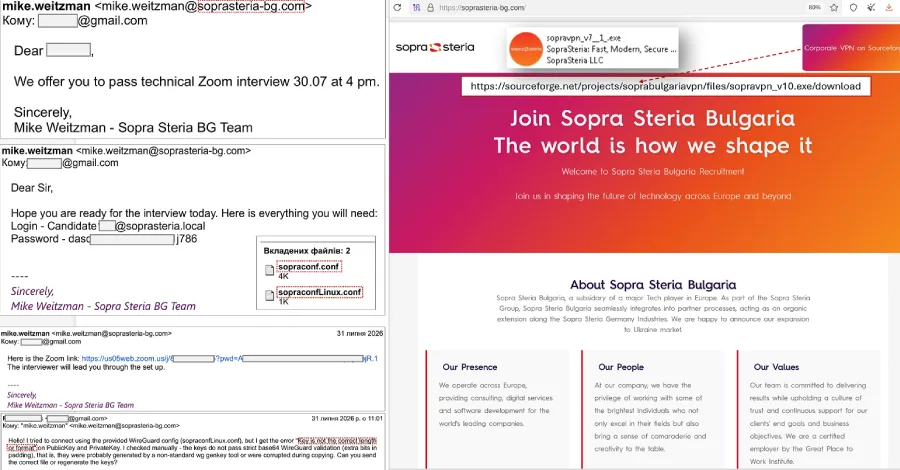
The cyber threat landscape is increasingly sophisticated, with attackers employing ingenious tactics to exploit vulnerabilities and gain unauthorized access to sensitive information. One particularly alarming development is the emergence of UAC-0145, a group linked to the notorious Sandworm threat actor, which has been employing fake job interviews as a lure to distribute a malicious VPN. This VPN not only provides a false sense of security but also allows attackers to run commands on compromised systems, thereby escalating their privileges and expanding their foothold within target organizations.
This article delves into the specifics of UAC-0145's tactics, the implications of their attacks, and what organizations can do to safeguard themselves against such evolving threats. Understanding these methods is critical for IT security professionals and decision-makers who must protect their organizations from falling victim to these dangerous schemes.
The Rise of UAC-0145 and Sandworm
UAC-0145, affiliated with the Sandworm group, has made headlines for its advanced cyber-espionage techniques. Sandworm is infamous for various high-profile attacks, including the 2015 Ukrainian power grid attack and several incidents targeting critical infrastructure. Their advanced persistent threat (APT) status places them among the most dangerous adversaries, using sophisticated techniques to achieve their goals.
What sets UAC-0145 apart is their innovative approach to social engineering. By leveraging fake job interviews, they exploit the trust and vulnerability of individuals seeking employment. This method not only facilitates the distribution of malware but also creates an environment ripe for privilege escalation, allowing attackers to navigate through networks undetected.

How the Fake Job Interview Scam Works
The operation begins with the creation of fake job postings, often targeting industries or organizations that are perceived as valuable or vulnerable. Attackers may utilize social media platforms, job boards, or even direct emails to reach potential victims. Once a candidate expresses interest, they are invited to a series of interviews, which can take place over video conferencing tools.
During these interviews, attackers can introduce malicious software under the guise of a VPN solution, claiming it is necessary for secure communication regarding the job process. Once installed, this VPN is not just a tool for privacy; it is a springboard for executing commands on the user's system and potentially across the network.
Key Features of the Malicious VPN
The malicious VPN associated with UAC-0145 has several alarming features:
- Command Execution: Once installed, attackers can run arbitrary commands on the infected system, allowing for a wide range of malicious activities.
- Data Exfiltration: The VPN can be used to siphon sensitive data from the target network.
- Network Scanning: Attackers can explore the network to identify other vulnerable systems.
- Privilege Escalation: The ability to escalate privileges grants attackers access to critical systems and data.

The Broader Implications of UAC-0145 Attacks
The implications of UAC-0145's tactics extend beyond individual organizations. With their ability to infiltrate networks and execute commands, they pose a significant risk to national security and critical infrastructure. As businesses increasingly move towards remote work and digital transformation, the potential attack surface continues to expand, making it imperative for organizations to remain vigilant.
Furthermore, the reliance on remote hiring and virtual interviews, a trend accelerated by the COVID-19 pandemic, has created an environment where such scams can thrive. Organizations must recognize that their hiring processes could be exploited, and measures need to be taken to protect sensitive information during recruitment.
Preventative Measures for Organizations
To mitigate the risks associated with the UAC-0145 threat, organizations should consider implementing the following strategies:
- Employee Training: Regularly educate employees about phishing tactics and the potential risks associated with unsolicited job offers.
- Security Protocols: Establish security protocols for remote hiring processes, including verifying the legitimacy of job postings and interview requests.
- Network Monitoring: Implement monitoring tools to detect unusual network activity, particularly after new software installations.
- Incident Response Plan: Develop and maintain an incident response plan to address any potential breaches quickly and effectively.

Key Takeaways
- UAC-0145 is linked to the Sandworm group and employs fake job interviews as a lure for malware distribution.
- The malicious VPN used in their attacks allows for command execution and data exfiltration.
- Organizations must enhance their recruitment security to prevent such scams.
- Regular employee training can significantly reduce the risk of falling victim to phishing tactics.
- Implementing a robust incident response plan is crucial for addressing potential breaches.
Frequently Asked Questions
What industries are most at risk from UAC-0145 attacks?
Industries that deal with sensitive data, such as finance, healthcare, and government, are particularly vulnerable. UAC-0145 targets organizations that may offer critical insights or access to valuable information. By understanding the risks, these sectors can implement more stringent security measures to protect against potential threats.
How can organizations verify the legitimacy of job postings?
Organizations can take several steps to verify job postings. This includes checking the domain of the email addresses associated with the postings, looking for reviews or feedback about the recruiting entity, and conducting background checks on recruiters. Utilizing professional networking platforms can also help in confirming the legitimacy of job offers.
What should I do if I suspect a job interview is a scam?
If you suspect that a job interview may be a scam, do not engage further with the potential employer. Report the incident to your local authorities and consider informing other potential victims. Additionally, ensure that your system is scanned for malware if you have installed any software related to the interview process.
Comments
Critical Cisco ASA and FTD Vulnerability: Understanding the Risks
A recently discovered vulnerability affecting Cisco's ASA and FTD devices has been exploited in the wild, triggering remote Denial of Service (DoS) attacks. This article explores the implications for businesses and how they can mitigate risks.

Related articles




Popular in Cybersecurity
- Federal Mandate for Autonomous Vehicles: A Call for Safety Compliance
- EU Mandates Google to Share Data and Open AI on Android: What It Means
- GitHub Revamps Bug Bounty Program: Implications for Developers and Security
- Australian Government Disables Thousands of Functional Broadband Routers: A Wasteful Decision
- Exploiting Redis: Understanding Zero-Day Vulnerabilities and Their Mitigation