Trump's Vaccine Policy Proposal Faces Heavy Backlash from Experts and Pharma
President Trump's recent executive order to split the MMR vaccine has ignited fierce criticism from health experts and the pharmaceutical industry, sparking concerns over children's health and public safety.
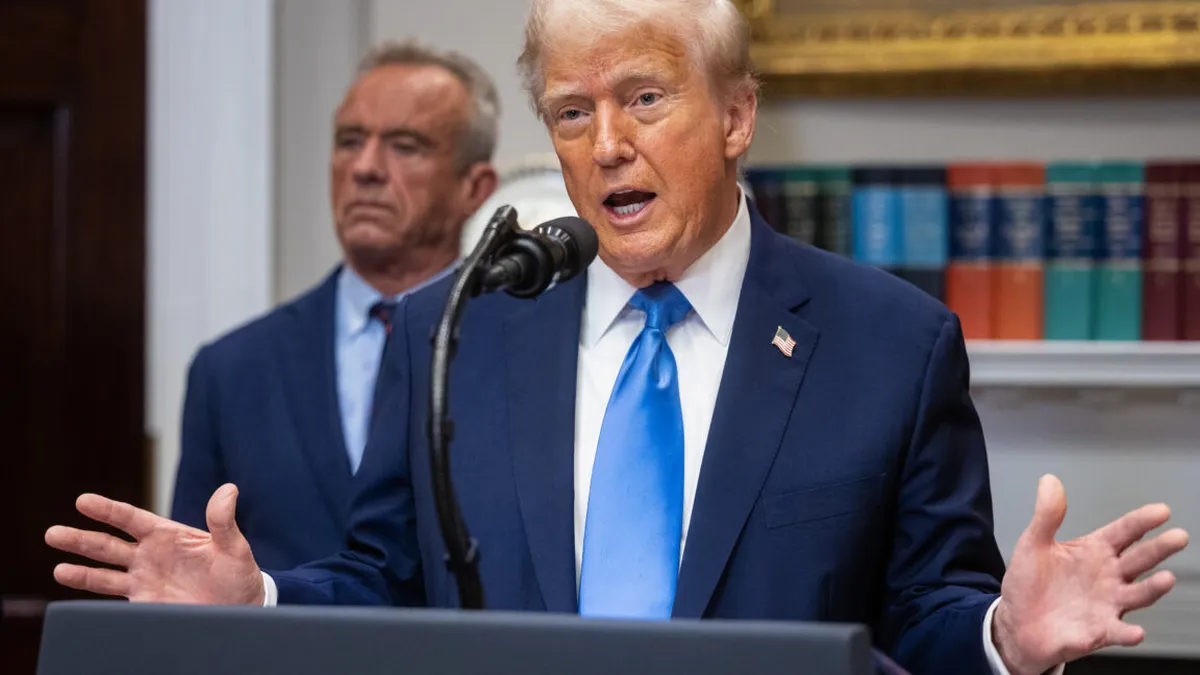
In a move that has set the medical community abuzz, President Donald Trump recently signed an executive order proposing a radical change to the administration of the measles, mumps, and rubella (MMR) vaccine. Instead of the current combined vaccine, Trump’s directive calls for the separation of the vaccine into three individual shots. This proposal, described as 'nonsensical' by critics, has drawn swift condemnation from public health experts, medical organizations, and even the pharmaceutical industry itself. The underlying concern is not merely about logistics—it represents a potential challenge to decades of scientific consensus regarding vaccine safety and efficacy.
The MMR vaccine, which has been administered in its combined form to millions of children, has proven to be both safe and effective over decades of use. The changes proposed by Trump could lead to logistical nightmares, increased healthcare costs, and, most importantly, a decline in vaccination rates, putting children at risk for preventable diseases. The backlash is not just concerned with the practicality of implementing such changes; it raises fundamental questions about the intersection of politics, public health, and science in America.

The Controversial Proposal
President Trump's executive order, described as part of a broader initiative to streamline vaccine administration, has caught many by surprise. The proposal aims to reduce the overall number of vaccines children receive, but advocates for splitting the MMR vaccine into three separate doses for measles, mumps, and rubella. Currently, children receive two doses of the MMR vaccine, which means the new directive would effectively double the number of shots required to achieve immunity.
However, the practical implementation of this order raises significant concerns. Not only are individual vaccines for measles, mumps, and rubella not currently available in the United States, but developing and testing these new vaccines would require substantial investment from pharmaceutical companies. This would involve extensive clinical trials to ensure safety and efficacy—processes that take years and cost millions of dollars.

Industry Response: A Unified Front
Within hours of the executive order, the Pharmaceutical Research and Manufacturers of America (PhRMA), representing major drug companies like Pfizer, Merck, and Johnson & Johnson, publicly condemned Trump's proposal. Michael Ybarra, PhRMA's Chief Medical Officer, emphasized that federal vaccine recommendations are built on decades of rigorous research and should not be altered without substantial scientific justification.
“Simply imposing a narrower schedule by importing recommendations from foreign countries wouldn’t reflect gold standard science,” Ybarra stated. “It would mean accepting a lower bar of protection against diseases that remain serious and, in some cases, life-threatening for children in the United States.”
Merck and GSK, the manufacturers of the MMR vaccine, echoed these sentiments, emphasizing that there has been no scientific evidence to support the benefits of separating the combined vaccine into three individual shots. According to Merck, any changes to vaccine policy should be grounded in evidence-based science, not political rhetoric.

Public Health Perspectives
The immediate backlash from the pharmaceutical industry was unexpected, signaling a notable resistance to a presidential directive. Public health organizations, led by the American Academy of Pediatrics, have also voiced strong opposition to the order. The Academy has called the proposal “not only disheartening but dangerous,” arguing that it undermines years of progress in immunization efforts. They are currently leading a lawsuit against previous changes to federal childhood vaccine recommendations under the Trump administration.
Critics argue that Trump’s approach reflects a broader anti-vaccine sentiment that has gained traction in certain political circles. Robert F. Kennedy Jr., who has no formal background in science or public health, has been a vocal advocate for vaccine skepticism. His role as Secretary of Health and Human Services further complicates the situation, as many view his influence as detrimental to evidence-based public health policy.
Legal Implications and Future Considerations
The implications of Trump’s executive order extend beyond the immediate health concerns and delve into the legal and regulatory landscape of vaccine policy in the United States. Public health experts warn that the separation of the MMR vaccine could lead to a significant decline in vaccination rates, which in turn could result in outbreaks of diseases that have been largely controlled through widespread immunization.
Moreover, the order could face legal challenges similar to those mounted against previous changes to vaccine recommendations. The American Academy of Pediatrics, along with various medical organizations, has already won temporary injunctions to reverse earlier modifications made under the Trump administration. These legal battles highlight the ongoing tension between political decisions and public health mandates.
Key Takeaways
- Trump's executive order proposes separating the MMR vaccine into three individual shots, raising concerns about health and logistics.
- Pharmaceutical companies have publicly condemned the proposal, emphasizing the lack of scientific evidence supporting such a change.
- The American Academy of Pediatrics and other organizations are leading legal challenges against the administration's vaccine policy changes.
- The controversy reflects a broader tension between political agendas and evidence-based public health policy.
- Experts warn of potential outbreaks of preventable diseases if vaccination rates decline.
Frequently Asked Questions
What is the MMR vaccine, and why is it important?
The MMR vaccine protects against three serious diseases: measles, mumps, and rubella. These diseases can lead to severe complications, including hospitalization and even death. The vaccine has been shown to be highly effective in preventing these diseases, contributing to a significant decline in their incidence in the United States over the past few decades.
How would splitting the MMR vaccine impact vaccination rates?
Splitting the MMR vaccine into three separate shots could complicate the vaccination schedule, potentially leading to lower immunization rates. Parents may be less likely to bring their children in for multiple visits, increasing the risk of outbreaks of these preventable diseases. Health experts fear that this change could undermine decades of progress in vaccination efforts.
What are the legal implications of Trump's executive order?
Trump's executive order could face legal challenges similar to those seen with previous vaccine policy changes. Organizations like the American Academy of Pediatrics are already preparing to mount lawsuits to reverse these changes, emphasizing that public health policy should be grounded in rigorous scientific evidence rather than political agendas.
How has the pharmaceutical industry reacted to the proposal?
The pharmaceutical industry has reacted swiftly and strongly against Trump's proposal. Leading companies like Merck and GSK have stated that there is no scientific basis for splitting the MMR vaccine and have emphasized the importance of evidence-based policy in vaccination efforts. This public resistance reflects a rare instance of the industry standing up against a presidential directive.
Comments
The Rise of SignalTrace: How New Surveillance Tech Links Phones to License Plates
The advent of SignalTrace technology is revolutionizing surveillance by linking mobile devices to vehicles, raising significant privacy concerns. This article explores the implications and challenges of this new tracking method.

Related articles




Popular in Cybersecurity
- Federal Mandate for Autonomous Vehicles: A Call for Safety Compliance
- EU Mandates Google to Share Data and Open AI on Android: What It Means
- GitHub Revamps Bug Bounty Program: Implications for Developers and Security
- Australian Government Disables Thousands of Functional Broadband Routers: A Wasteful Decision
- Exploiting Redis: Understanding Zero-Day Vulnerabilities and Their Mitigation