Innovative Patterns: Evading Surveillance in the Digital Age
Bill Swearingen's noRecognition project introduces computer-generated patterns that can effectively prevent surveillance cameras from detecting individuals and vehicles, sparking discussions about privacy rights and the future of surveillance technology.
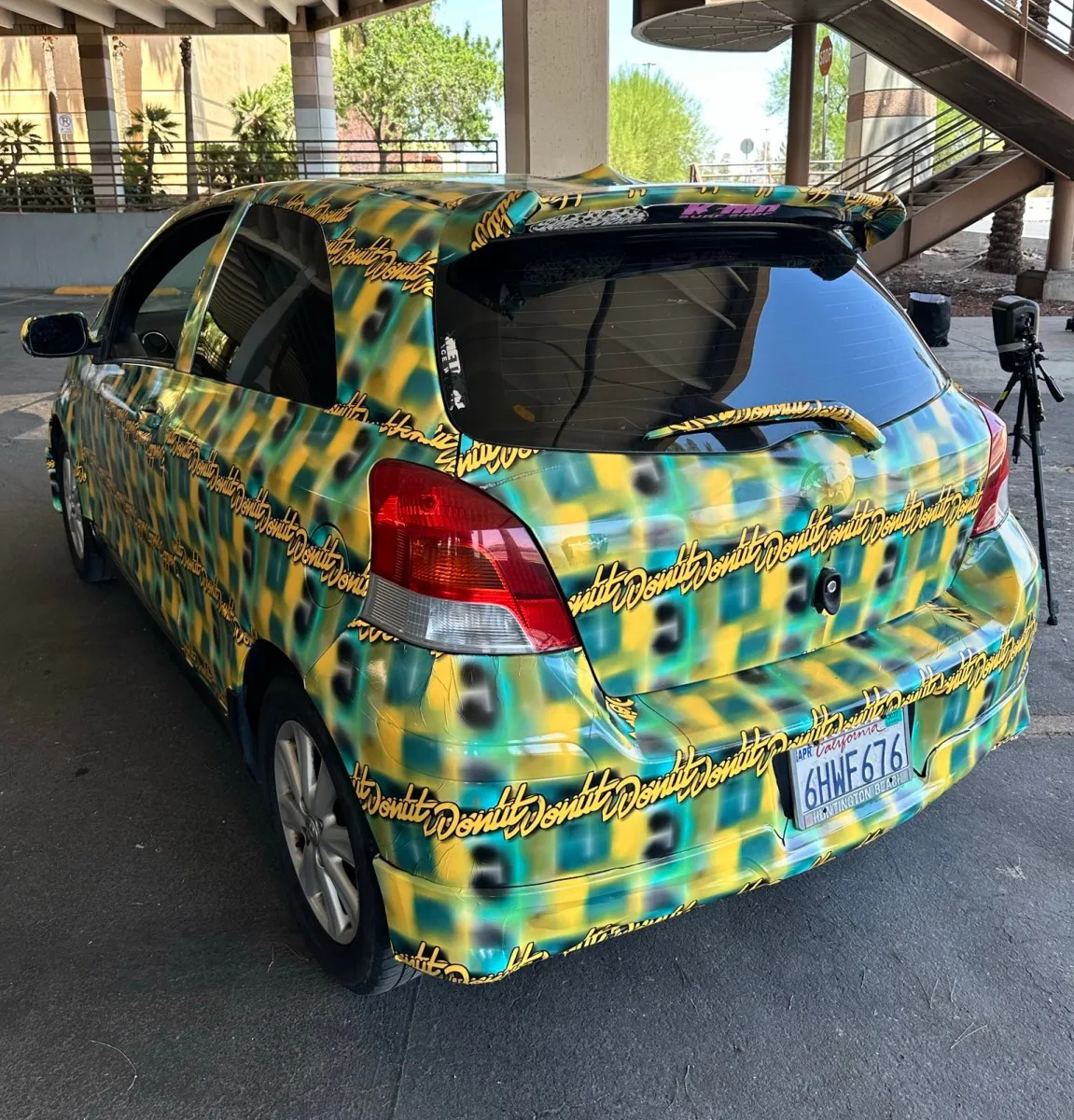
In an era where surveillance cameras are omnipresent, capturing footage on streets, in stores, and at public events, the question of personal privacy has become increasingly pressing. Bill Swearingen, a cybersecurity expert based in Kansas City, has taken on the challenge of developing a solution to this dilemma. Through his project, noRecognition, Swearingen has created a series of computer-generated patterns designed to obscure detection from the surveillance systems that monitor our daily lives. After running over 31 million tests, he has come to the conclusion that these patterns can effectively render individuals and vehicles invisible to commonly deployed detection algorithms.
Surveillance technology has evolved significantly over the past decade, with algorithms now capable of not only recording video footage but also analyzing it to identify specific objects, people, or behaviors. This capability has raised concerns about the erosion of privacy, particularly as law enforcement agencies increasingly rely on these technologies to monitor public spaces. Swearingen's work represents a countermeasure to these trends, aiming to empower individuals with the ability to opt-out of being tracked.
The Mechanics of noRecognition
The noRecognition project operates on a unique premise: while surveillance cameras continue to record, the patterns developed by Swearingen scramble the algorithms that power detection systems. This means that even though cameras are capturing video footage, the software cannot accurately identify or trigger alerts on what the patterns cover. Essentially, it transforms the individual or object into a 'needle in a haystack' once more, making it much harder for surveillance systems to track movements.
Development Process and Technology
Swearingen's journey began with a simple proof-of-concept. He initially focused on defeating open-source video camera detection algorithms, refining his approach incrementally. Over time, he transitioned to a reinforcement learning model that allowed his system to learn from failures and successes alike. Each iteration improved the model's ability to create patterns that could outsmart specific camera algorithms.
The sophistication of this technology is noteworthy. Swearingen's model can generate new patterns every minute, each designed to be more effective than its predecessor. In testing against 11 different open-source detection algorithms, including those used by Flock license plate readers and Clearview AI, Swearingen's patterns have shown remarkable resilience and adaptability.

Real-World Applications and Testing
The breakthrough moment for noRecognition came during a public demonstration at the Def Con cybersecurity conference in Las Vegas. Swearingen covered a 2009 Toyota Yaris with one of his specially designed patterns and successfully demonstrated its effectiveness in evading detection by a Flock camera. This was not merely a theoretical exercise; it showcased the potential for real-world applications of his technology.
However, Swearingen acknowledges that while the patterns effectively obscure detection, they are not foolproof. For instance, he noted challenges with the vehicle’s wheels that were still detectable. Nonetheless, the success of the demonstration has set the stage for further development and public engagement.
Legal and Ethical Considerations
The implications of Swearingen's work extend far beyond mere technological innovation; they delve into complex legal and ethical realms. As surveillance technologies proliferate, raising questions about civil liberties and privacy rights becomes imperative. Swearingen emphasizes that privacy is a fundamental right, stating, "We never opted in to being watched." This sentiment resonates particularly for individuals concerned about exercising their rights in public, such as attending protests or engaging in free expression. In this context, the noRecognition patterns not only serve as a tool for evasion but also as a statement about the right to privacy in an increasingly monitored society.
- Empowerment through Technology: noRecognition serves as a form of empowerment, providing individuals with a means to reclaim their privacy.
- Public Response: The growing concern over surveillance is reflected in public interest in solutions that allow for anonymity.
- Legal Landscape: Ongoing debates about the legality and ethics of surveillance technologies continue to shape the discourse around privacy rights.
The Future of Surveillance Evasion
As the noRecognition project continues to evolve, Swearingen aims to make these patterns accessible to the public. Plans are in place for a crowdsourcing campaign to fund the production of merchandise featuring the patterns, including T-shirts, hoodies, and potentially vehicle skins. The goal is to ensure that the patterns are not only effective but also aesthetically appealing, encouraging wider adoption.
Swearingen is also cautious about the exposure of his strongest patterns online, aware that publicizing them could lead surveillance technology developers to find ways to counteract them. The project’s ongoing refinement process ensures that even as some patterns become known, new and improved designs will continue to emerge.

Key Takeaways
- Bill Swearingen's noRecognition project creates patterns that obscure detection by surveillance cameras.
- After 31 million tests, the patterns have proven to be effective against multiple algorithms.
- The project highlights the need for privacy rights in a world increasingly dominated by surveillance technologies.
- Public testing at Def Con demonstrates real-world applicability, opening doors for broader usage.
- Swearingen aims to make these patterns accessible through merchandise while continuing to refine their effectiveness.
Frequently Asked Questions
How do the noRecognition patterns work?
The noRecognition patterns work by scrambling the algorithms used by surveillance cameras to detect objects or people. This means that while the cameras continue to record, they cannot effectively identify or trigger alerts on the patterns, rendering the covered individuals or objects virtually invisible to the technology.
What are the implications for privacy rights?
The implications for privacy rights are significant. Swearingen's project underscores the need for individuals to have the ability to opt-out of surveillance. It raises important questions about consent and the extent to which people are monitored in public spaces, urging a reconsideration of privacy standards in the era of advanced surveillance technologies.
Can these patterns be used in everyday life?
Yes, Swearingen is working on making these patterns accessible for everyday use, with plans to produce merchandise like clothing and vehicle skins. The goal is to provide individuals with a fashionable way to exercise their right to privacy while navigating increasingly monitored environments.
What are the future steps for the noRecognition project?
The next steps for the noRecognition project include continuing to refine the patterns, expanding the public's access to them, and exploring new applications and designs. Swearingen aims to keep the project evolving to stay ahead of surveillance technology advancements and ensure ongoing protection for individuals seeking privacy.
Comments
Decoding the Names: Why Cybersecurity Groups Get Codenames
The cybersecurity landscape is riddled with hacker groups, each assigned a unique codename for identification. Google’s recent overhaul of its naming system reveals the complexities and necessities behind this practice.

Related articles







Popular in Cybersecurity
- Federal Mandate for Autonomous Vehicles: A Call for Safety Compliance
- EU Mandates Google to Share Data and Open AI on Android: What It Means
- GitHub Revamps Bug Bounty Program: Implications for Developers and Security
- Australian Government Disables Thousands of Functional Broadband Routers: A Wasteful Decision
- Exploiting Redis: Understanding Zero-Day Vulnerabilities and Their Mitigation