New CSS Attacks Threaten Webmail Security: What You Need to Know
Recent developments in CSS attacks have raised alarms about webmail security and user identity exposure. This article explores the implications and preventive measures.
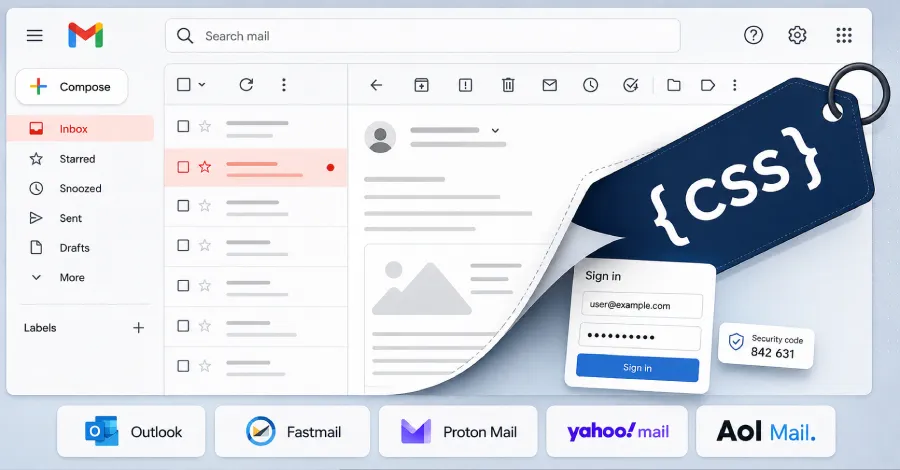
The digital landscape is in constant flux, with cybersecurity threats evolving faster than the defenses designed to protect against them. Recently, a new type of attack has emerged that specifically targets webmail services using Cascading Style Sheets (CSS). These attacks exploit vulnerabilities in webmail interfaces to extract sensitive information, including passwords and session tokens. As cybercriminals become more sophisticated, understanding the mechanics of these CSS attacks is crucial for both individuals and organizations seeking to safeguard their digital identities.
Webmail services like Gmail, Yahoo Mail, and Outlook are integral to our online lives, serving as the backbone for personal and professional communication. With their widespread use, they have become prime targets for cyber attacks. The latest CSS attacks demonstrate a worrying trend where attackers can bypass traditional security measures, leaving users vulnerable to identity theft and unauthorized access. This article delves into the mechanics of these attacks, the potential consequences, and the strategies that users can employ to protect themselves.
The Mechanics of CSS Attacks
Cascading Style Sheets (CSS) are a cornerstone of web design, allowing developers to control the layout and appearance of web pages. However, when misused, CSS can also become a weapon for attackers. CSS attacks typically exploit cross-domain privilege escalation vulnerabilities. This means that an attacker can manipulate CSS to gain unauthorized access to different domains, resulting in the theft of sensitive information.
How Do CSS Attacks Work?
At their core, CSS attacks take advantage of how browsers interpret and render stylesheets. Here’s a simplified breakdown of the attack process:
- Injection: An attacker injects malicious CSS code into a webmail service.
- Cross-Domain Access: The malicious CSS can access content from other domains, particularly those that the user is authenticated against.
- Data Extraction: Sensitive information, such as authentication tokens or session cookies, is extracted and sent to the attacker’s server.
- Account Compromise: With the stolen tokens or passwords, the attacker can access the user’s accounts across various services.
This process highlights a critical security gap in how webmail services manage cross-origin requests and privilege escalation, making it imperative for organizations to fortify their defenses.

The Impact of Identity Exposure
The consequences of successful CSS attacks can be severe. When attackers gain access to a user’s webmail account, they can not only steal personal information but also leverage that access to infiltrate other accounts linked to the same email address. This can lead to a cascading series of breaches, as many services rely on email accounts for password recovery and two-factor authentication (2FA).
Real-World Consequences
To illustrate the potential fallout, consider the following scenarios:
- Phishing Attacks: Once an attacker has access to a user's webmail, they can send phishing emails to contacts, facilitating further compromises.
- Identity Theft: Personal information gleaned from webmail can be used for identity theft, leading to financial loss and reputational damage.
- Business Vulnerabilities: For organizations, compromised employee accounts can result in data breaches, exposing sensitive client information and leading to regulatory fines.
These scenarios underscore the importance of robust security measures in protecting not just individual users but entire organizations from the ripple effects of identity exposure.

Prevention Strategies for Users and Organizations
As the threat landscape evolves, so must our defense strategies. Here are several key measures that users and organizations can implement to bolster their webmail security:
For Individual Users:
- Enable Two-Factor Authentication (2FA): Always use 2FA on webmail accounts to add an extra layer of security.
- Use Strong Passwords: Create complex, unique passwords for each account and consider using a password manager.
- Be Wary of Phishing: Always verify the authenticity of emails requesting sensitive information.
For Organizations:
- Regular Security Audits: Conduct regular audits of webmail applications to identify and patch vulnerabilities.
- Educate Employees: Provide training on recognizing phishing attempts and safe webmail practices.
- Implement CSPs: Content Security Policies (CSPs) can help mitigate the risk of CSS attacks by controlling which resources are allowed to load on your webmail domain.
By adopting these strategies, both users and organizations can significantly reduce their risk of falling victim to CSS attacks and other cyber threats.

Key Takeaways
- New CSS attacks exploit vulnerabilities in webmail services to steal sensitive information.
- The impact of identity exposure can lead to serious consequences, including identity theft and business vulnerabilities.
- Implementing two-factor authentication and strong password practices is essential for user protection.
- Organizations should conduct regular security audits and educate employees on cybersecurity best practices.
Frequently Asked Questions
What are CSS attacks and how do they work?
CSS attacks leverage vulnerabilities in Cascading Style Sheets to access sensitive information across different domains. By injecting malicious CSS code into a webmail service, attackers can extract data such as authentication tokens and passwords, ultimately compromising user accounts.
How can I protect my webmail account from CSS attacks?
To safeguard your webmail account, enable two-factor authentication, use strong and unique passwords, and remain vigilant against phishing attempts. These measures will significantly enhance your security posture against CSS attacks and other cyber threats.
What should organizations do to mitigate the risk of CSS attacks?
Organizations should conduct regular security audits of their webmail applications to identify vulnerabilities. Additionally, implementing Content Security Policies and providing employee training on cybersecurity best practices can help mitigate the risk of CSS attacks.
Are CSS attacks common?
While CSS attacks are not yet as prevalent as other forms of cyber attacks, the rise of sophisticated attack vectors makes them a growing concern. As webmail services remain popular targets, understanding and defending against these attacks is increasingly important for both individuals and organizations.
Comments
Innovative Patterns: Evading Surveillance in the Digital Age
Bill Swearingen's noRecognition project introduces computer-generated patterns that can effectively prevent surveillance cameras from detecting individuals and vehicles, sparking discussions about privacy rights and the future of surveillance technology.

Related articles





Popular in Cybersecurity
- Federal Mandate for Autonomous Vehicles: A Call for Safety Compliance
- EU Mandates Google to Share Data and Open AI on Android: What It Means
- GitHub Revamps Bug Bounty Program: Implications for Developers and Security
- Australian Government Disables Thousands of Functional Broadband Routers: A Wasteful Decision
- Exploiting Redis: Understanding Zero-Day Vulnerabilities and Their Mitigation