Amazon's Satellite Network: A New Challenger to SpaceX's Dominance
Amazon's ambitious plans for a satellite network could reshape mobile connectivity, putting pressure on SpaceX's established position in the market.
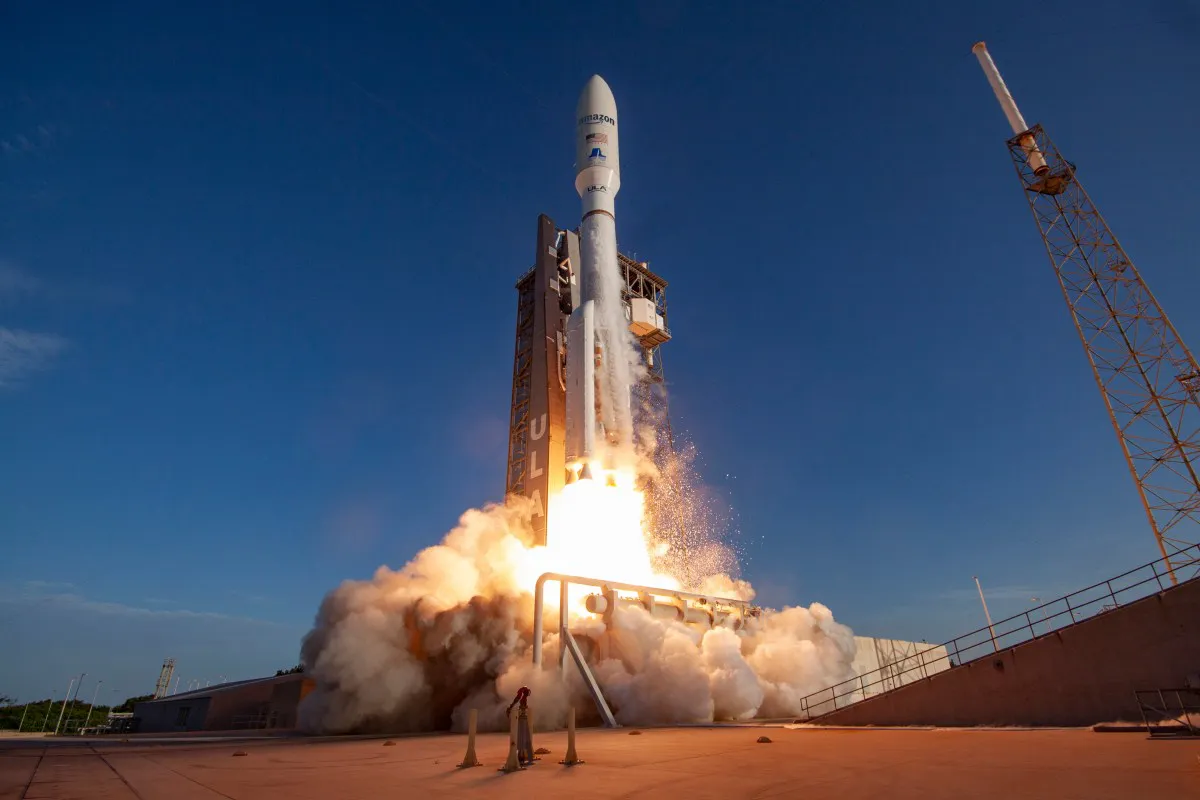
In a bold move that could significantly alter the landscape of mobile connectivity, Amazon has filed an application with the Federal Communications Commission (FCC) for a license to operate a massive constellation of 5,105 satellites. These satellites aim to provide mobile phone connectivity, a sector currently dominated by SpaceX's Starlink network. Set to launch as early as 2028, Amazon's initiative appears to be a direct response to the increasing demand for reliable global connectivity and the burgeoning market for satellite-based communication.
This filing follows Amazon's recent acquisition of Globalstar's satellite operations, a company known for providing emergency connectivity services to Apple iPhones and Internet-of-Things (IoT) devices. By leveraging Globalstar's established radio spectrum, Amazon plans to enhance its mobile offerings and integrate them with its existing broadband internet satellite network, known as Project Kuiper. This strategic maneuver not only positions Amazon as a formidable competitor in the satellite communications sector but also raises questions about the future of satellite-to-mobile services.
The Satellite Landscape: Current Players and Market Dynamics
The satellite communications landscape has been rapidly evolving, with several key players vying for market share. SpaceX, led by its visionary founder Elon Musk, has established itself as the leader in the satellite internet sector with its Starlink project. The company is currently in the process of expanding its services, including the introduction of satellite-to-mobile connectivity, which has garnered considerable attention. However, there are challenges ahead.
SpaceX's Expansion Plans
SpaceX has earmarked an impressive $20 billion to acquire spectrum from EchoStar as part of its strategy to enhance its mobile satellite constellation. This investment is crucial for its growth, particularly as the company prepares for an Initial Public Offering (IPO) that will require significant capital. Yet, despite its ambitious plans, the market's reception to satellite-to-mobile services remains lukewarm.
Challenges of Satellite-to-Mobile Services
The CEO of T-Mobile, which collaborates with SpaceX to provide satellite connectivity, noted a stark reality: consumer interest in satellite services is minimal. In a conference earlier this year, Srini Gopalan highlighted that satellite usage constituted a mere 0.0002% of T-Mobile's total network usage. This statistic underscores a critical challenge in the satellite industry: the current offerings primarily cater to niche markets, such as remote areas and national parks, rather than mainstream consumer needs.
Amazon's Strategic Advantage
While Amazon's satellite initiative faces its own set of challenges, the company has distinct advantages that could aid its success. With a staggering $255 billion in assets as of April, Amazon is well-positioned to invest heavily in its satellite network, despite not having its own launch capabilities. Initially, Amazon planned to rely on Blue Origin, Jeff Bezos' space venture, to deploy its satellites. However, setbacks in Blue Origin's New Glenn rocket development have delayed these plans, prompting Amazon to request an extension on its FCC license deadline.
Potential Integration with IoT and Emergency Services
A key aspect of Amazon's strategy lies in its ability to integrate satellite services with existing Amazon Web Services (AWS) offerings. By providing robust connectivity for IoT devices and emergency services, Amazon could carve out a niche that appeals to businesses and government agencies. This integration could enhance the value proposition of Amazon's satellite network, making it more appealing than current offerings.
The Future of Satellite Connectivity
As the competition heats up between Amazon and SpaceX, several factors will determine the future trajectory of satellite connectivity. One primary consideration is the technological limitations of satellite-to-mobile services, which currently struggle with bandwidth constraints. Most existing systems can only support basic functionalities, such as text messaging or emergency alerts, significantly limiting their market appeal.
Market Demand and Consumer Readiness
Understanding consumer readiness for satellite services will also be paramount. As the world becomes increasingly connected, the demand for reliable communication in remote areas will grow. However, whether this demand translates into widespread adoption of satellite-to-mobile services remains to be seen. For Amazon and SpaceX, the challenge is not merely about launching satellites but also about demonstrating their utility to everyday consumers.
Key Takeaways
- Amazon plans to deploy 5,105 satellites to provide mobile phone connectivity starting in 2028.
- SpaceX currently leads the satellite internet market with its Starlink project but faces challenges in consumer adoption.
- Amazon's acquisition of Globalstar enhances its capabilities in satellite communications.
- Both companies must navigate the limitations of satellite-to-mobile technology and its current appeal.
- Market demand for reliable connectivity in remote areas may drive future growth in satellite services.
Frequently Asked Questions
What are Amazon's plans for its satellite network?
Amazon aims to launch a network of 5,105 satellites to provide mobile phone connectivity. This initiative is part of a broader strategy to enhance global communication capabilities, particularly in underserved regions. The company plans to integrate satellite services with its existing offerings, enhancing the value of its Amazon Web Services (AWS) platform.
How does SpaceX's Starlink compare to Amazon's upcoming service?
SpaceX's Starlink currently dominates the satellite internet market, providing high-speed internet to consumers globally. However, its recent foray into satellite-to-mobile connectivity has seen limited consumer engagement, with usage accounting for a fraction of total network activity. As both companies compete, their ability to attract consumers and demonstrate the value of their services will be crucial.
What challenges do satellite-to-mobile services face?
Satellite-to-mobile services are limited by technological constraints, primarily bandwidth issues. Current systems can typically only support basic functionalities, which diminishes their attractiveness to consumers. Additionally, market demand and consumer readiness to adopt such services will significantly impact their success.
Comments
FCC Exemption for SpaceX's Starlink Routers: Implications and Insights
The FCC has exempted SpaceX's Starlink routers from a ban on foreign-made devices, allowing for continued production and sales. This article explores the implications of this decision for the tech industry and national security.

Related articles


Popular in Cloud Computing
- SK Hynix's Historic $26.5 Billion IPO: A New Era for Memory Chips
- Kubernetes and the Future of Desktop Infrastructure: A Paradigm Shift
- Amazon Expands Partnership with Nvidia, Tripling GPU Orders Amid AI Demand Surge
- Elon Musk's Evolving Relationship with Anthropic: A New Era for AI Hosting
- Emerging Rocket Launches: A New Era for Space Exploration