The Future of AI: Why Diversifying Your AI Strategy is Crucial
Microsoft's CEO Satya Nadella warns businesses against overly relying on a single AI provider. He emphasizes the importance of maintaining control over data and model training to ensure long-term success in the AI landscape.
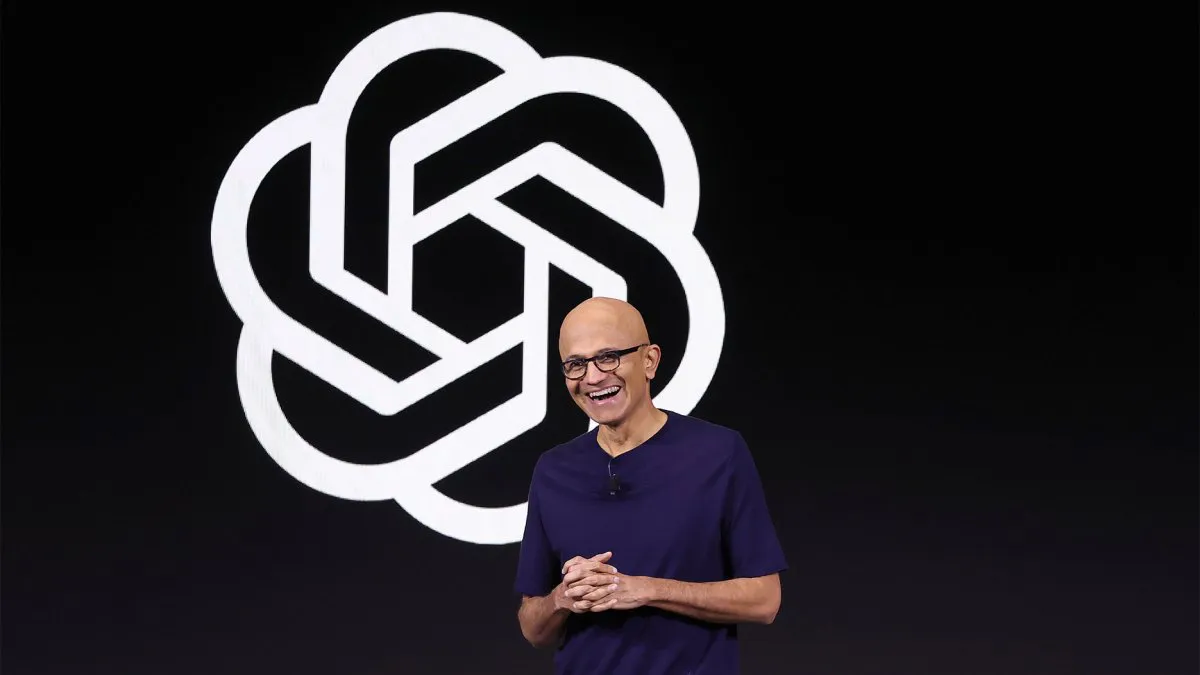
As the AI landscape rapidly evolves, the strategies employed by businesses in harnessing this technology are coming under intense scrutiny. In a recent interview, Microsoft CEO Satya Nadella raised an alarming point about the potential pitfalls of relying too heavily on a single AI model or provider. His warning, delivered during an appearance on CNN's 'Fareed Zakaria GPS', underscores the critical importance of data ownership and AI diversification for companies aiming to thrive in an increasingly competitive marketplace.
Nadella's assertion is clear: companies that outsource their thinking to proprietary AI models risk not just their innovation but their very survival. In an era where AI is becoming integral to business operations, the call for a more nuanced approach to AI deployment could not be more timely.

The Dangers of AI Dependence
Nadella pointed out a significant concern regarding businesses that depend solely on proprietary AI solutions for their operational needs. He argued that this dependence equates to outsourcing critical thinking processes, which can lead to a loss of competitive edge. This situation is particularly perilous for companies that provide sensitive data to AI providers without retaining control over the metadata associated with their usage.
Understanding Metadata and Model Weights
Metadata refers to the data that provides information about other data, which in the context of AI, includes the details of how a model is being used, the inputs given, and the outputs received. Nadella emphasized that companies should maintain ownership of this metadata to potentially train their own AI models in the future. This approach involves understanding 'weights'—the trained parameters of an AI model that dictate its behavior and decision-making processes.
By retaining the metadata, businesses can leverage their unique operational data to refine or even develop their own models. This ensures they are not at the mercy of external providers who might evolve their offerings in ways that do not align with the company's strategic goals.

AI Gateways: A New Infrastructure Paradigm
Nadella proposed an architectural change in how businesses interact with AI. He advocates for the implementation of AI gateways, which serve as intermediaries between the company’s data and the AI models. This separation allows businesses to utilize multiple AI models tailored for specific tasks without risking total dependence on any single provider.
Benefits of AI Gateways
By implementing AI gateways, companies can:
- Enhance Flexibility: Use a variety of models optimized for different tasks, which can improve overall efficiency.
- Retain Control: Maintain ownership of their data and metadata, allowing for potential future developments in AI.
- Reduce Risk: Mitigate the risk of being locked into a single vendor’s ecosystem.
- Encourage Innovation: Foster a culture of experimentation and innovation by enabling trial and error with various models.
Such a framework not only empowers businesses to remain competitive but also shields them from the risks associated with the rapid evolution of AI technologies.

The Open-Weight Model Movement
An ongoing trend in the AI sector is the shift towards open-weight models, which are publicly available AI frameworks that businesses can fine-tune according to their specific needs. This movement is gaining traction as companies realize the financial and strategic benefits of customizing their AI solutions rather than relying on expensive proprietary models.
Why Open-Weight Models Matter
Open-weight models offer several advantages:
- Cost-Effectiveness: By running models on their own hardware, companies can significantly reduce operational costs.
- Customization: Tailoring open models to fit specific business needs enhances performance and relevance.
- Community Support: Leveraging a community of developers can lead to continuous improvement and innovation.
This trend not only fosters a sense of independence but also cultivates a more robust ecosystem where companies can thrive without being overshadowed by larger AI providers.
The Risks of Oversharing Data
Nadella's warnings extend beyond just operational control; they touch on a broader issue of data security and ethical considerations in AI deployment. As businesses adopt AI technologies, they often expose their internal processes and proprietary information to external AI providers—potentially creating avenues for competition from those very providers.
The Competitive Threat
One of the most pressing concerns is that AI providers, upon accessing detailed operational data, could replicate successful business models or ideas. This fear has been echoed in the startup community, where founders worry about AI giants using their insights to launch competing products. The classic platform playbook of ‘gather, learn, and compete’ is a looming threat that cannot be ignored.
To mitigate these risks, companies must establish clear boundaries about what data they share with AI models and under what conditions. This involves creating robust data governance policies that prioritize confidentiality and competitive integrity.

What Businesses Should Do Now
Given Nadella’s insights, businesses must take proactive steps to cultivate a resilient and effective AI strategy. Here are some actionable recommendations:
- Assess Current AI Usage: Evaluate how existing AI models are utilized and identify areas of dependence on single providers.
- Implement AI Gateways: Invest in infrastructure that separates data management from model usage to maintain control.
- Explore Open-Weight Models: Research and consider adopting open-weight models for specific business applications.
- Establish Data Governance Policies: Create clear guidelines for data sharing with AI providers to safeguard proprietary information.
By taking these steps, companies can not only protect their intellectual property but also position themselves for future growth and innovation in an AI-driven world.
Key Takeaways
- Satya Nadella warns against reliance on a single AI provider, emphasizing the need for control over data.
- Implementing AI gateways can help businesses maintain flexibility and reduce risk.
- The open-weight model movement is gaining momentum, offering cost-effective and customizable solutions.
- Establishing strong data governance policies is essential to protect against competitive threats.
Frequently Asked Questions
What is an AI gateway?
An AI gateway is an intermediary layer that separates a company’s data from the AI models it utilizes. This infrastructure enables businesses to maintain control over their data, allowing them to interact with multiple models without being locked into a single provider’s system. It enhances flexibility and reduces risk by ensuring that companies can adapt to changes in the AI landscape.
Why are open-weight models important for businesses?
Open-weight models are crucial because they allow businesses to customize AI solutions based on their unique needs. They can reduce costs associated with proprietary models and foster innovation through community collaboration. By leveraging open-weight models, companies can enhance their operational efficiency and maintain a competitive edge in the market.
How can companies protect their proprietary data when using AI?
To protect proprietary data, companies should implement robust data governance policies that clearly define what data can be shared with AI providers. It is essential to establish boundaries around sensitive information and regularly review data-sharing practices. Additionally, utilizing AI gateways can help maintain control over data while still benefiting from AI technologies.
What are the potential risks of relying on a single AI provider?
The primary risks include loss of competitive advantage and potential replication of business ideas by the AI provider. When companies rely solely on one AI provider, they may end up sharing critical operational data that could be used against them. This dependence can make it challenging for businesses to pivot or innovate, ultimately jeopardizing their long-term success in a rapidly changing marketplace.
Comments
FCC Exemption for SpaceX's Starlink Routers: Implications and Insights
The FCC has exempted SpaceX's Starlink routers from a ban on foreign-made devices, allowing for continued production and sales. This article explores the implications of this decision for the tech industry and national security.

Related articles



Popular in Cloud Computing
- SK Hynix's Historic $26.5 Billion IPO: A New Era for Memory Chips
- Kubernetes and the Future of Desktop Infrastructure: A Paradigm Shift
- Amazon Expands Partnership with Nvidia, Tripling GPU Orders Amid AI Demand Surge
- Elon Musk's Evolving Relationship with Anthropic: A New Era for AI Hosting
- Emerging Rocket Launches: A New Era for Space Exploration