Securing Your Organization Against Evolving Cyber Threats
As hackers leverage innovative techniques to exploit software vulnerabilities, organizations must adopt robust cybersecurity measures. This article explores the latest threats and offers actionable steps to enhance security.
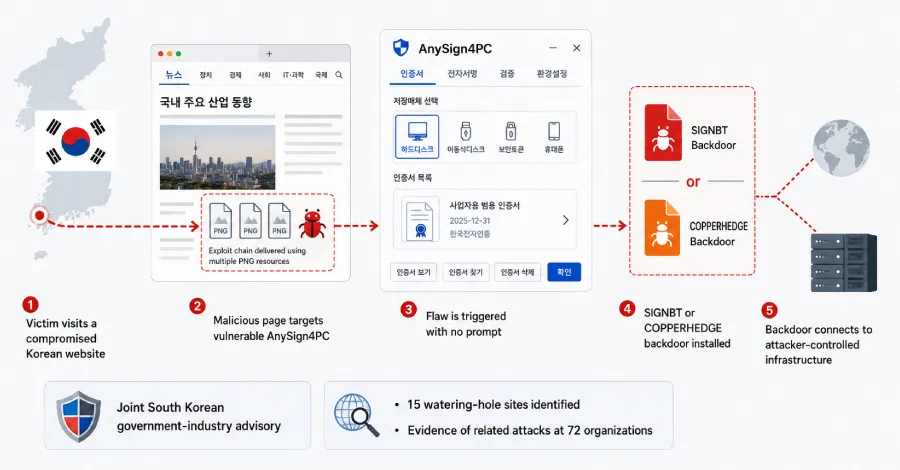
The digital landscape is ever-evolving, and with it, the tactics employed by cybercriminals continue to grow increasingly sophisticated. Recently, reports have surfaced about hackers exploiting vulnerabilities within software like AnySign4PC by infiltrating compromised Korean websites, allowing them to install backdoors without user prompts. This alarming trend illustrates the lengths hackers will go to disrupt organizations and steal sensitive data. In light of these developments, it’s imperative for businesses to fortify their cybersecurity measures and remain vigilant against emerging threats.
As artificial intelligence (AI) becomes a more integral tool in cybersecurity, it also presents new challenges. Hackers are now utilizing AI-driven models to identify and exploit software vulnerabilities at an unprecedented pace. In this article, we will delve deeper into the recent hacking strategies, the role of AI in cybersecurity, and provide actionable steps organizations can take to enhance their defenses against such threats.
Understanding the Threat: AnySign4PC Exploit
Recently, cybersecurity experts uncovered a series of attacks targeting AnySign4PC, a software application widely used for secure digital signing. The exploit works by leveraging vulnerabilities found in hacked Korean websites, which serve as the launching pad for installing malicious backdoors on unsuspecting users' systems.
The Mechanics of the Attack
In these attacks, hackers infiltrate legitimate websites to alter their content, adding malicious scripts. When users visit these compromised sites, the scripts execute automatically, allowing hackers to gain unauthorized access to their systems. This method of attack is particularly insidious because it requires no user interaction, making it difficult for individuals to recognize the breach until it's too late.
Why This Matters
The implications of such vulnerabilities extend beyond individual users; they can jeopardize entire organizations. For example, a successful backdoor installation can provide hackers with access to sensitive data, including customer information, financial records, and proprietary business secrets. The fallout from such breaches can include financial losses, reputational damage, and even legal repercussions.

The Role of AI in Cybersecurity
Artificial intelligence has revolutionized many sectors, and cybersecurity is no exception. AI models can analyze vast amounts of data to identify patterns and anomalies that may indicate a potential threat. However, this same technology is being harnessed by hackers to automate their attacks and enhance their effectiveness.
AI-Driven Exploits
Cybercriminals are increasingly utilizing AI to optimize their attacks. By employing machine learning algorithms, they can evaluate which vulnerabilities are most likely to be exploited and tailor their methods accordingly. This means that organizations must not only defend against traditional attacks but also adapt to a landscape where AI is a key player in cyber warfare.
The Need for Proactive Defense
In a world where AI can expedite the process of finding and exploiting vulnerabilities, organizations must adopt a proactive approach to cybersecurity. This includes not just implementing reactive measures but also anticipating potential threats and acting before they can be exploited.

Five Steps to Strengthen Your Cybersecurity
Given the rising sophistication of cyber threats, organizations must take decisive action to bolster their cybersecurity strategies. Here are five actionable steps that can significantly enhance your defenses against software vulnerabilities:
- Regular Software Updates: Ensure that all software applications, including operating systems, are regularly updated to patch known vulnerabilities.
- Implement Strong Access Controls: Limit access to sensitive information based on user roles and responsibilities to minimize exposure.
- Conduct Regular Security Audits: Regularly assess your security measures to identify and rectify vulnerabilities before they can be exploited.
- Utilize AI-Based Security Solutions: Leverage AI-driven tools that can analyze network traffic and user behavior to detect anomalies and potential threats.
- Educate Employees: Provide ongoing training for employees on recognizing phishing attempts and understanding the importance of cybersecurity protocols.

Key Takeaways
- Hackers are exploiting vulnerabilities in software like AnySign4PC via compromised websites.
- AI is playing a dual role in cybersecurity, both as a tool for defense and a weapon for attack.
- Organizations must adopt proactive measures to protect against evolving cyber threats.
- Regular software updates and employee training are crucial components of a robust cybersecurity strategy.
Frequently Asked Questions
What is the AnySign4PC exploit, and how does it work?
The AnySign4PC exploit involves hackers infiltrating compromised Korean websites to install backdoors on users' systems without their knowledge. This is achieved through malicious scripts that execute automatically when users visit these sites, allowing hackers to gain unauthorized access to sensitive information.
How can AI enhance cybersecurity?
AI enhances cybersecurity by analyzing large volumes of data to identify patterns and anomalies that may indicate potential security threats. It can also automate the detection of vulnerabilities and improve response times, thereby helping organizations to mitigate risks more effectively.
What steps should organizations take to protect themselves from cyber threats?
Organizations should implement a multi-faceted approach to cybersecurity that includes regular software updates, strong access controls, conducting security audits, leveraging AI-based security solutions, and employee education on recognizing potential threats.
Why is employee training important for cybersecurity?
Employee training is crucial because human error often leads to security breaches. By educating employees on the importance of cybersecurity practices and how to recognize potential threats, organizations can significantly reduce their risk of falling victim to cyber attacks.
Comments
Google's AI Revolutionizes Chrome Bug Fixes: A New Era in Cybersecurity
In a groundbreaking achievement, Google has leveraged AI to patch more security flaws in Chrome in June than in the past two years combined. This shift not only enhances user safety but also reshapes the cybersecurity landscape.

Related articles






Popular in Cybersecurity
- Federal Mandate for Autonomous Vehicles: A Call for Safety Compliance
- EU Mandates Google to Share Data and Open AI on Android: What It Means
- GitHub Revamps Bug Bounty Program: Implications for Developers and Security
- Australian Government Disables Thousands of Functional Broadband Routers: A Wasteful Decision
- Exploiting Redis: Understanding Zero-Day Vulnerabilities and Their Mitigation