Elon Musk’s xAI Faces Legal Challenges Over Grok Technology
Elon Musk’s xAI is embroiled in legal battles surrounding its Grok tool, facing scrutiny from Minnesota's new nudification ban. As lawsuits pile up, the implications for AI-generated content are significant.
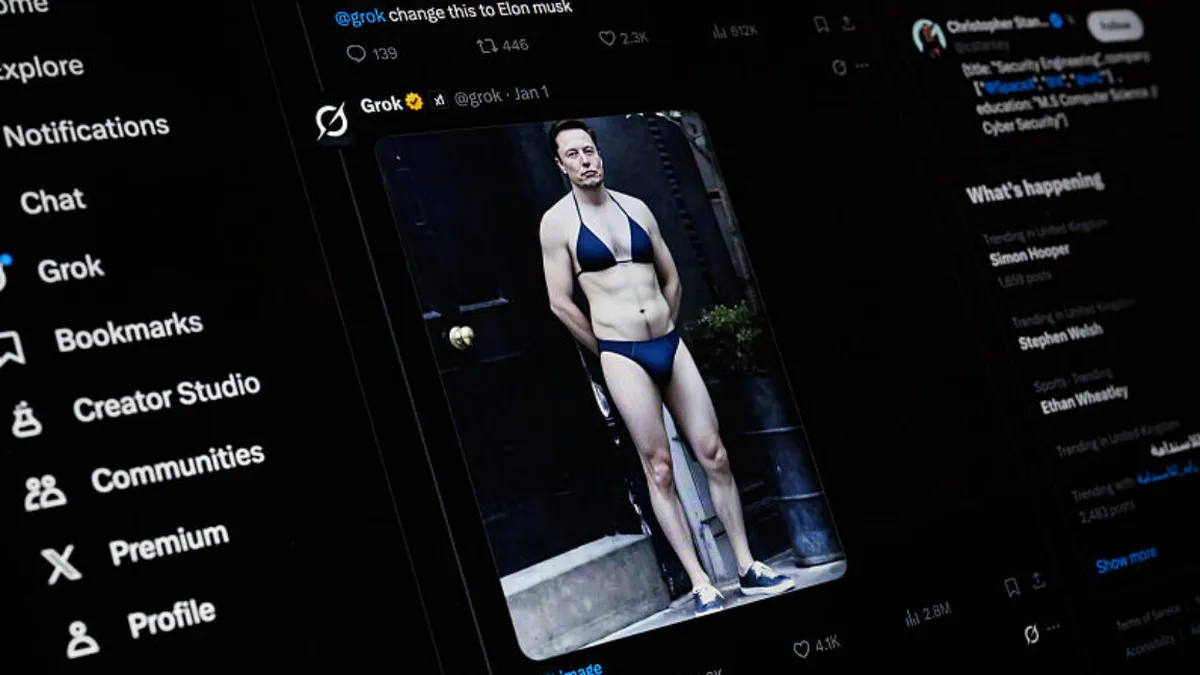
In a world increasingly dominated by artificial intelligence (AI), the intersection of technology and law has never been more contentious. Elon Musk's xAI, the company behind the AI tool Grok, is currently embroiled in a significant legal battle that raises critical questions about user rights, content moderation, and the implications of newly proposed legislation. As Grok faces scrutiny over its role in generating potentially harmful content, the ramifications extend beyond the courtroom, impacting how AI tools are designed and regulated.
The heart of the conflict lies in Minnesota's soon-to-be-implemented law aimed at prohibiting 'nudification' technology, which has sparked an intense legal showdown. With potential fines reaching up to $500,000 for each harmful output, xAI's response has been to launch lawsuits against users who allegedly exploit Grok to create illegal content, including child sexual exploitation materials (CSAM). The stakes could not be higher for xAI, as it grapples with the dual challenge of defending its technology while attempting to mitigate the legal and reputational risks associated with its use.

The Legal Landscape and xAI's Defensive Play
xAI's strategy appears to be one of preemptive legal action combined with a defense rooted in constitutional rights. The company has initiated lawsuits against users who are accused of circumventing the platform's safeguards, seemingly in an attempt to establish a legal precedent that would grant them a safe harbor from liability. By doing so, xAI aims to position itself as a responsible actor that actively punishes bad actors while defending the right to use its technology freely.
Concerns Over Minnesota's Law
As Minnesota's nudification law threatens to impose devastating financial penalties, xAI argues that the law is excessively punitive and fails to account for the complexities of AI-generated content. The company claims that the law lacks a necessary distribution requirement, meaning that fines could be levied even when harmful images are only viewed by a single user. This potentially opens the door for astronomical penalties—up to $50 billion—if Grok users were to generate a large volume of harmful outputs.
Implications for AI and User Rights
The legal challenges facing xAI are indicative of broader concerns within the tech industry regarding user rights and content moderation. The fines imposed by Minnesota’s law could fundamentally alter how AI tools operate, compelling companies to implement stricter regulations on user-generated content. xAI has expressed concern that the law could lead to a chilling effect on free expression, restricting artistic, educational, and political uses of AI technology.
First Amendment Arguments
Musk's firm is leveraging First Amendment arguments, asserting that the nudification law is an unconstitutional overreach that broadly targets protected speech. xAI contends that the law fails to distinguish between harmful and benign uses of AI-generated content, thus endangering a wide range of legitimate expressions. This raises critical questions about how states can regulate technology without infringing upon constitutional rights.

Public Backlash and Corporate Responsibility
Public opinion regarding AI technology, especially in sensitive areas like nudification and CSAM, is increasingly polarized. While many advocate for stringent regulations to protect vulnerable populations, others caution against overly restrictive measures that may stifle innovation and free speech. xAI's recent experiences highlight the precarious balance that must be struck between safeguarding individuals and promoting technological advancement.
The Role of Corporate Responsibility
In the face of legal challenges, xAI has been urged to take greater responsibility for the outputs generated by Grok. Critics argue that AI companies must implement robust safeguards to prevent misuse, particularly when it comes to sensitive content involving minors. As lawsuits from victims are filed, the pressure mounts for xAI to enhance its monitoring and moderation capabilities, a move that could impact its operational model and user engagement.

Future of AI Content Generation
The ongoing legal battles surrounding xAI’s Grok technology serve as a bellwether for the future of AI-generated content. As states like Minnesota push for stricter regulations, the tech industry must navigate a landscape fraught with uncertainty and potential liabilities. The outcome of these legal challenges could set significant precedents that shape the future of AI development and deployment.
Potential Legislative Changes
Should xAI succeed in its arguments against Minnesota's law, it could pave the way for a more permissive regulatory environment for AI tools. However, if the courts uphold the law, it could signal a shift toward stricter oversight of AI technologies, compelling companies to rethink their content moderation strategies and user agreements. Ultimately, the resolution of these legal disputes will likely have lasting implications for both technology and society.
Key Takeaways
- xAI's Grok is facing legal challenges due to Minnesota's nudification law.
- Potential fines for harmful outputs could reach up to $500,000 per incident.
- First Amendment protections are central to xAI's defense strategy.
- Public opinion is divided on the regulation of AI-generated content.
- The outcome could reshape the future of AI technology and user rights.
Frequently Asked Questions
What is the Grok tool, and how does it function?
Grok is an AI tool developed by xAI that enables users to generate and modify images based on various prompts. It leverages machine learning algorithms to create outputs that can range from artistic representations to more controversial content. The technology has come under scrutiny for its potential misuse, particularly regarding the generation of non-consensual or harmful images.
What are the implications of Minnesota’s nudification law for AI companies?
Minnesota’s nudification law could impose severe penalties on AI companies like xAI if harmful outputs are generated through their platforms. The law aims to prevent the creation and distribution of non-consensual images, but critics argue that its broad definitions may inadvertently target legitimate uses of AI technology, leading to a chilling effect on free expression and innovation.
How is xAI responding to the lawsuits and legal challenges?
xAI is proactively suing users accused of generating harmful content while simultaneously defending its technology against Minnesota's nudification law. By arguing for First Amendment protections and highlighting the excessive nature of the proposed fines, xAI seeks to establish a legal precedent that could protect its interests and those of its users.
What does the future hold for AI-generated content?
The future of AI-generated content is uncertain as legal frameworks evolve to address the challenges posed by new technologies. Depending on the outcomes of ongoing legal disputes, there may be a shift toward stricter regulations or, conversely, a more permissive environment that encourages innovation. The resolution of these issues will play a crucial role in shaping the landscape of AI development and its societal implications.
Comments
How Cybercriminals Exploit Cloned Sites: Understanding the Threat Landscape
A recent nine-year fraud campaign highlights the alarming trend of cybercriminals cloning websites to steal advance payments. This article explores the implications of such tactics, how AI models are shaping cybersecurity, and critical steps businesses can take to protect themselves.

Related articles






Popular in Cybersecurity
- Federal Mandate for Autonomous Vehicles: A Call for Safety Compliance
- EU Mandates Google to Share Data and Open AI on Android: What It Means
- GitHub Revamps Bug Bounty Program: Implications for Developers and Security
- Australian Government Disables Thousands of Functional Broadband Routers: A Wasteful Decision
- Exploiting Redis: Understanding Zero-Day Vulnerabilities and Their Mitigation