Mitigating Gitea RCE: Understanding and Securing Your Repositories
Recent vulnerabilities in Gitea have raised alarms about remote code execution risks. This article explores what this means for users and how to protect your repositories from exploitation.
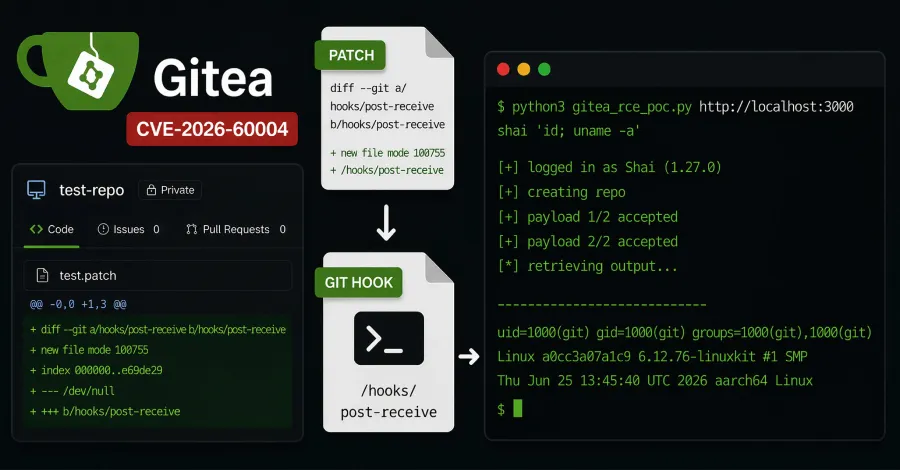
The recent discovery of a remote code execution (RCE) vulnerability in Gitea, an open-source Git service, has sent shockwaves through the developer community. The flaw allows repository writers to plant malicious Git hooks that can execute shell commands on the server, creating a significant security risk for organizations using this platform. As developers increasingly rely on Git for version control and collaboration, understanding the implications of this vulnerability and implementing robust security measures is crucial.
With the rise of artificial intelligence in cybersecurity, organizations have new tools at their disposal to mitigate these risks. By leveraging AI-driven security models, developers can better protect their codebases while ensuring that their software development lifecycle remains uninterrupted. In this article, we will delve deeper into the Gitea vulnerability, the mechanics behind it, and the steps you can take to secure your repositories against such threats.
Understanding Gitea and Its Vulnerability
Gitea is a lightweight, self-hosted Git service that offers a user-friendly interface for managing Git repositories. As an open-source project, it has gained immense popularity among developers who prefer a simple and efficient alternative to larger platforms like GitHub or GitLab. However, the recent RCE vulnerability has put a spotlight on potential security risks associated with using Gitea.
The Mechanics of the RCE Vulnerability
The vulnerability arises from how Gitea handles Git hooks—scripts that are triggered by certain Git events, such as pushes or merges. In this case, an attacker with write access to a repository could create a malicious hook that executes arbitrary shell commands when triggered. This could allow the attacker to gain control of the server, exfiltrate sensitive data, or even deploy malware.
To put this in perspective, imagine a scenario where a developer unknowingly pulls code from a compromised repository. If this repository contains a malicious hook, executing a simple Git command could inadvertently grant the attacker access to the server environment. This illustrates the importance of rigorous access controls and vigilant monitoring of repository activity.
Immediate Actions to Secure Your Gitea Instances
Organizations using Gitea should act swiftly to mitigate the risks associated with this vulnerability. Here are five crucial steps to enhance security:
- Review Repository Access: Limit write access to trusted contributors only. Implement role-based access control (RBAC) to ensure that only authorized users can modify repositories.
- Update Gitea: Always keep your Gitea instance updated to the latest version, as security patches and fixes are regularly released by the development team.
- Monitor Git Hooks: Regularly audit and review the Git hooks present in your repositories. Implement policies that restrict the execution of hooks unless explicitly approved.
- Implement Code Reviews: Establish a thorough code review process to scrutinize changes before they are merged into the main branch. This adds an additional layer of protection against malicious code.
- Leverage AI Security Tools: Utilize AI-driven security solutions that can analyze repository activities, detect anomalies, and alert administrators to potential threats.
The Role of AI in Cybersecurity
As the threat landscape continues to evolve, artificial intelligence is becoming an increasingly valuable ally in cybersecurity. AI models can analyze vast amounts of data at unprecedented speeds, identifying patterns and anomalies that human analysts might overlook. This capability is particularly useful in the context of code repositories, where timely detection of vulnerabilities can prevent significant damage.
AI-Driven Security Solutions
Several AI-driven security tools are emerging in the market that can help organizations safeguard their code repositories. These tools can perform tasks such as:
- Behavioral Analysis: Monitoring user behavior to detect unusual activities that could indicate a security breach.
- Automated Threat Detection: Scanning code repositories for known vulnerabilities and alerting developers about potential risks.
- Incident Response: Providing automated responses to detected threats, helping to mitigate damage quickly.
By integrating these AI tools into their development workflows, organizations can enhance their security posture and reduce the likelihood of falling victim to attacks that exploit vulnerabilities like the one discovered in Gitea.

Long-Term Security Strategies
While immediate actions are essential, organizations must also adopt long-term security strategies to maintain a resilient posture against evolving threats. Here are some recommendations:
Security Training and Awareness
Investing in security training for developers is critical. Educating staff on secure coding practices, the importance of access controls, and recognizing potential threats can significantly reduce the risk of exploitation. Regular training programs can keep your team informed about the latest security trends and best practices.
Establishing a Security Culture
Creating a culture of security within the organization encourages all employees to prioritize security in their daily tasks. This can be achieved through proactive communication channels, regular security updates, and fostering an environment where team members feel empowered to report potential security issues.

Key Takeaways
- Gitea's recent RCE vulnerability highlights the risks of Git hooks.
- Implement strict access controls and regularly review repository settings.
- Utilize AI-driven security tools for enhanced threat detection.
- Invest in ongoing security training for development teams.
Frequently Asked Questions
What is Gitea, and why is it popular among developers?
Gitea is a lightweight and self-hosted Git service that provides an easy-to-use interface for managing Git repositories. Its popularity stems from its simplicity, efficiency, and the fact that it is open-source, allowing developers to customize and host their own Git services without relying on third-party platforms.
How can I check if my Gitea instance is vulnerable?
To determine if your Gitea instance is vulnerable, check the version you are running against the latest releases and security advisories from the Gitea development team. If you are running an outdated version, consider updating immediately to mitigate potential risks.
What are Git hooks, and how can they be exploited?
Git hooks are scripts that execute automatically on specific Git events, such as commits or pushes. If an attacker gains write access to a repository, they can modify or create malicious hooks that execute harmful commands on the server, leading to serious security breaches.
Comments
US Government Bans Foreign-Made Humanoids, Robot Dogs, and Solar Inverters
In a bold move to secure national interests, the U.S. government has banned the import of foreign-made humanoid robots, robot dogs, and solar inverters, primarily targeting Chinese manufacturers. This decision reflects growing concerns over cybersecurity and surveillance risks.

Related articles




Popular in Cybersecurity
- Federal Mandate for Autonomous Vehicles: A Call for Safety Compliance
- EU Mandates Google to Share Data and Open AI on Android: What It Means
- GitHub Revamps Bug Bounty Program: Implications for Developers and Security
- Australian Government Disables Thousands of Functional Broadband Routers: A Wasteful Decision
- Exploiting Redis: Understanding Zero-Day Vulnerabilities and Their Mitigation