Ukraine's Innovative Use of Drones and Robots in Modern Warfare
Ukraine's military is leveraging drones and ground robots to conduct innovative assaults, showcasing a new era of warfare. This article explores the implications, tactics, and effectiveness of these technologies on the battlefield.
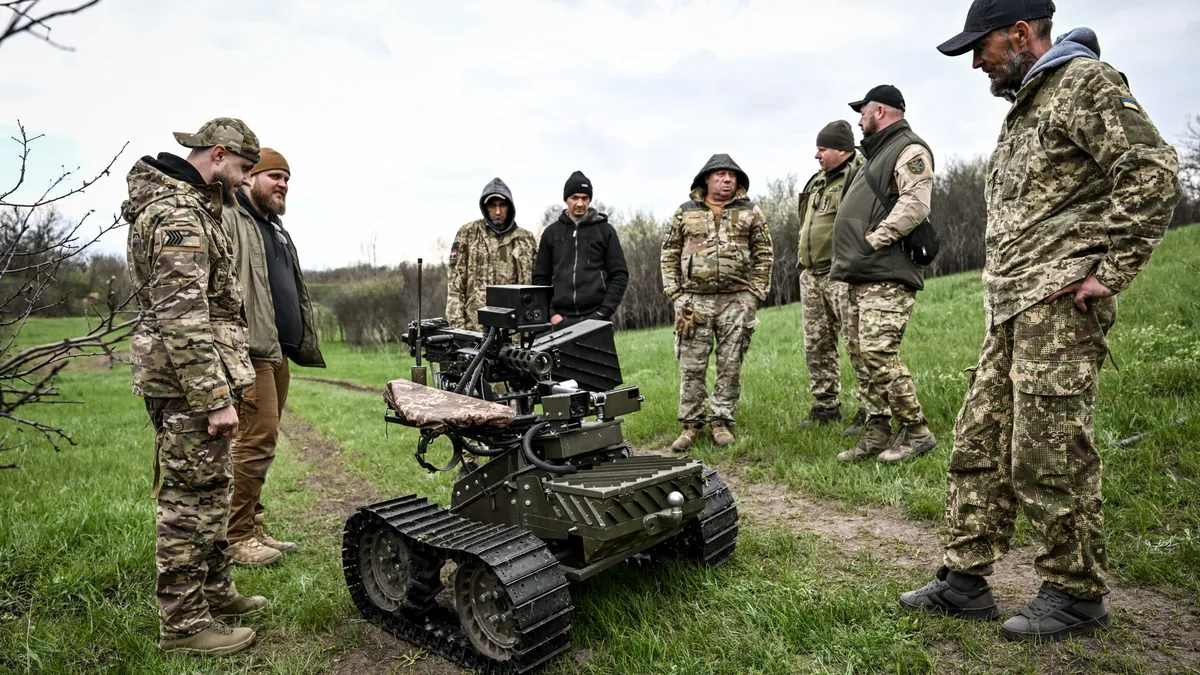
The landscape of modern warfare is evolving at an unprecedented pace, and at the forefront of this transformation is Ukraine. Since the onset of Russia's full-scale invasion in February 2022, Ukraine has harnessed cutting-edge technologies—particularly drones and ground robots—to confront and counteract a larger and more traditional military force. The latest reports reveal that Ukrainian forces are deploying flying drone carriers and drone boats to deliver ground robots directly into battle, marking a significant shift in tactical approaches on the battlefield. This innovative use of technology allows for more strategic assaults, minimizes risk to human soldiers, and showcases the resilience and adaptability of Ukraine’s military.
As of mid-2026, Ukrainian military operations have seen a dramatic increase in the use of robotic systems. These advancements are not merely about technology; they represent a shift in how warfare is conducted, emphasizing agility, speed, and the element of surprise. This article delves into the mechanics of these robotic deployments, their operational successes, and the broader implications for military strategy and international relations.
The Emergence of Robotic Warfare
Ukraine's adoption of robotic warfare tactics can be traced back to late 2025, when the military began ramping up its use of ground robots in various operations. By June 2026, reports indicated that Ukrainian forces had executed over 16,600 robotic missions, a significant increase from just under 7,500 missions at the beginning of the year. These robots have been deployed for a variety of tasks, including:
- Transporting supplies to frontline troops
- Evacuating wounded soldiers
- Clearing or laying mines
- Engaging in direct combat operations
This surge in robotic missions has been facilitated by a combination of technological advancements and tactical necessity. With Russian forces maintaining a significant numerical advantage, Ukraine's military has turned to robotics and drones to level the playing field.
Innovative Tactics: Airdrops and Amphibious Assaults
One of the most striking developments in Ukraine's use of robotic technology has been the implementation of airdrops and amphibious assaults. For instance, on July 19, a video surfaced on a Russian Telegram channel showing a Ukrainian hexacopter drone deploying a four-wheeled ARK-1 robot, equipped with explosive anti-tank mines. This type of deployment allows ground robots to bypass challenging terrain and evade detection by Russian forces. The ARK-1 can reach speeds of nearly 28 miles per hour, making it a formidable asset on the battlefield.
In a notable operation on June 25, Ukrainian forces employed a drone boat to deliver a ground robot to the contested Kinburn Spit, a strategic location that extends into the Black Sea. This operation was significant not only because of the successful deployment but also due to the robot's ability to engage in combat, firing its machine gun amid ongoing skirmishes and allowing Ukrainian troops to plant their flag in the area.

Strategic Advantages of Robotic Warfare
The tactical advantages of employing drones and robots are manifold. Firstly, these technologies allow for:
- Reduced Risk to Human Life: By deploying robots, Ukraine can engage in operations that might otherwise result in significant casualties among its soldiers.
- Increased Operational Reach: Robots can traverse terrain that may be too dangerous or inaccessible for human troops, allowing for strategic maneuvers that put pressure on Russian positions.
- Enhanced Intelligence Gathering: Drones can provide real-time aerial reconnaissance, helping to inform tactical decisions and minimize the element of surprise for opposing forces.
Moreover, the ability to deploy robots via drones also enhances their survivability. Ground robots can evade aerial surveillance and drone strikes, effectively closing in on targets more quickly and quietly.
International Implications and Future Prospects
The implications of Ukraine's robotic warfare tactics extend far beyond its borders. As the conflict evolves, other nations are closely monitoring Ukraine's innovations. The U.S. military, for example, has been observing Ukraine's drone strategies and has even deployed its own kamikaze drone boats in conflicts, indicating a growing recognition of the effectiveness of these technologies. Additionally, military analysts are predicting a broader shift in how countries will approach warfare, with an increased emphasis on unmanned systems and advanced technologies.
However, the landscape of drone warfare is not without its challenges. The Russian military has begun to adopt similar tactics, utilizing its own carrier drones to deliver weapons and supplies. This mutual escalation raises questions about the future of drone warfare and the potential for new arms races centered around unmanned systems.
Key Takeaways
- Ukraine's military has significantly increased its use of drones and ground robots, executing over 16,600 missions in recent months.
- Innovative tactics, such as airdrops and amphibious assaults, demonstrate the effectiveness of robotic deployments in combat.
- The use of robots reduces the risk to human soldiers while enhancing operational capabilities.
- This shift in warfare tactics is attracting international attention and may influence future military strategies globally.
Frequently Asked Questions
How effective are drones and robots in modern warfare?
Drones and robots have proven to be highly effective in modern warfare, particularly in asymmetric conflicts where one side possesses a numerical disadvantage. They allow for strategic engagements, minimize risks to human life, and can perform missions in environments that are hazardous to human soldiers. Ukraine's utilization of these technologies has demonstrated their potential to alter the dynamics of battlefield engagements significantly.
What are the main challenges faced by robotic warfare?
While robotic warfare offers numerous advantages, it also presents challenges, including vulnerabilities to electronic warfare, the potential for malfunction, and the need for robust command-and-control systems. As both Ukraine and Russia enhance their robotic capabilities, the battlefield may become increasingly contested, leading to a race for technological superiority.
What can we expect from the future of warfare?
The future of warfare is likely to see an increasing reliance on unmanned systems, with countries investing heavily in drone technology and robotics. As nations observe the outcomes of conflicts like the one in Ukraine, we may see shifts in military doctrines that prioritize the use of autonomous systems for reconnaissance, logistics, and direct combat.
Comments
How to Protect Your Data from Emerging Cybersecurity Threats
Recent vulnerabilities in widely-used software like Adobe Acrobat have highlighted the urgent need for robust cybersecurity measures. This article explores how organizations can safeguard against these threats and outlines practical steps to enhance security.

Related articles







Popular in Cybersecurity
- Federal Mandate for Autonomous Vehicles: A Call for Safety Compliance
- EU Mandates Google to Share Data and Open AI on Android: What It Means
- GitHub Revamps Bug Bounty Program: Implications for Developers and Security
- Australian Government Disables Thousands of Functional Broadband Routers: A Wasteful Decision
- Exploiting Redis: Understanding Zero-Day Vulnerabilities and Their Mitigation