The Rising Threat of NadMesh Botnet: Safeguarding AI Services
The NadMesh botnet is targeting exposed AI services, with a focus on stealing cloud keys and Kubernetes tokens. Organizations must adopt robust security measures to defend against this new threat.
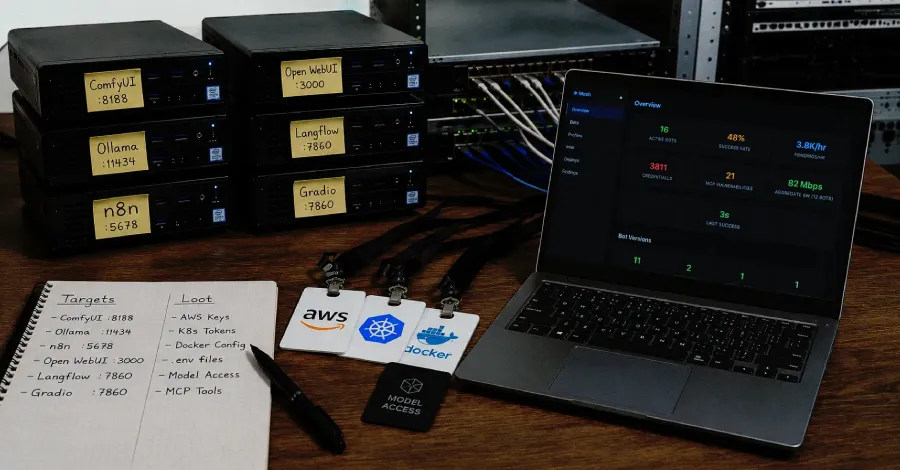
As artificial intelligence (AI) continues to transform the landscape of technology, it has also caught the attention of cybercriminals. The recently identified NadMesh botnet exemplifies this dual-edged sword, hunting for exposed AI services with the intent of pilfering sensitive cloud keys and Kubernetes tokens. As organizations increasingly leverage AI for their operations, understanding this threat and implementing robust security measures becomes paramount.
The NadMesh botnet is not just another malware variant; it represents a new wave of cyber threats that utilize AI capabilities to enhance their effectiveness. By specifically targeting AI services that are inadequately secured, NadMesh highlights the vulnerabilities that can arise when businesses rush to adopt new technologies without implementing necessary safeguards. The implications of these attacks can be severe, potentially leading to data breaches, unauthorized access to cloud infrastructures, and significant financial losses.
The NadMesh Botnet: A New Breed of Threat
While botnets are not a new phenomenon, NadMesh distinguishes itself by its specific targeting of AI services. It employs sophisticated techniques to search for exposed services and identifies weak points in cloud infrastructures. Understanding how NadMesh operates is essential for organizations that rely on AI technologies.
How NadMesh Works
The NadMesh botnet employs advanced scanning algorithms to identify vulnerable AI services. Once it locates these services, it can exploit vulnerabilities, often using brute force methods to gain access to cloud keys and Kubernetes tokens. This access can then be leveraged to manipulate cloud resources, deploy malicious software, or even launch further attacks against other targets.

The Importance of Securing AI Services
With the rise of AI technologies, the potential for exploitation escalates. Organizations must recognize that the adoption of AI should not come at the cost of security. The consequences of failing to secure AI services can be catastrophic.
Potential Consequences of NadMesh Attacks
- Data Breaches: Unauthorized access to sensitive information can lead to significant data breaches, compromising user data and organizational secrets.
- Financial Loss: Organizations may face substantial financial losses, not only from theft but also from regulatory fines and reputational damage.
- Operational Disruption: Attacks can lead to downtime, impacting business operations and leading to further losses.
Steps to Secure Against Software Vulnerabilities
To defend against threats like the NadMesh botnet, organizations must adopt a proactive approach to security. Here are five vital steps that can help safeguard AI services:
1. Conduct Regular Security Audits
Regularly assess your AI services for vulnerabilities. This includes scanning for exposed endpoints and misconfigured settings that could be exploited by attackers.
2. Implement Strong Authentication Mechanisms
Ensure that all access points to AI services are protected with strong authentication methods, such as multi-factor authentication (MFA), to limit unauthorized access.
3. Use Encryption for Sensitive Data
Encrypt sensitive data, both in transit and at rest, to protect it even if an attacker gains access to your systems.
4. Monitor for Anomalous Activity
Employ monitoring tools that can detect unusual activities or access patterns, allowing for early identification of potential breaches.
5. Train Employees on Cybersecurity Best Practices
Educate your staff about the risks associated with AI and cybersecurity best practices to foster a culture of security awareness.

The Role of AI in Enhancing Cybersecurity
Interestingly, while AI is being used by cybercriminals, it can also be harnessed as a powerful tool in the fight against cyber threats. AI-driven security solutions can analyze vast amounts of data to identify patterns and predict potential vulnerabilities before they are exploited.
AI-Powered Threat Detection
Utilizing AI for threat detection can bolster an organization’s defenses. AI systems can learn from previous attacks to improve detection capabilities and respond to threats in real-time, significantly reducing response times and minimizing damage.

Key Takeaways
- The NadMesh botnet specifically targets exposed AI services, posing significant risks to organizations.
- Understanding how NadMesh operates is crucial for implementing effective countermeasures.
- Proactive security measures, including regular audits and strong authentication, are essential to protecting AI services.
- AI technology can both enable cyber threats and enhance cybersecurity measures.
Frequently Asked Questions
What is the NadMesh botnet?
The NadMesh botnet is a sophisticated piece of malware that specifically targets exposed AI services. It utilizes advanced techniques to scan for vulnerabilities in cloud infrastructures, allowing cybercriminals to access sensitive information such as cloud keys and Kubernetes tokens.
How can organizations protect themselves from NadMesh attacks?
Organizations can mitigate the risks posed by the NadMesh botnet by implementing strong security measures, including conducting regular security audits, utilizing strong authentication methods, encrypting sensitive data, monitoring for unusual activities, and educating employees about cybersecurity best practices.
Can AI be used to enhance cybersecurity?
Yes, AI can play a vital role in enhancing cybersecurity. AI-driven solutions can analyze large volumes of data to identify patterns indicative of potential threats, enabling faster detection and response to cyber incidents. This duality of AI—being both a tool for attackers and defenders—highlights the importance of robust cybersecurity strategies in an increasingly AI-driven world.
Comments
Christopher Nolan's Cautionary Tale: AI as a Modern Trojan Horse
Oscar-winning director Christopher Nolan warns that artificial intelligence could serve as a 'Trojan horse,' masking deeper societal threats. His views reflect a growing skepticism of AI, especially among younger generations, and highlight the need for critical engagement with emerging technologies.

Related articles






Popular in Cybersecurity
- Federal Mandate for Autonomous Vehicles: A Call for Safety Compliance
- EU Mandates Google to Share Data and Open AI on Android: What It Means
- GitHub Revamps Bug Bounty Program: Implications for Developers and Security
- Australian Government Disables Thousands of Functional Broadband Routers: A Wasteful Decision
- Exploiting Redis: Understanding Zero-Day Vulnerabilities and Their Mitigation