Emerging Cybersecurity Threats: Securing Against AI-Driven Vulnerabilities
As AI tools evolve, so do the vulnerabilities they expose in software systems. This article explores recent threats and offers actionable steps for organizations to enhance their security posture.
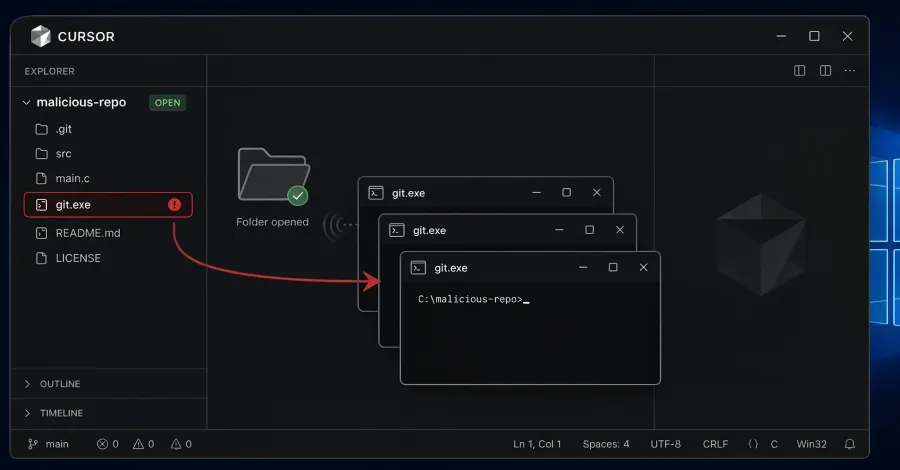
The rise of artificial intelligence (AI) in software development and cybersecurity has revolutionized the way we approach coding, testing, and securing applications. However, this technological advancement also brings new vulnerabilities, as evidenced by a recent flaw that allows malicious actors to exploit cloned repositories on Windows systems. This situation underscores the importance of proactive security measures in the software development lifecycle.
As more organizations leverage AI to enhance their operational capabilities, it’s crucial to understand the risks associated with these technologies. The implications of AI vulnerabilities extend beyond individual organizations; they can affect entire ecosystems, including cloud platforms, open-source libraries, and business-critical applications. In this article, we will delve into how these vulnerabilities manifest, the specific case of the cursor flaw, and the essential steps organizations can take to mitigate such risks.

The Cursor Flaw: A Case Study
Recently, a serious vulnerability was discovered related to cursor functionality in Windows environments. This flaw allows malicious cloned repositories to execute arbitrary code, posing significant risks to systems that rely on these repositories for development and deployment. The flaw exploits how cursor data is processed, enabling attackers to manipulate software behavior by injecting harmful code through seemingly benign repository clones.
Understanding the Mechanism
The cursor flaw operates under a specific set of conditions, primarily affecting developers and organizations that utilize version control systems (VCS) such as Git. When a repository is cloned, the application inadvertently processes custom cursor settings, which can be exploited to trigger unintended code execution. This means that an unsuspecting developer might inadvertently run malicious code simply by interacting with a compromised repository.
Impacts of AI-Driven Vulnerabilities
The integration of AI into software development has undoubtedly enhanced productivity and efficiency. However, it has also led to a new wave of vulnerabilities that traditional security practices may not adequately address. Some of the impacts of AI-driven vulnerabilities include:
- Increased Attack Surface: With AI tools automating various aspects of coding, the potential for introducing flaws increases.
- Speed of Exploitation: Attackers can leverage AI to identify and exploit vulnerabilities faster than the typical patching cycle.
- Dependency Risks: Open-source libraries, often powered by AI, may contain vulnerabilities that can propagate across multiple systems.
Five Steps to Mitigate Risks
Organizations must take a proactive approach to secure their software against vulnerabilities exacerbated by AI. Here are five essential steps to consider:
1. Implement Rigorous Code Reviews
Regular code reviews should be an integral part of the development process. This includes not only peer reviews but also the use of automated tools that can identify potential security issues early in the coding phase. By scrutinizing code for vulnerabilities, organizations can reduce the likelihood of flaws being introduced into production.
2. Adopt Secure Coding Practices
Training developers in secure coding practices is vital. This includes educating them about common vulnerabilities like SQL injection, cross-site scripting, and the specific risks associated with AI-generated code. Awareness is the first step in preventing vulnerabilities.
3. Utilize Dependency Scanning Tools
Organizations should incorporate tools that scan for vulnerabilities in open-source dependencies. Many AI-generated libraries can contain flaws that are not immediately apparent, so utilizing tools that automatically identify and alert teams to these risks can mitigate exposure.
4. Regularly Update and Patch Software
Timely updates and patches are crucial in maintaining software security. Organizations should establish a routine for applying security updates to their software and dependencies. This practice helps close known vulnerabilities before they can be exploited.
5. Monitor and Audit Systems Continuously
Continuous monitoring and auditing of systems can help organizations detect and respond to security threats in real time. Implementing security information and event management (SIEM) solutions can provide valuable insights into potential breaches, allowing teams to act swiftly.

Key Takeaways
- AI introduces new vulnerabilities in software systems, requiring heightened security measures.
- The recent cursor flaw exemplifies how malicious actors can exploit cloned repositories.
- Implementing rigorous code reviews and secure coding practices can mitigate risks.
- Continuous monitoring and timely updates are essential to safeguard systems against exploitation.
- Educating teams about AI-generated code risks is crucial for proactive defense.
Frequently Asked Questions
What is the cursor flaw, and why is it significant?
The cursor flaw is a vulnerability discovered in Windows that allows malicious cloned repositories to execute arbitrary code. It is significant because it highlights the risks associated with version control systems and the potential for AI-generated code to introduce unforeseen security issues.
How can organizations protect themselves from AI-driven vulnerabilities?
Organizations can protect themselves by implementing rigorous code reviews, adopting secure coding practices, using dependency scanning tools, ensuring timely updates and patches, and continuously monitoring their systems for suspicious activity. These measures can help identify and mitigate risks associated with AI vulnerabilities.
Are AI-driven vulnerabilities unique to certain types of software?
No, AI-driven vulnerabilities can affect various types of software, including web applications, mobile apps, and even enterprise systems. As AI becomes more integrated into development processes, the risk of introducing vulnerabilities exists across the entire software landscape.
Comments
Exploiting Vulnerabilities: Understanding SonicWall's SMA 1000 Threats
Recent zero-day vulnerabilities in SonicWall's SMA 1000 series have raised alarms in the cybersecurity landscape. Organizations must act swiftly to secure their systems against these threats.

Related articles




Popular in Cybersecurity
- Federal Mandate for Autonomous Vehicles: A Call for Safety Compliance
- EU Mandates Google to Share Data and Open AI on Android: What It Means
- GitHub Revamps Bug Bounty Program: Implications for Developers and Security
- Australian Government Disables Thousands of Functional Broadband Routers: A Wasteful Decision
- Exploiting Redis: Understanding Zero-Day Vulnerabilities and Their Mitigation