The Impact of AI on Entry-Level Jobs: A Deep Dive into the Stanford Study
A recent Stanford study reveals that AI is disproportionately affecting entry-level jobs, particularly for younger workers. As automation rises, the employment landscape is changing dramatically, raising concerns for future job seekers.
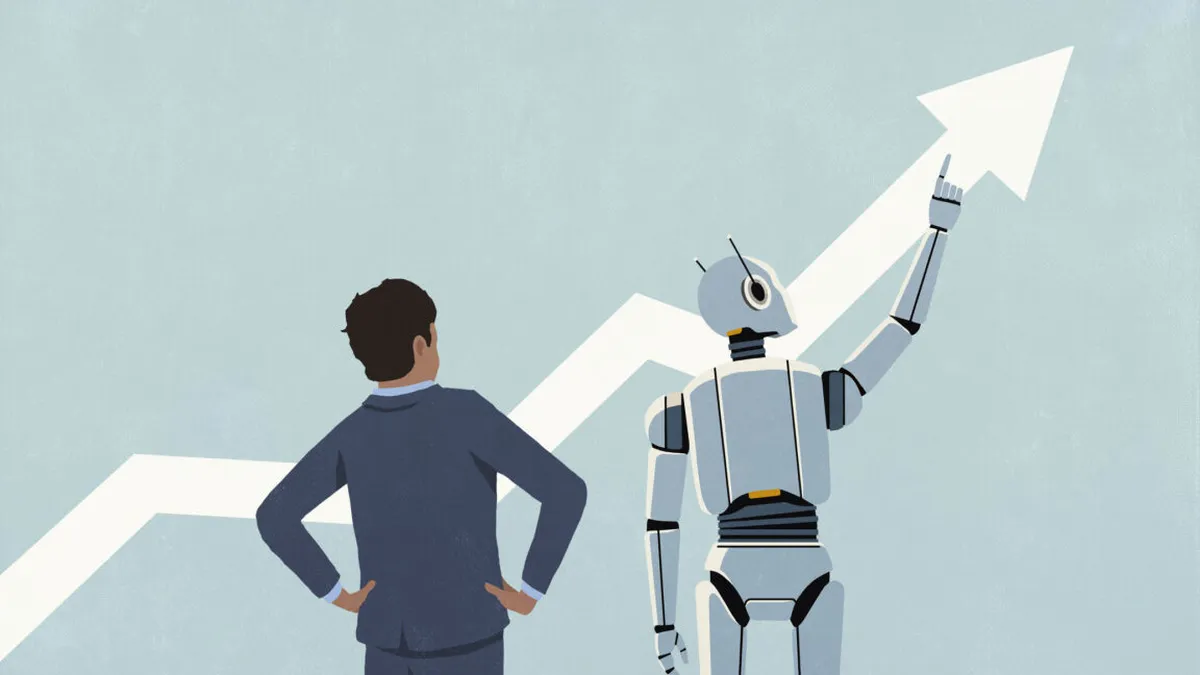
The introduction of artificial intelligence (AI) into the workforce has ignited debates about its potential to disrupt traditional employment structures. A recent study by Stanford University economists adds a new dimension to these discussions, revealing that AI is specifically hitting entry-level jobs the hardest. While older workers remain largely unaffected, those aged 22 to 25 are witnessing a troubling decline in employment opportunities in AI-impacted fields. This trend raises questions about the future job market for younger generations and the long-term implications of AI on employment.
In the August 2026 edition of the paper titled “Canaries in the Coal Mine? Six Facts about the Recent Employment Effects of Artificial Intelligence,” the researchers present updated data that underscores the widening gap in employment based on AI exposure. The findings indicate that young workers in the most AI-exposed occupations are experiencing a staggering **19% drop** in employment compared to their peers in less impacted fields, up from a **13% decline** noted in the previous year.
Understanding AI's Disruption: The Research Methodology
The Stanford researchers utilized a comprehensive analysis of anonymized payroll data sourced from ADP, a well-known HR management company. This data allowed them to evaluate employment trends across a wide range of occupations, categorizing them based on their susceptibility to AI disruption. To gauge the level of exposure, they employed metrics from prior studies as well as the Anthropic Economic Index, which assesses how various jobs utilize AI technologies in their daily operations.
For instance, positions such as “accountants and auditors” and “receptionists” rank high on the scale of AI automation susceptibility, while roles like “chief executives” and “registered nurses” are more oriented toward AI augmentation, enhancing human capabilities rather than replacing them outright. This distinction is crucial, as the research indicates that jobs with a high degree of automation are the ones with the most significant decline in entry-level employment.

The Employment Gap: AI's Disproportionate Impact on Young Workers
The data reveals a stark contrast between entry-level employment trends in AI-heavy fields and those that are less affected. Specifically, employment levels for young workers in the top 40% of AI-impacted jobs have plummeted by **11%** since 2022, while jobs in the bottom 60%, which are less susceptible to AI, saw a **10% increase** in employment during the same time frame. This divergence highlights the increasing difficulties faced by younger professionals trying to enter the workforce.
Interestingly, the study suggests that the decline in entry-level job availability is not primarily due to layoffs or resignations but rather reflects lower hiring rates in AI-impacted sectors. Despite the decrease in job opportunities, the researchers noted that pay rates have not significantly dropped, indicating that AI's impact is manifesting more through hiring practices than through wage reductions.
Codified vs. Tacit Knowledge: A Key Distinction
One of the critical insights from the study is the differentiation between jobs that rely on codified knowledge and those that depend on tacit knowledge. Codified knowledge refers to formal, standardized information that can be easily documented and taught through educational means. In contrast, tacit knowledge is acquired through experience, mentorship, and hands-on practice.
The researchers argue that younger workers, who often occupy entry-level positions, are more likely to be found in roles that require codified knowledge, making them particularly vulnerable to AI disruption. For example, roles in data entry, customer service, and basic accounting often require skills that can be easily automated. Conversely, jobs that rely on tacit knowledge, such as those in healthcare or skilled trades, have shown more resilience against AI threats.

The Role of Education in Mitigating AI’s Impact
Another noteworthy finding from the study is the potential mitigating effect of higher education on the employment trends observed among young workers. The data indicates that occupations with a higher proportion of college graduates demonstrate more muted differences in employment levels between AI-exposed and less-exposed fields. This suggests that education may serve as a buffer against the adverse effects of AI on job availability.
In essence, the research posits that as the demand for skilled labor increases, those equipped with advanced degrees may find themselves better positioned in the labor market. Conversely, in fields with lower educational requirements, a stark contrast emerges: while entry-level jobs in less AI-exposed roles are growing, those in more exposed fields are declining. This phenomenon raises concerns about the future employability of younger workers who may not have the educational credentials to compete effectively.

Future Outlook: A Widening Employment Gap
Lead researcher Erik Brynjolfsson emphasizes the urgency of the situation, indicating that the trends observed could lead to a labor market where jobs held by older workers remain stable while entry-level positions for younger generations dwindle. This pattern could create a precarious environment for those entering the workforce, as the traditional pathways to career advancement become increasingly limited.
Moreover, as companies continue to integrate AI into their operations, the need for adaptability and continuous learning becomes paramount. Young workers must prepare to navigate a landscape where AI is not merely a tool but a significant player in determining job availability and career trajectories. This evolving environment requires a proactive approach to skill development, emphasizing the importance of lifelong learning and adaptability in the face of rapid technological change.
Key Takeaways
- 19% decline in entry-level jobs for young workers in AI-impacted fields since 2022.
- Employment growth of 10% in occupations less affected by AI.
- Lower hiring rates, not layoffs, primarily drive the decline in entry-level employment.
- Higher education serves as a buffer against AI's negative employment effects.
- Jobs requiring codified knowledge are more vulnerable to AI disruption than those relying on tacit knowledge.
Frequently Asked Questions
What types of jobs are most affected by AI?
Jobs that involve routine, repetitive tasks are most susceptible to AI disruption. Positions such as data entry clerks, customer service representatives, and basic accounting roles are examples where AI can easily automate tasks that were previously performed by humans. In contrast, jobs requiring a higher degree of critical thinking, creativity, and human interaction, such as roles in healthcare or leadership, are less affected.
How can young workers prepare for an AI-driven job market?
Young workers can enhance their employability in an AI-driven market by pursuing higher education and engaging in continuous skill development. Emphasizing skills such as critical thinking, creativity, and emotional intelligence can make them more attractive to employers. Additionally, gaining hands-on experience through internships or apprenticeships can help them navigate the evolving landscape effectively.
What should policymakers do in response to these trends?
Policymakers should consider implementing education and retraining programs aimed at equipping workers with skills that are less susceptible to automation. Investing in vocational training, emphasizing STEM education, and promoting lifelong learning initiatives can help bridge the gap between the skills offered by the workforce and the demands of an AI-integrated economy.
Comments
Uber's New Live Video Streaming: Enhancing Teen Ride Safety
Uber has introduced a live video streaming feature for teen accounts, enabling parents to monitor their children's rides in real-time. This initiative aims to enhance safety and peace of mind for guardians.

Related articles






Popular in Cybersecurity
- Federal Mandate for Autonomous Vehicles: A Call for Safety Compliance
- EU Mandates Google to Share Data and Open AI on Android: What It Means
- GitHub Revamps Bug Bounty Program: Implications for Developers and Security
- Australian Government Disables Thousands of Functional Broadband Routers: A Wasteful Decision
- Exploiting Redis: Understanding Zero-Day Vulnerabilities and Their Mitigation