Explosive Drone Incident at Leipzig Airport: Unpacking the Threat
An explosive drone was found near Ukrainian cargo aircraft at Leipzig airport, raising concerns over security and potential foreign threats. This incident underscores the growing menace of drone warfare in Europe.
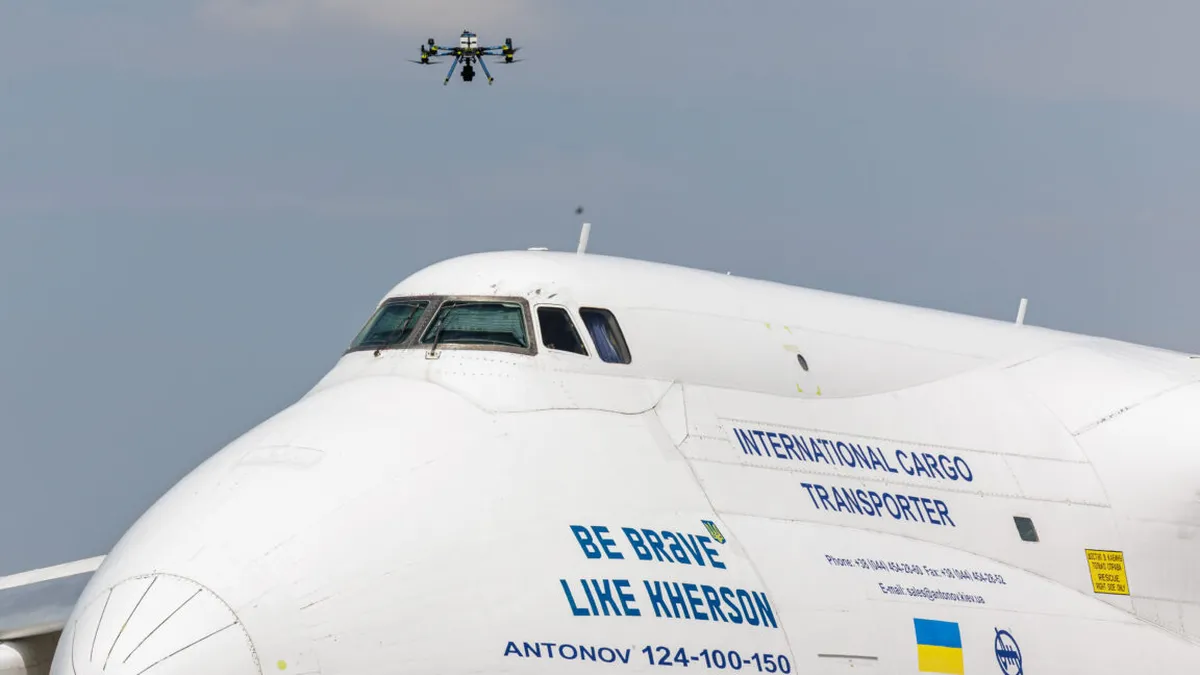
On August 5, 2026, an unsettling incident occurred at Leipzig/Halle Airport in Germany when airport workers discovered an explosive drone hovering dangerously close to parked Ukrainian cargo aircraft. This incident not only highlights the vulnerabilities present in Europe’s air transport security but also raises alarming questions about the geopolitical tensions surrounding the ongoing conflict in Ukraine.
The drone, which was equipped with a fist-sized package of Semtex—a plastic explosive—was found between two Antonov An-124 cargo planes owned by Antonov Airlines. German authorities have since launched a counterterrorism investigation, suspecting that this attempted attack could be linked to foreign powers, particularly amid accusations directed at Russia.
Understanding the Incident
According to reports from German officials, the drone's design was modified to evade standard detection protocols at the airport. German Interior Minister Alexander Dobrindt disclosed that the drone was equipped with a failed detonator, suggesting a premeditated plan to incapacitate the Ukrainian aircraft. While the aircraft were confirmed to be empty at the time of the incident, the gravity of the situation led to the temporary closure of Leipzig/Halle Airport, one of Europe’s busiest cargo hubs.
The implications of such a threat are profound, especially considering that Leipzig/Halle serves as a key transit point for NATO and German military supplies, as well as humanitarian aid to Ukraine. The airport has become a critical node in the logistics of the conflict, and any disruption could have ripple effects on military and humanitarian operations.

The Broader Context of Drone Warfare
This incident is not an isolated occurrence but part of a troubling trend of drone sightings and incursions across Europe. Since the onset of the Russian invasion of Ukraine in 2022, reports of drones appearing over military bases, airports, and critical infrastructure have surged. In May 2026, Munich airport experienced two temporary shutdowns within a single day due to drone activity, illustrating the rising frequency of these disturbances.
The risks associated with drone warfare extend beyond mere security concerns. Drones can be used for reconnaissance, targeted attacks, and psychological warfare, making them a versatile tool in modern military strategy. The ease of drone access and their relatively low operational cost have made them increasingly appealing to non-state actors and foreign adversaries alike.
Security Vulnerabilities
Despite the heightened threat, European nations have struggled to implement comprehensive counter-drone measures. The much-touted European Drone Defence Initiative, aimed at creating a unified surveillance and defense system, has yet to materialize. In the absence of a cohesive strategy, individual countries like Poland have begun developing their own counter-drone capabilities. This piecemeal approach raises concerns about the effectiveness of airspace security across the continent.

Potential Motives Behind the Attack
While no specific suspect has been named in the Leipzig incident, the circumstances strongly suggest a foreign power's involvement. Dobrindt's reference to a “hybrid threat scenario” implies that state-sponsored actors may be attempting to destabilize European security. Roderich Kiesewetter, a member of the German parliament’s intelligence committee, did not shy away from linking the incident to Russian interests, labeling it an “attempted act of terrorism.”
This assertion is echoed by pro-Kremlin voices, with Russian propagandist Alexander Sosnowski suggesting the attack was indeed a targeted operation against Ukrainian assets. Such rhetoric not only reflects the ongoing hostilities but also indicates a potential escalation in the use of drones as an instrument of geopolitical strategy.
The Impact on Air Cargo Operations
The immediate aftermath of the drone discovery had significant operational consequences. Leipzig/Halle Airport had to divert 19 flights, including a DHL Boeing 757 that narrowly avoided a midair collision with another object as it aborted its landing approach. This incident underscores the vulnerabilities in air traffic management and the potential for chaos in airspace whenever security is compromised.
For logistics companies that rely on timely shipments, such disruptions can have cascading effects. Delays in air cargo can lead to increased operational costs, missed delivery deadlines, and strained supply chains. With the ongoing conflict in Ukraine, ensuring the secure transit of goods has never been more critical, and incidents like these threaten the stability of logistics operations across Europe.

Key Takeaways
- Drone Threats: The discovery of an explosive drone near Ukrainian aircraft highlights the growing security challenges in Europe.
- Geopolitical Implications: The incident raises concerns about foreign interference and the potential for state-sponsored terrorism.
- Operational Disruptions: Leipzig/Halle Airport's temporary closure demonstrates the vulnerabilities in air cargo logistics.
- Counter-Drone Strategies: The lack of cohesive European defense measures against drone incursions poses risks to national security.
Frequently Asked Questions
What steps are being taken to enhance airport security against drone threats?
In response to the increasing number of drone incursions, various European nations are investing in advanced drone detection and mitigation technologies. This includes radar systems specifically designed to identify and track unauthorized drones, as well as the development of counter-drone systems that can neutralize threats. However, the effectiveness of these measures varies by country, and a coordinated European approach is still lacking.
How does this incident relate to the ongoing conflict in Ukraine?
The drone found at Leipzig Airport underscores the broader implications of the war in Ukraine, extending beyond the battlefield. It highlights how the conflict can manifest in various forms, including cyber threats and drone warfare. As both state and non-state actors exploit emerging technologies, the risk of attacks on critical infrastructure in Europe increases.
What are the potential legal ramifications for those responsible for drone attacks?
Legal consequences for drone attacks are complex and can vary significantly depending on the jurisdiction. Typically, individuals or groups found responsible for such acts could face severe criminal charges, including terrorism-related offenses. Additionally, international law may come into play, especially if state-sponsored actors are implicated.
Comments
AI-Driven Genome Models: A New Frontier in Virus Design
Recent advancements in AI-driven genome models have opened up possibilities for designing new viruses, particularly bacteriophages. This article explores the implications, risks, and benefits of this technology in the context of antibiotic resistance and future biological research.

Related articles







Popular in Cybersecurity
- Federal Mandate for Autonomous Vehicles: A Call for Safety Compliance
- EU Mandates Google to Share Data and Open AI on Android: What It Means
- GitHub Revamps Bug Bounty Program: Implications for Developers and Security
- Australian Government Disables Thousands of Functional Broadband Routers: A Wasteful Decision
- Exploiting Redis: Understanding Zero-Day Vulnerabilities and Their Mitigation