Revolutionizing Astronaut Safety: The AstroRad Vest's Journey to the Moon
The AstroRad vest, a groundbreaking radiation-blocking garment, has successfully completed a mission to the Moon aboard NASA's Artemis I, showcasing a new approach to astronaut safety in space.
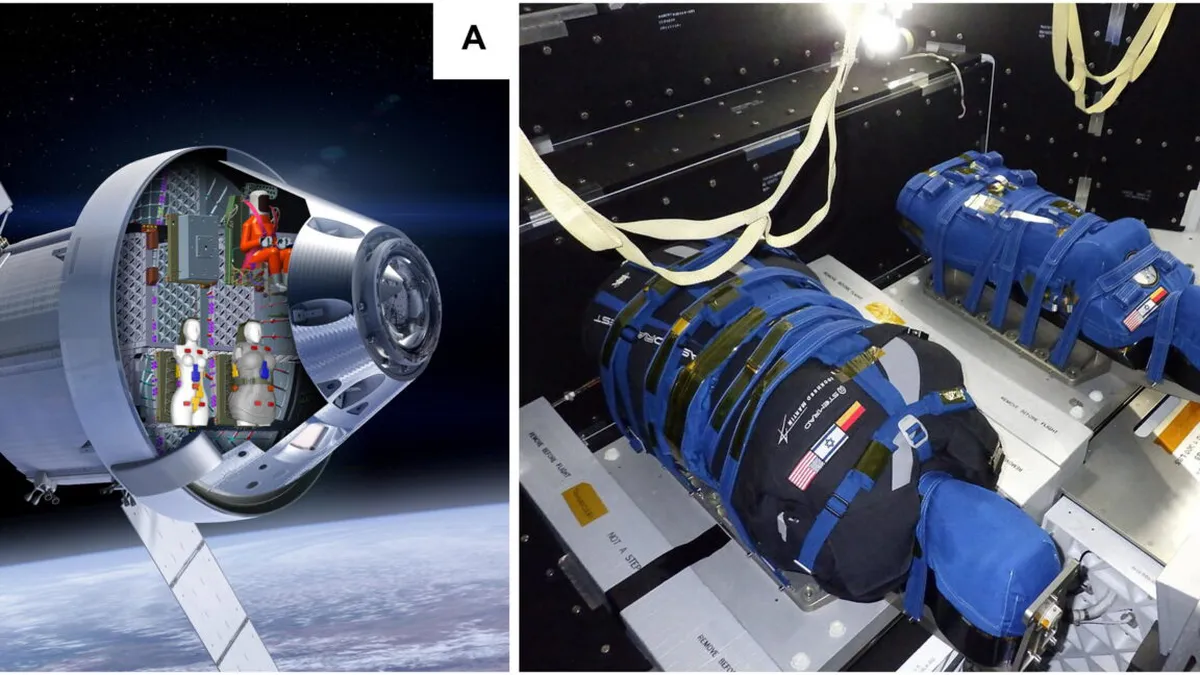
The quest for deep space exploration is fraught with challenges, one of the most daunting being the exposure to harmful radiation. As humanity sets its sights on returning to the Moon and venturing to Mars, protecting astronauts from radiation has never been more critical. Traditional spacecraft shielding strategies can only go so far, as demonstrated by past missions. However, a promising innovation has emerged in this field: the AstroRad vest. This radiation-blocking garment has recently completed a successful mission to the Moon aboard NASA's Artemis I, marking a significant leap forward in astronaut safety.
The AstroRad vest, developed by the Israeli-American startup StemRad in collaboration with Lockheed Martin, represents a paradigm shift in how we think about radiation protection in space. Instead of reinforcing the spacecraft's structure with heavy materials, which adds significant mass and poses logistical challenges, the focus has shifted to directly shielding the astronauts. This shift in strategy could redefine how missions are planned and executed, especially as we look to establish a sustainable human presence on the Moon and beyond.
Understanding Space Radiation Risks
Space radiation primarily consists of galactic cosmic rays (GCRs) and solar particle events (SPEs). While Earth’s atmosphere and magnetic field provide a protective barrier against most of this radiation, astronauts traveling beyond low Earth orbit lose this shield. The lack of adequate shielding in spacecraft has been a long-standing concern, particularly in the context of missions to the Moon or Mars. Historical data, such as the solar storm that occurred in August 1972, illustrates the potential dangers: bursts of protons that can significantly raise cancer risks and cause acute radiation sickness.
Current spacecraft designs have incorporated various shielding strategies, from aluminum hulls to water-filled walls. However, these methods often add substantial weight, complicating launch logistics. As Jordan Houri, a lead engineer at StemRad, notes, “Mass is really the bottleneck—every gram counts.” This has led to the exploration of personal protective gear that astronauts can wear, which opens up new avenues for both safety and mission feasibility.
The Innovative Design of AstroRad
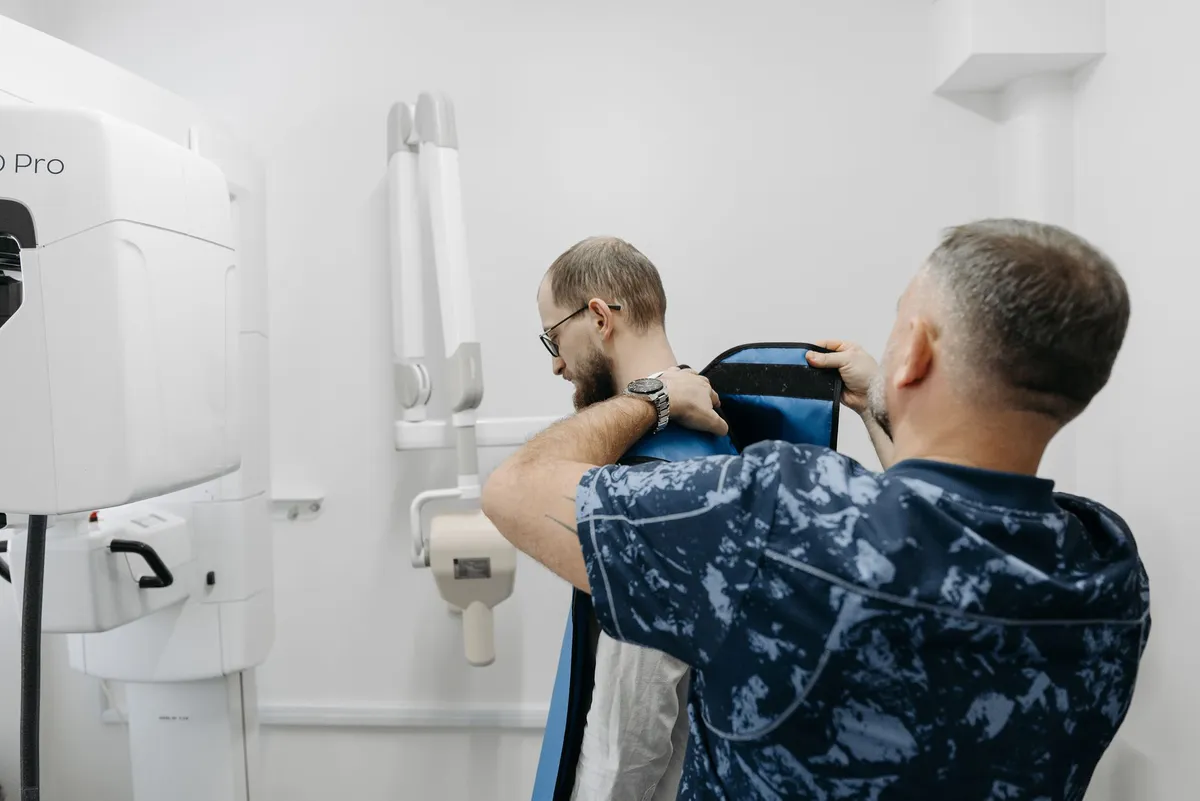
StemRad’s solution, the AstroRad vest, is built on the understanding that not all body tissues are equally vulnerable to radiation. For instance, bone marrow—responsible for producing blood cells—is significantly more sensitive to radiation than other tissues such as the brain. Taking this into account, the AstroRad vest is designed to cover areas of the body that are critical to both immediate survival and long-term health, such as the hips, breasts, stomach, colon, and reproductive organs.
One of the critical innovations of the AstroRad vest is its use of high-density polyethylene (HDPE), a material rich in hydrogen, which is effective at blocking radiation due to its favorable atomic properties. Instead of a solid, heavy barrier, the vest utilizes a tessellated design of hexagonal rods made from HDPE. This construction allows for flexibility and comfort, enabling astronauts to move freely while still receiving substantial protection against radiation.
Testing the AstroRad Vest in Space
The AstroRad vest was rigorously tested during the Artemis I mission, which was uncrewed but included two anthropomorphic torsos named Helga and Zohar. Zohar wore the AstroRad vest, while Helga did not, allowing researchers to compare radiation exposure directly. Thousands of dosimeters embedded in both phantoms tracked radiation doses throughout the mission. While the mission did not encounter a solar storm, the data gathered during the flight, particularly from the Van Allen belt crossing, provided valuable insights into the vest's performance.
Simulations based on the Artemis I flight data indicated that the AstroRad vest could reduce radiation exposure by approximately 60 percent during a typical solar storm and about 40 percent during a more energetic event, such as the October 1989 storm. This performance is comparable to that of the Orion spacecraft's heavily shielded storm shelter, but with the added advantage that astronauts can remain mobile and engaged in mission operations while wearing the vest.
Implications for Future Missions
The implications of the AstroRad vest extend beyond just immediate safety. By allowing astronauts to move freely while offering significant radiation protection, the vest could enhance mission efficiency and effectiveness. According to calculations, wearing the vest during a major solar storm could extend an astronaut's career by 40 to 193 days, based on the NASA lifetime dose limit of 600 millisieverts.
However, it is essential to note that while the vest offers protection against solar radiation, it is not designed to shield astronauts from galactic cosmic rays, which pose a continuous threat in space travel. GCRs are much more energetic and require different protective strategies. As Houri points out, “Using the vest against these rays would not be reasonable.” This highlights the need for ongoing research and development to find comprehensive solutions for all types of space radiation.

Future Developments and Challenges
While the AstroRad vest has shown promising results, challenges remain. The current iteration of the vest weighs approximately 26 kilograms—similar to a full suit of plate armor—raising concerns about comfort and practicality for astronauts. The StemRad team is actively working on reducing the vest's weight without sacrificing protection. They have already made progress, cutting the weight down to 16 kilograms based on data from the Artemis I mission.
The goal is to create a vest that is lightweight yet effective, which would allow astronauts to wear the protective gear during extended missions without hindering their performance. Additionally, further testing in real deep-space conditions is necessary to validate the vest's effectiveness against various radiation scenarios.
Key Takeaways
- The AstroRad vest represents a significant advancement in astronaut radiation protection by focusing on personal shielding rather than spacecraft shielding.
- Tests conducted during the Artemis I mission demonstrated the vest's ability to reduce radiation exposure by up to 60 percent during solar storms.
- Future developments aim to reduce the vest's weight, enhancing comfort and usability for astronauts on long missions in deep space.
- The vest does not protect against galactic cosmic rays, necessitating continued research and potential complementary protective measures.
- This innovative approach could extend astronauts' careers by allowing them to work more freely while maintaining safety during solar events.
Frequently Asked Questions
What is the AstroRad vest and how does it work?
The AstroRad vest is a wearable radiation-shielding garment designed to protect astronauts from harmful space radiation, particularly during solar storms. It uses high-density polyethylene (HDPE) rods to provide flexibility and comfort while effectively reducing radiation exposure. The vest covers critical areas of the body, significantly lowering the effective dose of radiation that astronauts would otherwise receive during space missions.
How was the effectiveness of the AstroRad vest tested?
The effectiveness of the AstroRad vest was tested during NASA's Artemis I mission. Two anthropomorphic phantoms, Helga and Zohar, were used to measure radiation exposure. Zohar wore the vest, while Helga did not. Thousands of dosimeters tracked radiation doses throughout the flight, allowing researchers to analyze the vest's performance under simulated conditions similar to solar storms.
What are the limitations of the AstroRad vest?
While the AstroRad vest offers significant protection against solar radiation, it does not shield astronauts from galactic cosmic rays (GCRs), which are a constant threat during deep space missions. Additionally, the vest's current weight poses practical challenges for astronauts, and ongoing efforts are focused on reducing its mass while maintaining effectiveness.
What does the future hold for astronaut safety in space?
The future of astronaut safety in space is focused on innovative protective technologies like the AstroRad vest, along with continued research into comprehensive solutions for various types of radiation. As missions to the Moon and Mars become more frequent, enhancing astronaut safety will be crucial to ensuring successful long-duration space exploration.
Comments
Rocket Report: The Future of Launch Systems and Market Dynamics
Rocket Lab and Blue Origin are redefining flexibility in space launches amid growing demand. This article explores their strategies and the challenges faced by the industry.
Related articles


Popular in Cloud Computing
- SK Hynix's Historic $26.5 Billion IPO: A New Era for Memory Chips
- Kubernetes and the Future of Desktop Infrastructure: A Paradigm Shift
- Amazon Expands Partnership with Nvidia, Tripling GPU Orders Amid AI Demand Surge
- Elon Musk's Evolving Relationship with Anthropic: A New Era for AI Hosting
- Emerging Rocket Launches: A New Era for Space Exploration