Buzz Aldrin's Historic Felt-Tip Pen and Circuit Breaker Auction
A felt-tip pen and circuit breaker from the Apollo 11 mission sell for $867,600, revealing the iconic moments behind these artifacts and their significance in space exploration history.
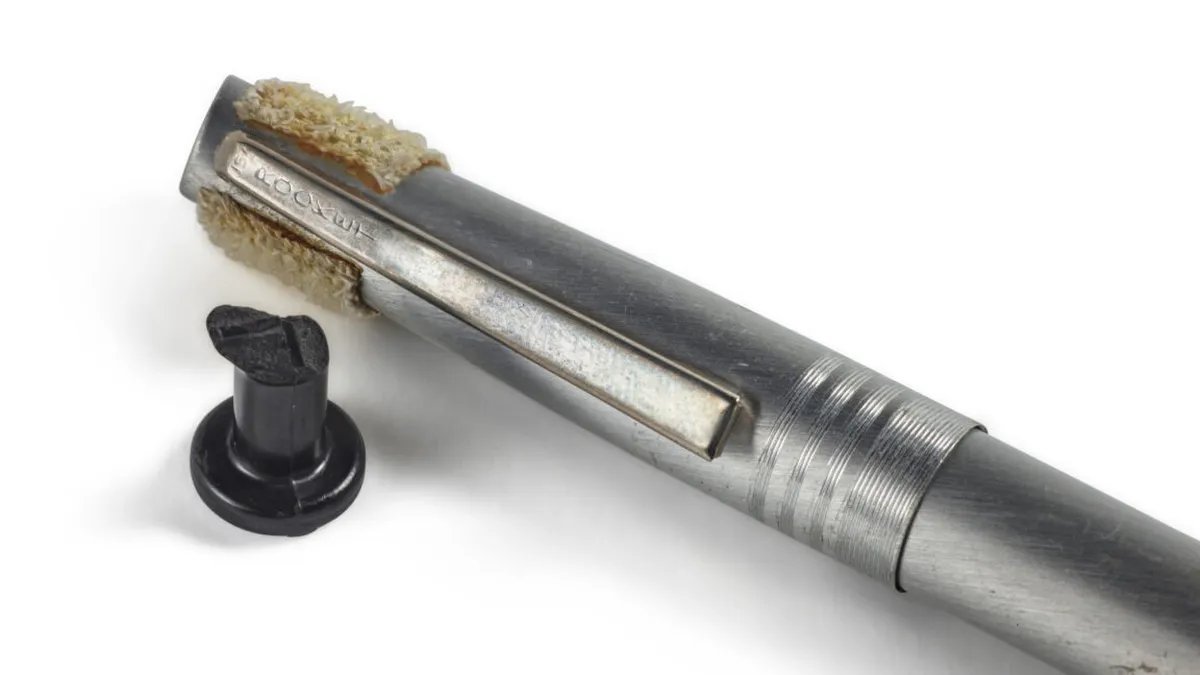
In an extraordinary showcase of history and ingenuity, a felt-tip pen and a broken circuit breaker switch that played pivotal roles during the Apollo 11 mission were auctioned for a staggering $867,600 at Sotheby’s on July 15, 2026. This auction not only highlights the artifacts’ monetary value but also underscores their significance in one of humanity's most daring ventures: the landing on the Moon. While the sale price was impressive, it did not eclipse the highest bids recorded for other space-related memorabilia, illuminating the nuances of space artifact valuation and ownership.
For those unfamiliar with the epic tale of Apollo 11, this mission marked humanity's first steps on the lunar surface. Astronauts Neil Armstrong and Buzz Aldrin successfully landed the Lunar Module, dubbed 'Eagle,' on July 20, 1969, only to face a near-disastrous situation that could have stranded them on the Moon. The story of how a simple felt-tip pen and a broken switch saved their mission is as remarkable as the mission itself, showcasing human creativity and quick thinking under pressure.
The Items at the Center of a Near-Disaster
During the Apollo 11 mission, the crew encountered a critical issue when the circuit breaker switch that would ignite their ascent engine was accidentally broken. In a moment of urgency, Aldrin radioed Mission Control, seeking guidance on how to proceed with a broken switch that was essential for their return journey. It was a tense moment, as the stakes were unimaginably high—failure to ignite the ascent engine would mean remaining stranded on the Moon, with dire consequences.
Aldrin later recounted in a letter accompanying the auctioned items how he ingeniously used a plastic felt-tip pen to reset the circuit breaker. He described how he carefully pushed the pen into the switch’s opening, successfully clicking it back into position and enabling the ascent engine to fire. This simple yet effective solution was nothing short of a lifesaver, allowing Aldrin and Armstrong to safely rendezvous with command module pilot Michael Collins and return to Earth.
The Auction: A Snapshot of History
The auction at Sotheby’s was not just a sale; it was a celebration of history. The felt-tip pen, a Duro-brand Rocket marker, and the broken circuit breaker sold for $857,600, which included the buyer's premium. This sale was conducted on behalf of the Buzz Aldrin Family Trust, and although the final bid was notable, it fell short of the most valuable space artifacts sold at auction. For instance, a Bulova watch worn on the Moon during the Apollo 15 mission fetched $1.625 million, showcasing the premium placed on items with direct lunar connection.
While the auction price indicates the cultural significance of space exploration memorabilia, it also reflects the market dynamics surrounding such items. Space artifacts often garner attention due to their unique stories and the emotional resonance they carry with the public. Aldrin’s pen and switch, while not setting records, are emblematic of human ingenuity and the spirit of exploration.

The Legal Landscape of Space Artifacts
Interestingly, the ownership of these artifacts is rooted in legal frameworks established in recent years. A law passed in 2012 allows astronauts like Aldrin to retain ownership of the hardware and equipment they used during their missions. This has opened the door for the sale and trade of space memorabilia, enabling astronauts to capitalize on their historic contributions while fostering public interest in space exploration.
The auctioning of Aldrin’s items is part of a broader trend where space artifacts are increasingly recognized not just for their historical significance but also as valuable collectibles. The legal endorsement of ownership has led to a burgeoning market where pieces of space history can be bought and sold, providing a unique intersection of history, law, and commerce.
Broader Implications for Space Memorabilia
The sale of Aldrin’s pen and circuit breaker is a reminder of how artifacts from space exploration carry deep emotional and historical weight. These items are not merely relics; they represent the triumphs and tribulations of human courage, scientific progress, and the quest for knowledge. As the space industry evolves, with missions to Mars and beyond on the horizon, the significance of space memorabilia is expected to grow.
Collectors and enthusiasts are increasingly drawn to items that tell the stories of human achievement and resilience. Whether it’s a piece of a spacecraft or a simple writing instrument, each artifact serves as a tangible link to a moment in history that changed our understanding of what is possible. The public interest in such items will likely continue to drive their market value, prompting more auctions and exhibitions in the years to come.
Key Takeaways
- Aldrin's auction included a felt-tip pen and circuit breaker that played key roles during the Apollo 11 mission.
- The items sold for $867,600, yet did not break records for space memorabilia sales.
- Legal frameworks established in 2012 allow astronauts to own and sell artifacts from their missions.
- The auction reflects a growing market for space memorabilia, driven by public interest and historical significance.
- Each artifact represents a piece of human ingenuity and the quest for exploration.
Frequently Asked Questions
What was the significance of the felt-tip pen and circuit breaker sold at auction?
The felt-tip pen and broken circuit breaker were crucial in averting a potential disaster during the Apollo 11 mission. When the circuit breaker switch for the ascent engine broke, Aldrin used the pen to reset the switch, enabling the astronauts to return safely to Earth. This incident highlights the blend of human creativity and engineering that defined the mission.
How did the auction reflect the market for space memorabilia?
The auction of Aldrin's artifacts illustrated the growing interest in space memorabilia as collectibles. While the final sale price was significant, it did not reach record highs for similar items, indicating a competitive market where unique stories and historical context enhance value. The legal right of astronauts to sell mission artifacts further fuels this market.
What laws govern the ownership of space artifacts?
A law enacted in 2012 allows astronauts to retain ownership of the equipment and hardware they used during their missions, legitimizing the sale and trade of such items. This legal framework has led to increased auctioning of space memorabilia, allowing astronauts to share their legacies while engaging the public's fascination with space exploration.
Where can I find more information about space memorabilia auctions?
For those interested in space memorabilia auctions, resources include auction houses like Sotheby’s, which regularly feature space-related items, and online platforms dedicated to collectibles. Additionally, space museums and exhibitions often showcase artifacts, providing insights into their historical significance and the stories behind them.
Comments
Celebrating Sam Neill: A Tribute to an Iconic Actor
Sam Neill, renowned for his role in 'Jurassic Park,' passed away at the age of 78. This article pays tribute to his remarkable career and diverse filmography.

Related articles
Popular in Guides
- Boomers Lead the Charge in Alcohol Abstinence: Insights from New Research
- Understanding the Physics of Silly Sprinklers and Feynman's Reverse Sprinkler Puzzle
- The Coming Air-Conditioning Revolution in Europe: A Necessity or a Luxury?
- Hobbits of Flores: Scavengers or Skilled Hunters?
- US Citizens Infected with Ebola: A Shifting Response Landscape