Unpatched Kaltura Vulnerabilities: A Deep Dive into Remote Exploitation Risks
Recent vulnerabilities in Kaltura's mwEmbed could expose organizations to significant risks, allowing remote attackers to access sensitive files and execute code. This article explores the implications, the affected parties, and necessary mitigation strategies.
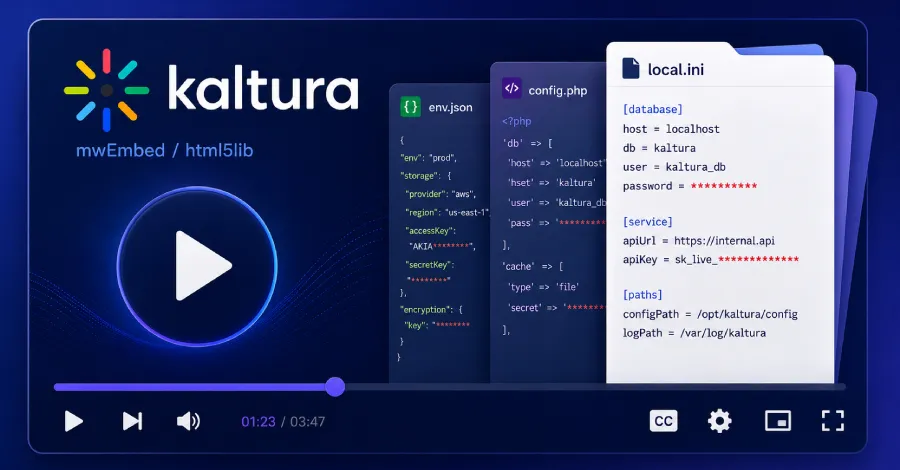
The recent discovery of unpatched vulnerabilities in Kaltura's mwEmbed component has raised alarms across the tech landscape. Kaltura, a prominent video hosting platform widely used in educational and enterprise settings, is now under scrutiny as these flaws could potentially allow remote attackers to read sensitive files and execute arbitrary code. For organizations relying on Kaltura for video content management, this issue is not just a technical concern but a potential crisis that could compromise data security and operational integrity.
The mwEmbed framework is integral to Kaltura's video player functionality and is employed in a variety of applications, from online learning platforms to corporate training modules. The implications of these vulnerabilities extend beyond mere technical glitches; they represent a significant risk vector that could be exploited by malicious actors to gain unauthorized access to sensitive information. This article delves into the technical aspects of these flaws, the potential fallout for affected organizations, and essential strategies for mitigating risk.
Understanding the Vulnerabilities
Kaltura's mwEmbed has been identified as having critical vulnerabilities that can be exploited remotely without the need for user interaction. These vulnerabilities fall under two primary categories: file reading and arbitrary code execution.
File Reading Vulnerability
This flaw enables attackers to access sensitive files on the server running the mwEmbed component. By manipulating requests, cybercriminals could potentially read configuration files, user data, or other sensitive information, leading to further exploitation opportunities.
Arbitrary Code Execution Vulnerability
The more severe of the two vulnerabilities allows attackers to execute arbitrary code on the server. This could lead to complete system compromise, where an attacker might install malware, exfiltrate data, or use the server as a launching pad for further attacks on the network.

Market Context and Legal Implications
The emergence of these vulnerabilities comes against a backdrop of increasing scrutiny on the cybersecurity practices of SaaS providers. In a climate where data breaches are rising, there is a heightened expectation for companies to implement robust security measures and promptly address vulnerabilities. Organizations using Kaltura may face legal repercussions if they fail to protect user data adequately.
In recent years, regulatory bodies have emphasized the importance of data protection, leading to stricter compliance requirements under laws such as GDPR in Europe and CCPA in California. Companies that do not address these vulnerabilities risk not only reputational damage but also hefty fines and legal actions.

Who Is Affected?
The fallout from the Kaltura mwEmbed vulnerabilities is not limited to the platform itself. A wide array of organizations that utilize Kaltura for video content delivery are at risk, including:
- Educational Institutions: Many universities and schools use Kaltura for e-learning initiatives, making them prime targets for attackers seeking to exploit sensitive student data.
- Corporate Enterprises: Businesses leveraging Kaltura for training and communication could face significant disruptions and data breaches that impact employee privacy.
- Content Creators: Independent creators and media companies that rely on Kaltura to distribute content must be vigilant about potential exposure of proprietary material or audience data.
Mitigation Strategies
Organizations using Kaltura must take immediate action to mitigate the risks associated with these vulnerabilities. Here are several recommended strategies:
1. Implement Access Controls
Organizations should ensure that strict access controls are in place to limit who can access the Kaltura platform and its components. Role-based access controls (RBAC) can help enforce the principle of least privilege, minimizing exposure.
2. Regularly Update Software
Keeping the Kaltura platform and all associated components updated is crucial. Organizations should stay informed about security patches and updates released by Kaltura and apply them as soon as they become available.
3. Monitor for Unusual Activity
Establishing robust monitoring practices can help detect unusual behavior that may indicate exploitation attempts. This includes analyzing logs for suspicious activity and implementing intrusion detection systems (IDS).
4. Educate Staff
Training employees on cybersecurity best practices can reduce the risk of successful attacks. Awareness programs should cover how to recognize phishing attempts and other common exploitation methods.

Key Takeaways
- The Kaltura mwEmbed vulnerabilities can allow remote attackers to read sensitive files and execute arbitrary code.
- Organizations using Kaltura, including educational institutions and corporate enterprises, face significant risks.
- Immediate action is required to mitigate these vulnerabilities, including implementing access controls and regular software updates.
- Monitoring for unusual activity and staff education are essential components of an effective security strategy.
Frequently Asked Questions
What steps should I take if my organization uses Kaltura?
If your organization relies on Kaltura, the first step is to assess your current security posture. Review access controls, ensure software is up to date, and monitor for unusual activity. Engage your IT team to implement necessary security measures and stay informed about any updates from Kaltura regarding these vulnerabilities.
Are there any known exploits for these vulnerabilities yet?
As of now, there are no public reports of active exploits targeting these specific vulnerabilities in Kaltura's mwEmbed. However, given the nature of the flaws, it is advisable to act quickly before they are discovered and exploited by malicious actors.
How can I educate my staff about cybersecurity risks?
Educating your staff about cybersecurity can be done through regular training sessions, workshops, and providing access to online resources. Focus on common threats such as phishing, social engineering, and the importance of strong password practices. Creating a culture of security awareness can significantly reduce the risk of breaches.
Comments
Meta's $18 Billion Settlement: New Protections for Minors on Social Media
Meta has agreed to implement significant changes to enhance child safety on its platforms as part of an $18 billion settlement. These changes, including time limits and content controls, will impact millions of young users across the U.S.

Related articles






Popular in Cybersecurity
- Federal Mandate for Autonomous Vehicles: A Call for Safety Compliance
- EU Mandates Google to Share Data and Open AI on Android: What It Means
- GitHub Revamps Bug Bounty Program: Implications for Developers and Security
- Australian Government Disables Thousands of Functional Broadband Routers: A Wasteful Decision
- Exploiting Redis: Understanding Zero-Day Vulnerabilities and Their Mitigation