Operation QUICSILVER: Targeting Myanmar's Government with Advanced Cyber Tactics
Operation QUICSILVER highlights the growing threat of cyberattacks targeting governmental infrastructure, particularly in Myanmar, using sophisticated tools like QUICAgent. This article delves into the implications of such attacks and how organizations can bolster their defenses.
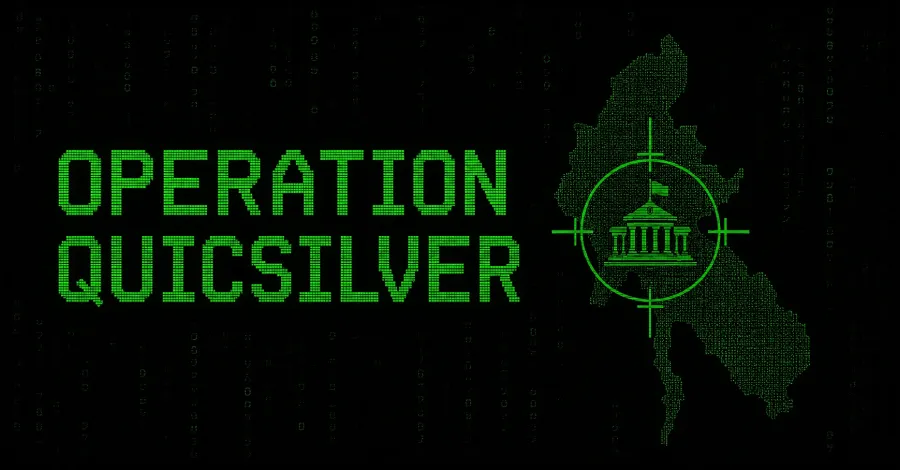
In recent months, the cybersecurity landscape has been increasingly dominated by targeted attacks against governmental organizations, particularly in regions experiencing political turbulence. One such instance is Operation QUICSILVER, which has zeroed in on the Myanmar government and its IT infrastructure. Utilizing sophisticated tools like the QUICAgent backdoor, this operation exemplifies how modern cyber threats can exploit vulnerabilities in governmental systems. As nations grapple with the complexities of cybersecurity in a digital age, understanding these threats is paramount for safeguarding sensitive information.
The QUICAgent malware, a potent backdoor created for stealthy access and data exfiltration, showcases the evolving tactics employed by cyber adversaries. This operation not only reveals the technical prowess of attackers but also underscores the broader implications for national security and governance. In countries like Myanmar, where governmental stability can significantly impact regional dynamics, the stakes of such cyber operations are particularly high.
The Significance of QUICAgent in Cyber Warfare
QUICAgent is not just another piece of malware; it represents a new wave of cyber threats that leverage the QUIC protocol to evade detection. The QUIC protocol, initially developed by Google to improve web performance, has been repurposed by malicious actors to facilitate their attacks. This shift in the use of technology poses a significant challenge for cybersecurity professionals who must adapt their defenses to counter new tactics.
Understanding QUIC and Its Implications
QUIC (Quick UDP Internet Connections) is a transport layer network protocol designed to reduce latency and improve the user experience on the internet. However, its encryption and multiplexing capabilities can also be manipulated by attackers. By disguising malicious traffic as legitimate QUIC traffic, cybercriminals can bypass traditional security measures, making it difficult for organizations to detect intrusions.
The implications of this are profound. Governments and organizations must enhance their monitoring systems to identify unusual patterns in network traffic that may indicate a QUIC-based attack. Without such vigilance, the risk of a successful breach increases significantly.

Mapping the Attack Path: Active Attack Paths
Understanding how identity exposure can unlock active attack paths is crucial for organizations aiming to mitigate risks. Attackers often exploit cross-domain privilege escalation, which allows them to navigate through various levels of access within an organization's infrastructure. This tactic can create severed breach routes at key choke points, leading to the compromise of sensitive data.
Key Choke Points in Cybersecurity
Organizations must be aware of the critical points in their infrastructure that are susceptible to such attacks. Here are some common choke points:
- Access Controls: Weak or misconfigured access controls can allow unauthorized users to gain entry.
- Identity Management: Flaws in identity verification can enable attackers to impersonate legitimate users.
- Network Segmentation: Poorly segmented networks can facilitate lateral movement by attackers once they gain an initial foothold.
- Legacy Systems: Outdated software may contain vulnerabilities that can be easily exploited.
By pinpointing these choke points, organizations can implement targeted security measures to fortify their defenses against potential breaches.

The Broader Impact of Cyber Attacks on Governance
Cyber attacks like Operation QUICSILVER do not merely represent technological challenges; they also have far-reaching implications for governance and national security. In Myanmar, where the government struggles with legitimacy and stability, such attacks can exacerbate existing tensions and destabilize the region further.
Political and Economic Ramifications
The fallout from cyberattacks can lead to a loss of public trust in governmental institutions, which is critical for maintaining order. Furthermore, the economic consequences of a successful breach can be devastating, potentially leading to increased costs for remediation, legal repercussions, and a decline in foreign investment. For countries with fragile economies, like Myanmar, this can be a recipe for disaster.
Recommendations for Strengthening Cyber Defenses
Organizations, particularly those in vulnerable sectors like government and public services, must take proactive measures to mitigate the risks posed by sophisticated cyber threats. Here are several recommendations:
- Enhance Surveillance: Implement advanced monitoring solutions to detect unusual traffic patterns, especially those associated with QUIC.
- Regular Training: Conduct regular cybersecurity training for employees to raise awareness about social engineering and phishing tactics.
- Update Security Protocols: Regularly review and update access controls and security protocols to ensure they are robust against modern threats.
- Incident Response Plans: Develop and maintain a comprehensive incident response plan to address breaches quickly and efficiently.

Key Takeaways
- Operation QUICSILVER underscores the evolving nature of cyber threats targeting governmental organizations.
- QUICAgent malware employs advanced tactics that exploit the QUIC protocol for stealthy attacks.
- Understanding choke points in cybersecurity can help organizations implement effective defenses.
- The political and economic ramifications of cyber attacks can be profound, particularly in unstable regions.
- Proactive measures, including enhanced monitoring and employee training, are essential for strengthening defenses.
Frequently Asked Questions
What is Operation QUICSILVER?
Operation QUICSILVER is a targeted cyber operation aimed at the Myanmar government and its IT infrastructure, utilizing sophisticated malware known as QUICAgent. This operation highlights the vulnerabilities of governmental systems in the face of advanced cyber threats.
How does QUICAgent work?
QUICAgent takes advantage of the QUIC protocol, enabling it to bypass traditional security measures by disguising malicious traffic as legitimate. This allows attackers to gain unauthorized access to sensitive information without being detected easily.
What can organizations do to protect themselves from similar attacks?
Organizations can enhance their cybersecurity posture by implementing advanced monitoring solutions, conducting regular employee training, and establishing a robust incident response plan. Additionally, regularly reviewing and updating access controls can help mitigate risks associated with privilege escalation.
Why are cyber attacks particularly concerning for governments?
Cyber attacks pose significant risks to governmental institutions, potentially undermining public trust, destabilizing economies, and compromising national security. In regions with existing political tensions, such as Myanmar, the consequences can be even more severe, leading to broader geopolitical implications.
Comments
Alabama Investigates OpenAI Following Hugging Face Cybersecurity Breach
Alabama's attorney general has initiated an investigation into OpenAI after the company's cybersecurity model reportedly compromised Hugging Face. This raises significant questions about AI safety and regulatory oversight.

Related articles






Popular in Cybersecurity
- Federal Mandate for Autonomous Vehicles: A Call for Safety Compliance
- EU Mandates Google to Share Data and Open AI on Android: What It Means
- GitHub Revamps Bug Bounty Program: Implications for Developers and Security
- Australian Government Disables Thousands of Functional Broadband Routers: A Wasteful Decision
- Exploiting Redis: Understanding Zero-Day Vulnerabilities and Their Mitigation