General Fusion Makes History as First Publicly Traded Fusion Company
General Fusion's debut on the Nasdaq as the first publicly listed fusion power company has captured investor attention, with shares soaring on the opening day. This article explores the implications of this historic moment for the fusion energy landscape.
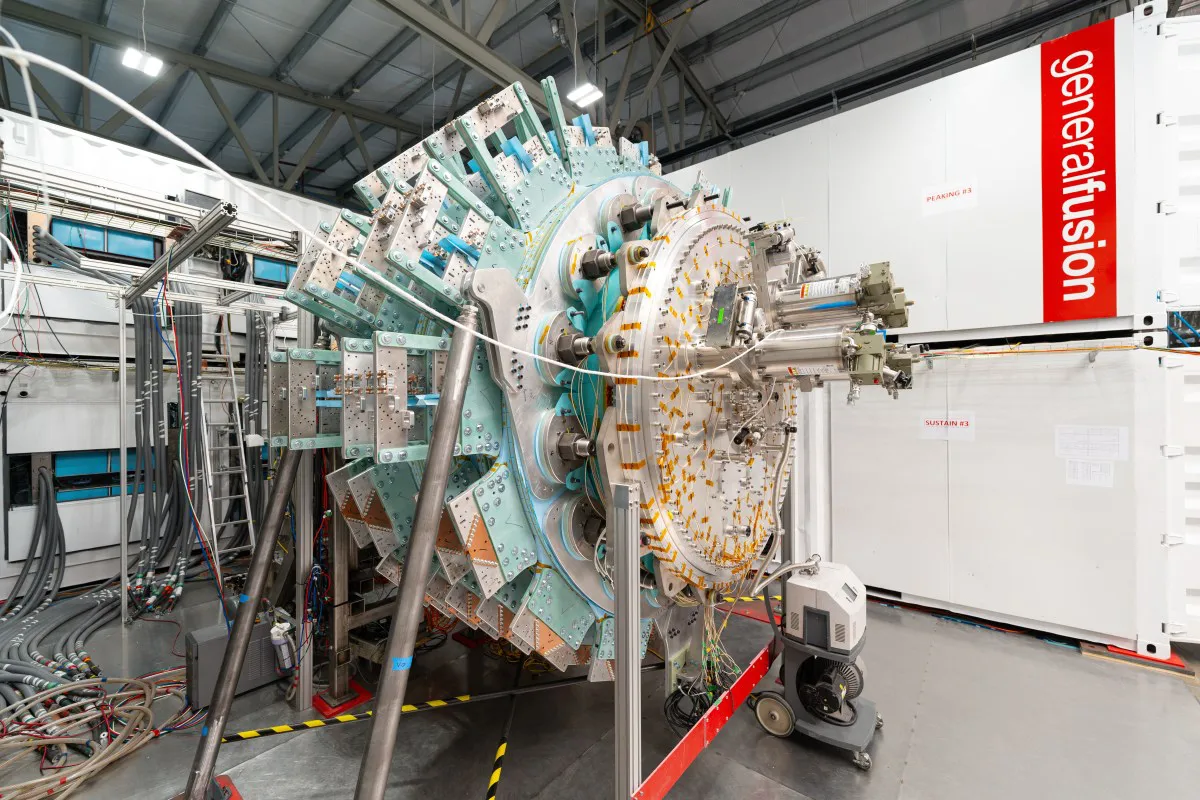
In a historic moment for the energy sector, General Fusion has officially begun trading on the Nasdaq under the ticker symbol GFUZ, marking its status as the first publicly listed fusion power company. This debut comes at a time when interest in alternative energy sources is surging, as the world grapples with climate change and the need for sustainable energy solutions. Investors responded enthusiastically to the news, pushing the stock price up by an impressive 40% on its opening day, reflecting a robust appetite for innovative energy technologies.
Founded in 2002, General Fusion has long been at the forefront of the quest for clean, limitless energy through nuclear fusion, a process that powers the sun and stars. Despite its promising technology, the road to becoming publicly traded has not been without challenges. The company had faced financial difficulties leading up to its merger with Spring Valley Acquisition Corp. III, which was finalized just days before its trading debut.
The Path to Public Trading
General Fusion's journey to the public market began with its plan to merge with a special purpose acquisition company (SPAC), a strategy increasingly favored by startups for its ability to bypass some of the complexities of traditional IPOs. The company announced this merger in January 2026, with expectations of raising substantial funds to support its ambitious fusion projects. Initially projected to add up to $230 million to its balance sheet, the final amount post-redemptions was significantly lower, estimated at around $30 million, exacerbated by the common trend of investor withdrawals in SPAC transactions.
Prior to the merger, General Fusion had been in a precarious financial position, struggling to secure $125 million in funding, which led to layoffs of approximately 25% of its workforce. However, a subsequent “pay to play” funding round enabled the company to raise an additional $22 million, providing temporary relief. This funding was critical, as the fusion energy sector demands high upfront investments and long-term capital commitment.

Understanding Fusion Power Technology
General Fusion's approach to harnessing fusion power is rooted in a technology known as magnetized target fusion. This method involves the use of electromagnetic fields to create and sustain a superheated plasma within a chamber lined with liquid lithium. Once the plasma is formed, a series of synchronized mechanical drivers compress the lithium around the fusion fuel, facilitating the fusion reaction that releases energy.
The company has set ambitious goals, aiming to achieve a key milestone known as breakeven, where the energy output from a fusion reaction exceeds the energy input required to initiate it. Originally slated for 2026, this target has been pushed back to 2028 or later due to funding constraints. Long-term, General Fusion aspires to activate its first commercial fusion power plant around 2035, a target that, if met, could revolutionize the energy landscape.
The Competitive Landscape of Fusion Energy
General Fusion is not alone in the race to commercialize fusion energy. Competitors like TAE Technologies, which is backed by high-profile investors including former President Donald Trump, are also vying for a breakthrough in this field. The urgency for fusion energy is underscored by the global energy crisis, with escalating demands for clean energy solutions as nations aim to meet carbon neutrality targets.
The competition within the fusion sector is fierce, with various companies adopting different technological approaches and funding strategies. Key players in this space include:
- TAE Technologies: Focuses on advanced beam-driven fusion technology.
- Helion Energy: Aims to develop cost-effective fusion energy through its proprietary technology.
- Commonwealth Fusion Systems: Known for its high-temperature superconductors to achieve fusion.
As the market for fusion energy evolves, investor confidence and public interest will play crucial roles in determining which companies succeed in scaling their technologies and achieving commercial viability.

The Role of Investors in the Energy Transition
The enthusiastic response from investors following General Fusion's public debut highlights a growing trend: the increasing interest in companies that promise innovative solutions to the global energy crisis. This interest is not limited to fusion technology but extends across various sectors of renewable energy and climate technology. Investors are increasingly prioritizing companies with sustainable practices and long-term viability, reflecting a shift in values as climate change becomes an urgent concern.
Funding for fusion companies like General Fusion is essential, not only for research and development but also for building facilities capable of testing and eventually deploying fusion technology on a commercial scale. The presence of significant private investment, alongside public trading, can provide the necessary capital to overcome the initial hurdles associated with developing this groundbreaking technology.
Future Implications for the Fusion Industry
The successful public debut of General Fusion could have broader implications for the fusion industry as a whole. By establishing a publicly traded entity, the company may attract more attention and investment into the sector, potentially leading to a wave of new technologies and innovations aimed at harnessing fusion power. This could, in turn, inspire other fusion companies to consider public offerings as a viable means of securing funding.
As fusion technology continues to advance, the potential benefits are immense. If realized, fusion power could offer a nearly limitless source of clean energy with minimal environmental impact. The implications for global energy security and climate change mitigation are profound, making the successful commercialization of fusion energy a critical goal for the coming decades.

Key Takeaways
- General Fusion is the first publicly traded fusion power company, launching on Nasdaq under ticker GFUZ.
- Investor enthusiasm resulted in a 40% stock price increase on its debut day.
- The company aims to achieve breakeven by 2028 and launch its first power plant by 2035.
- Funding and investor support are crucial for the development of fusion technology.
- The success of General Fusion could spur further investment in the fusion energy sector.
Frequently Asked Questions
What is nuclear fusion and why is it important?
Nuclear fusion is a process that combines atomic nuclei to release energy, similar to the reactions that power the sun. It holds the promise of providing a nearly limitless source of clean energy, which could significantly reduce reliance on fossil fuels and lower greenhouse gas emissions. The importance of fusion lies in its potential to address the global energy crisis while combating climate change.
How does General Fusion's technology work?
General Fusion utilizes a method called magnetized target fusion, where electromagnetic fields create a superheated plasma. This plasma is then compressed using mechanical drivers that apply pressure to a lithium blanket surrounding the fusion fuel, facilitating the fusion reaction. This innovative approach aims to harness the immense energy released during fusion for commercial electricity generation.
What challenges does General Fusion face moving forward?
Despite its promising technology, General Fusion faces several challenges, including securing consistent funding, achieving technical milestones such as breakeven, and navigating the competitive landscape of the fusion energy market. The company’s ability to attract investment and maintain operational stability will be crucial in determining its long-term success.
What does the future hold for fusion energy?
The future of fusion energy is promising, with significant advancements in research and technology underway. If companies like General Fusion can successfully develop and commercialize fusion power, it could lead to a new era of clean, sustainable energy. As interest and investment in fusion technology grow, the potential for breakthroughs that could change the energy landscape becomes increasingly likely.
Comments
SpaceX Prepares for Crucial Starship Test Flight: What You Need to Know
SpaceX's upcoming Starship test flight will push the boundaries of rocket technology while integrating real Starlink satellites. This mission is a pivotal step toward operational capabilities for both SpaceX's satellite network and future space exploration.

Related articles


Popular in Cloud Computing
- SK Hynix's Historic $26.5 Billion IPO: A New Era for Memory Chips
- Kubernetes and the Future of Desktop Infrastructure: A Paradigm Shift
- Amazon Expands Partnership with Nvidia, Tripling GPU Orders Amid AI Demand Surge
- Elon Musk's Evolving Relationship with Anthropic: A New Era for AI Hosting
- Emerging Rocket Launches: A New Era for Space Exploration