Starcloud Secures $250 Million to Propel Orbital Data Center Innovations
Starcloud has raised $250 million in funding to enhance its orbital data center capabilities, as launch options for satellites become increasingly scarce. This funding will support the development of its Starcloud-3 spacecraft, aiming to revolutionize data processing in space.

In a significant move that underscores the burgeoning interest in space-based technology, Starcloud has successfully raised an additional $250 million, extending a Series A funding round that initially brought in $170 million earlier this year. This substantial capital injection values the company at an impressive $2.3 billion and is earmarked for enhancing its manufacturing capabilities and advancing the development of its latest spacecraft, Starcloud-3. This spacecraft is designed to operate as an orbital data center, performing advanced AI inference tasks in space, a concept that could redefine how data is processed globally.
As the demand for satellite launches increases, Starcloud's CEO, Philip Johnston, has recognized the urgent need to secure reliable launch capacity amid growing concerns about the availability of rocket transportation options. In an industry where the costs associated with launching satellites are a major hurdle, Starcloud is positioning itself for the future by ensuring it can navigate the increasingly competitive landscape of space launches.
Understanding the Orbital Data Center Landscape
The concept of orbital data centers is emerging as a revolutionary solution to data processing challenges faced on Earth. With increasing data generation and the need for real-time processing, sending data to and from terrestrial data centers can introduce latency issues, inefficiencies, and higher operational costs. By contrast, data centers located in space can potentially offer solutions that are closer to the data source, significantly reducing latency and increasing processing speed.
The Role of AI in Space Computing
Starcloud aims to leverage AI technologies to enhance data processing capabilities in orbit. Its Starcloud-2 satellites, set to launch on rideshare flights in 2027, will be equipped with 8 kW compute capabilities, allowing them to handle complex AI tasks for various clients, including U.S. government agencies. Such advancements could pave the way for more efficient data analysis, machine learning, and real-time decision-making in applications ranging from climate monitoring to national security.
Launch Challenges and Strategic Partnerships
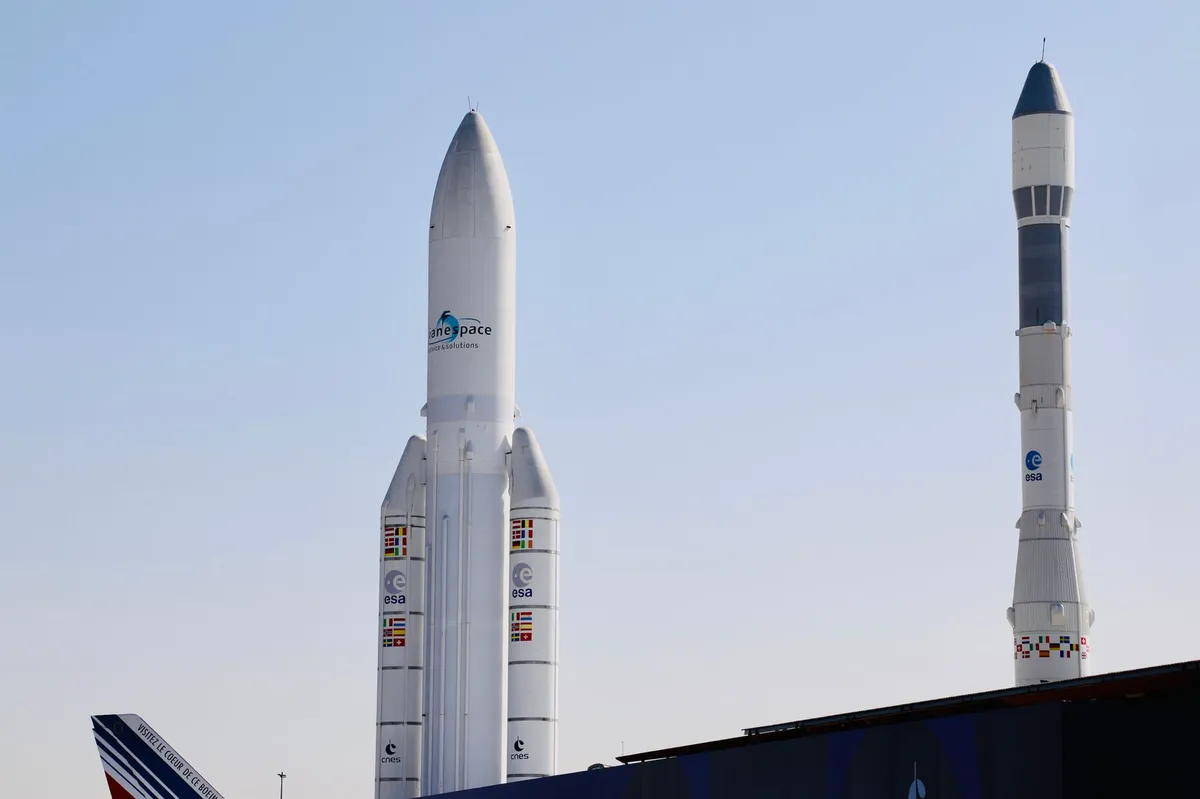
Despite the exciting prospects, the path forward is fraught with challenges. The current market for rocket launches is constrained, with SpaceX's Falcon 9 scheduled to retire in 2028, leaving a gap in reliable launch options. Johnston has been candid about the difficulties posed by this situation, stating, "One of the biggest costs is now on securing your launch capacity." Starcloud is actively exploring various options, including dedicated Falcon 9 launches and contracts with other providers, to ensure that it can meet its ambitious launch schedule.
Starcloud is not alone in seeking innovative solutions to these launch challenges. Some startups are even considering building their own rockets to bypass the constraints of existing launch services. However, the reality is that unless new vehicles like Blue Origin's New Glenn or ULA's Vulcan become operational and reliable, the market for satellite launches will remain tight.
Strategic Investments and Future Prospects
The recent funding round saw participation from several prominent investors, including Manhattan West Ventures, Nvidia, and Cisco. Notably, Nvidia's investment of $25 million highlights the strategic alignment between Starcloud and the tech giant, which is keenly focused on the growing space compute sector. Starcloud is currently the only company known to be operating Nvidia's H100 GPU in orbit, which positions it favorably as Nvidia develops its first space-specific GPU, the Vera Rubin Space-1 chip.
Johnston emphasizes the significance of this partnership, stating that the insights gained from operating in space are invaluable to Nvidia as it refines its chip designs for orbital applications. The anticipated launch of the Vera Rubin chip in late 2028 could further enhance Starcloud's capabilities, enabling it to process data more efficiently and effectively in an environment where traditional computing resources are limited.
Expanding Manufacturing Capabilities
To support its ambitious plans, Starcloud is ramping up its manufacturing capabilities. The company is establishing a 100,000 square foot facility in Woodinville, Washington, strategically located near other leading aerospace companies like SpaceX and Amazon. This proximity will facilitate collaboration and knowledge exchange, essential for developing cutting-edge satellite technology.
Hiring and Growth Trajectory
As of now, Starcloud employs 25 individuals, a number that is expected to grow as the company expands its operations. The demand for skilled professionals in the aerospace and tech sectors is on the rise, and Starcloud aims to attract talent that can contribute to its mission of revolutionizing data processing in space.

Implications for the Future of Data Processing
The implications of Starcloud's advancements extend beyond the company itself. As more businesses recognize the potential of orbital data centers, competition in this space will likely intensify, leading to innovation and lower costs for consumers. Additionally, the ability to process data closer to its source could yield significant benefits in various industries, such as environmental monitoring, telecommunications, and defense.
Ultimately, the success of Starcloud and similar ventures hinges on their ability to secure reliable launch options and demonstrate the viability of their technologies in orbit. If successful, they could pave the way for a new era of computing, one that harnesses the vastness of space to meet the demands of a data-driven world.

Key Takeaways
- Starcloud has raised $250 million to enhance its orbital data center capabilities and secure launch capacity.
- The company is focused on leveraging AI to improve data processing in space, reducing latency and increasing efficiency.
- Challenges in the satellite launch market are prompting Starcloud to explore various launch options and partnerships.
- Strategic investments from major players like Nvidia underscore the growing importance of space computing.
- Starcloud's manufacturing expansion in Washington is set to support its ambitious growth plans.
Frequently Asked Questions
What is an orbital data center, and how does it work?
An orbital data center is a satellite-based facility designed to process and analyze data in space. By positioning data centers in orbit, companies can reduce latency and improve processing speeds, enabling real-time analysis of data generated on Earth or in space. These facilities leverage advanced computing technologies, including AI, to perform tasks that would traditionally require terrestrial data centers.
Why is launch capacity a concern for satellite companies like Starcloud?
Launch capacity is a significant concern because the availability of reliable rocket transportation options is limited. As established launch vehicles like SpaceX's Falcon 9 are phased out, newer vehicles may not yet be operational or may face delays. This creates uncertainty for companies planning to launch satellites, making it crucial to secure contracts and book launch slots well in advance.
How does Nvidia's investment impact Starcloud's operations?
Nvidia's investment provides Starcloud with not only financial support but also technical expertise and access to cutting-edge GPU technology. By collaborating with Nvidia, Starcloud can enhance its satellite computing capabilities, ensuring that it remains competitive in the rapidly evolving space computing market. The partnership also allows Starcloud to contribute valuable data that can inform the development of Nvidia's space-specific chips.
What are the potential applications of space-based AI computing?
Space-based AI computing has a wide range of potential applications, including environmental monitoring, disaster response, telecommunications, and national security. By processing data closer to its source, companies can enable faster decision-making and more efficient resource allocation. As technology advances, the scope of applications for orbital data centers will likely expand, further integrating space computing into everyday life.
Comments
SpaceX's Orbital Data Centers: E-Waste and Environmental Implications
Elon Musk's vision for a million satellite data centers in orbit raises significant concerns about e-waste and material sustainability. Explore the implications of this ambitious plan and its potential impact on Earth's environment.

Related articles

Popular in Cloud Computing
- SK Hynix's Historic $26.5 Billion IPO: A New Era for Memory Chips
- Kubernetes and the Future of Desktop Infrastructure: A Paradigm Shift
- Amazon Expands Partnership with Nvidia, Tripling GPU Orders Amid AI Demand Surge
- Elon Musk's Evolving Relationship with Anthropic: A New Era for AI Hosting
- Emerging Rocket Launches: A New Era for Space Exploration