Newly Discovered Star Could Reveal Secrets of Milky Way's Black Hole
Astronomers have identified a star on an extreme orbit around the Milky Way's central black hole, Sgr A*, potentially unlocking insights about its spin and properties.
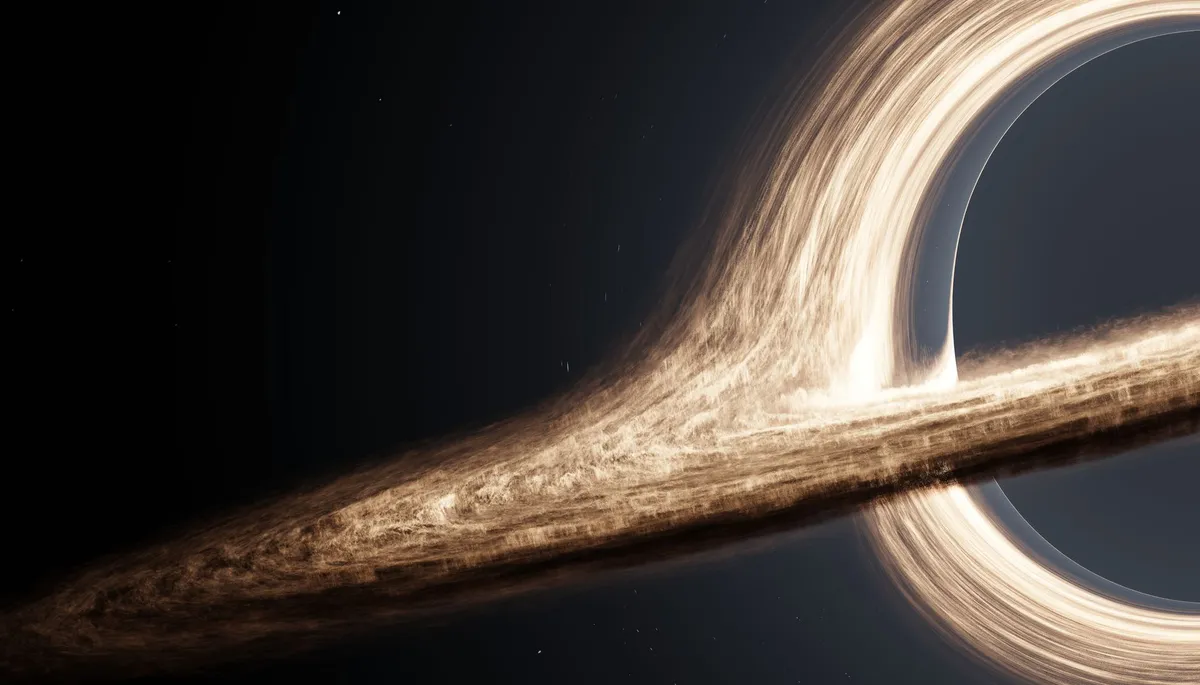
In a groundbreaking discovery, astronomers have identified a star that orbits the Milky Way's supermassive black hole, Sgr A*, at an unprecedented proximity. This star, dubbed S301, is not only the closest known star to the black hole but also moves at an extraordinary speed, providing a unique opportunity for scientists to glean new insights about black holes and their behaviors. Understanding the dynamics of S301's orbit could potentially unlock crucial details about the properties of Sgr A*, including its spin, a fundamental characteristic that has remained elusive in black hole research.
Sgr A* is the supermassive black hole located at the center of our galaxy, and while its presence has been confirmed since the 1970s, it wasn't until recent years that we could capture images of it, thanks to advancements in technology. The discovery of S301 marks a significant leap in our understanding of the black hole's environment and may allow astronomers to measure its spin for the first time.
Understanding Sgr A* and Its Stellar Neighbors
The supermassive black hole Sgr A* weighs in at an astonishing nearly 4 million solar masses, equivalent to approximately 1037 kilograms. Its mass has been determined largely through the gravitational influence it exerts on nearby stars, which serve as indirect instruments for observing the black hole's characteristics. By tracking the motion of these stars, astronomers have been able to estimate the mass of Sgr A* and infer its fundamental properties.
In the vicinity of Sgr A*, several stars have been identified that orbit at varying distances. These stars exhibit a range of orbital behaviors, and their gravitational interactions with the black hole provide critical data about its mass and size. However, to date, there has been a significant challenge in determining the spin of Sgr A*, one of the two fundamental properties of black holes, the other being charge. While charge remains largely inaccessible to observation, spin can be inferred from the behavior of nearby objects, particularly those on highly eccentric orbits.
The Discovery of S301
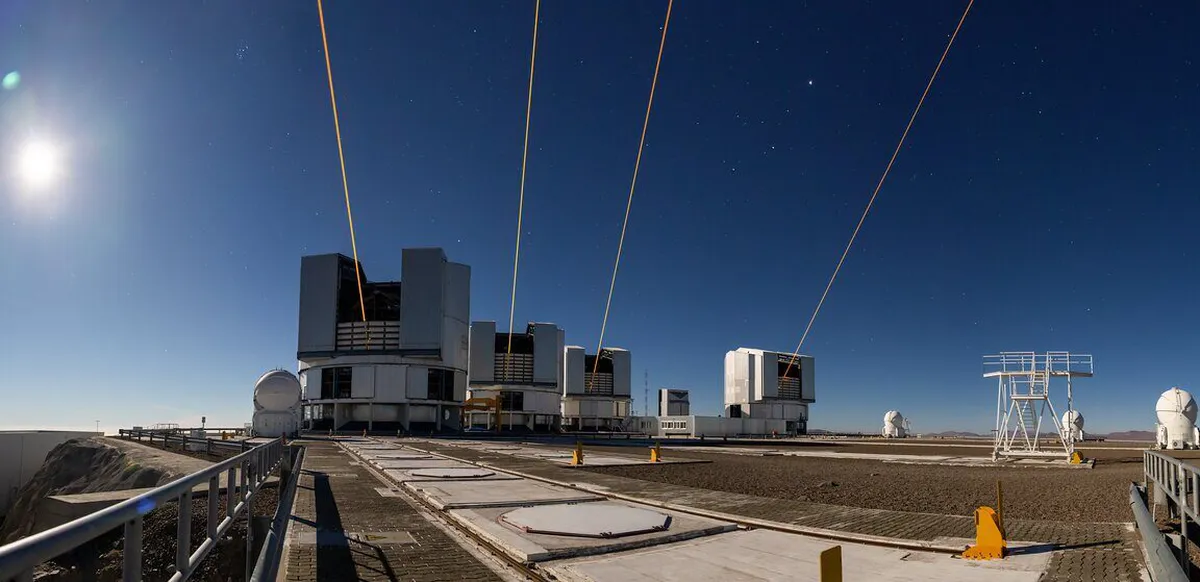
Researchers utilized the advanced GRAVITY instrument on the Very Large Telescope (VLT) at the European Southern Observatory to make this remarkable discovery. The GRAVITY instrument combines light from four individual telescopes, achieving a resolution equivalent to a single telescope with a diameter of 130 meters. This high-resolution capability has enabled astronomers to track the motion of stars in the immediate vicinity of Sgr A* with unprecedented precision.
During their observations, the research team spotted S301, a star moving away from Sgr A*. After months of tracking its trajectory, they were able to predict its position in historical data, confirming it as a genuine star. S301’s orbit is strikingly eccentric and completes a full revolution around Sgr A* in just 8.7 years, a significantly shorter period than any other known star in the area.
Characteristics of S301
S301's orbit has an eccentricity of 0.9832, indicating that it follows a highly elongated path around the black hole. For comparison, a perfectly circular orbit has an eccentricity of zero, while a value greater than one indicates a parabolic escape trajectory. S301's close approach to Sgr A* allows it to reach speeds of approximately 25,000 kilometers per second, or over 8% of the speed of light. At its closest approach, S301 comes within about 11 Astronomical Units (AU) of Sgr A*, which is roughly 10 times closer than the previous nearest star.

Implications for Black Hole Research
The implications of discovering S301 extend far beyond its immediate characteristics. By closely monitoring its orbit over time, researchers believe they can begin to estimate the spin of Sgr A*. Since the motion of nearby stars is influenced by the spin of the black hole, changes in S301’s trajectory could reveal key insights into the nature of Sgr A*.
As S301 continues its orbit, the research team anticipates that data from ongoing observations will refine their understanding of Sgr A*. Furthermore, improvements in observational technology could lead to even more precise measurements, enabling scientists to explore additional aspects of the black hole’s characteristics, such as its potential deviations from a perfect sphere and other properties that might affect its gravitational behavior.
Future Research Directions
The discovery of S301 opens up exciting avenues for future research. The ability to track the star’s orbit with sufficient precision could offer valuable data over the next decade, allowing astronomers to examine not only the spin of Sgr A* but also its gravitational interactions with surrounding stars. This information will contribute to a broader understanding of how supermassive black holes evolve and their roles in the dynamics of galaxies.
Moreover, S301's extreme orbit raises intriguing questions about its formation and evolution. Researchers speculate that S301 may have originated in a binary system that ventured too close to Sgr A*, leading to the ejection of its companion star. Understanding the dynamics of such interactions could shed light on the complex gravitational dance that occurs in the vicinity of supermassive black holes.
Key Takeaways
- The newly discovered star, S301, orbits the Milky Way's central black hole, Sgr A*, at an unprecedented proximity.
- S301's eccentric orbit and high speed may allow astronomers to measure the spin of Sgr A* for the first time.
- The GRAVITY instrument on the VLT has enabled precise tracking of stellar movements near Sgr A*.
- Future observations of S301 could unlock new insights into the behavior and characteristics of supermassive black holes.
- The dynamics of S301’s formation may inform our understanding of stellar interactions in the vicinity of black holes.
Frequently Asked Questions
What is Sgr A*?
Sgr A* is the supermassive black hole located at the center of the Milky Way galaxy. It has been a focal point of astronomical research since the 1970s and was imaged for the first time in recent years. Its mass is estimated to be around 4 million times that of our Sun, and it plays a crucial role in the dynamics of the galaxy.
Why is the spin of a black hole important?
The spin of a black hole is a fundamental property that influences its gravitational field and interactions with surrounding objects. Understanding a black hole's spin can help scientists learn about the black hole's origins, evolution, and the mechanisms behind its formation. It also provides insights into the nature of spacetime and the laws of physics in extreme conditions.
How did researchers discover S301?
S301 was discovered using the GRAVITY instrument on the Very Large Telescope, which combines light from four telescopes to achieve high-resolution observations. By tracking the star's motion and predicting its position based on historical data, researchers confirmed it as a genuine star in orbit around the black hole.
What are the implications of S301’s discovery for future research?
The discovery of S301 offers a unique opportunity to measure the spin of Sgr A* and investigate its properties in greater detail. Ongoing observations may reveal more about the star's orbital dynamics, the gravitational effects of Sgr A*, and the overall behavior of supermassive black holes, contributing to our understanding of galaxy formation and evolution.
Comments
The Rise of AI Trading Agents: What Binance's New Platform Means for Users
Binance has launched Agent OS, enabling AI agents to trade autonomously on behalf of users. This move raises questions about control, security, and the future of automated trading in the crypto space.

Related articles


Popular in Cloud Computing
- SK Hynix's Historic $26.5 Billion IPO: A New Era for Memory Chips
- Kubernetes and the Future of Desktop Infrastructure: A Paradigm Shift
- Amazon Expands Partnership with Nvidia, Tripling GPU Orders Amid AI Demand Surge
- Elon Musk's Evolving Relationship with Anthropic: A New Era for AI Hosting
- Emerging Rocket Launches: A New Era for Space Exploration