Chasing Shadows: The Concorde's Historic Solar Eclipse Adventure
In 1973, a team of scientists embarked on an extraordinary mission aboard the Concorde to capture the longest total solar eclipse observation in history. This article explores the remarkable journey and its scientific significance.
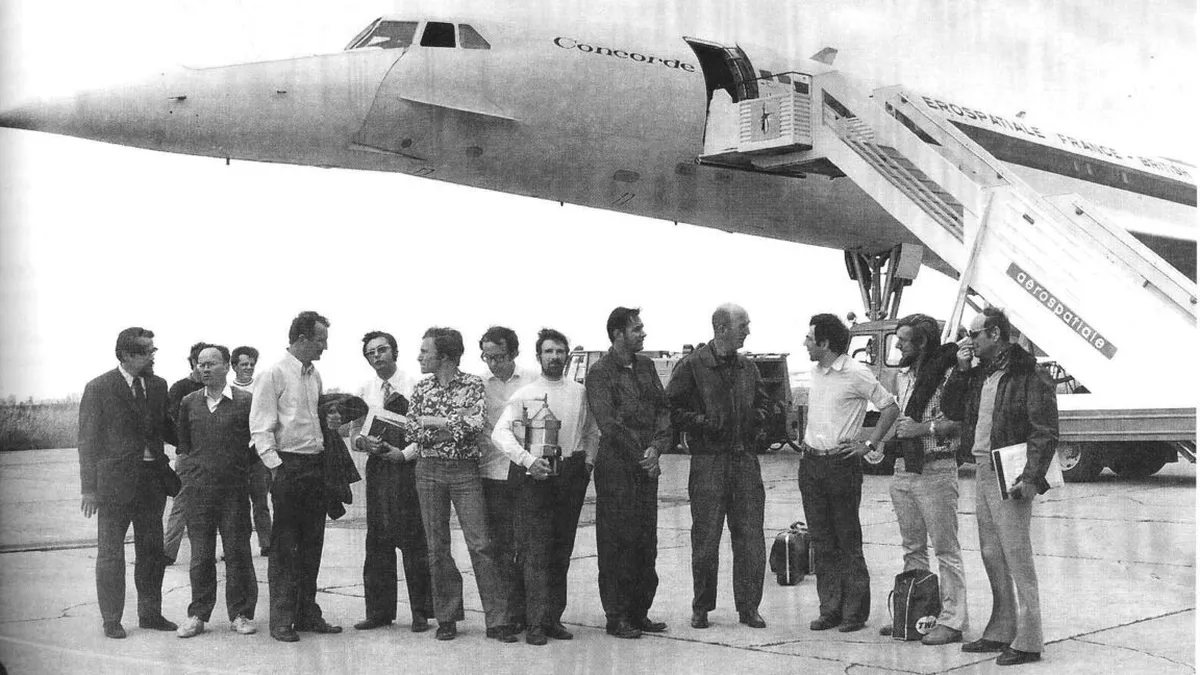
In the realms of aviation and astronomy, few stories are as exhilarating as that of the Concorde's remarkable chase of a total solar eclipse. On June 30, 1973, this iconic supersonic aircraft became a flying observatory, embarking on a mission to capture the solar corona during a total solar eclipse over Africa. The project was not only a feat of engineering but also a groundbreaking moment in solar observation, setting a world record for the longest duration of totality ever recorded from an aircraft. This article delves into the extraordinary journey of the Concorde, the scientists behind the mission, and the lasting impact of their findings on our understanding of the Sun.
The Concorde: An Engineering Marvel
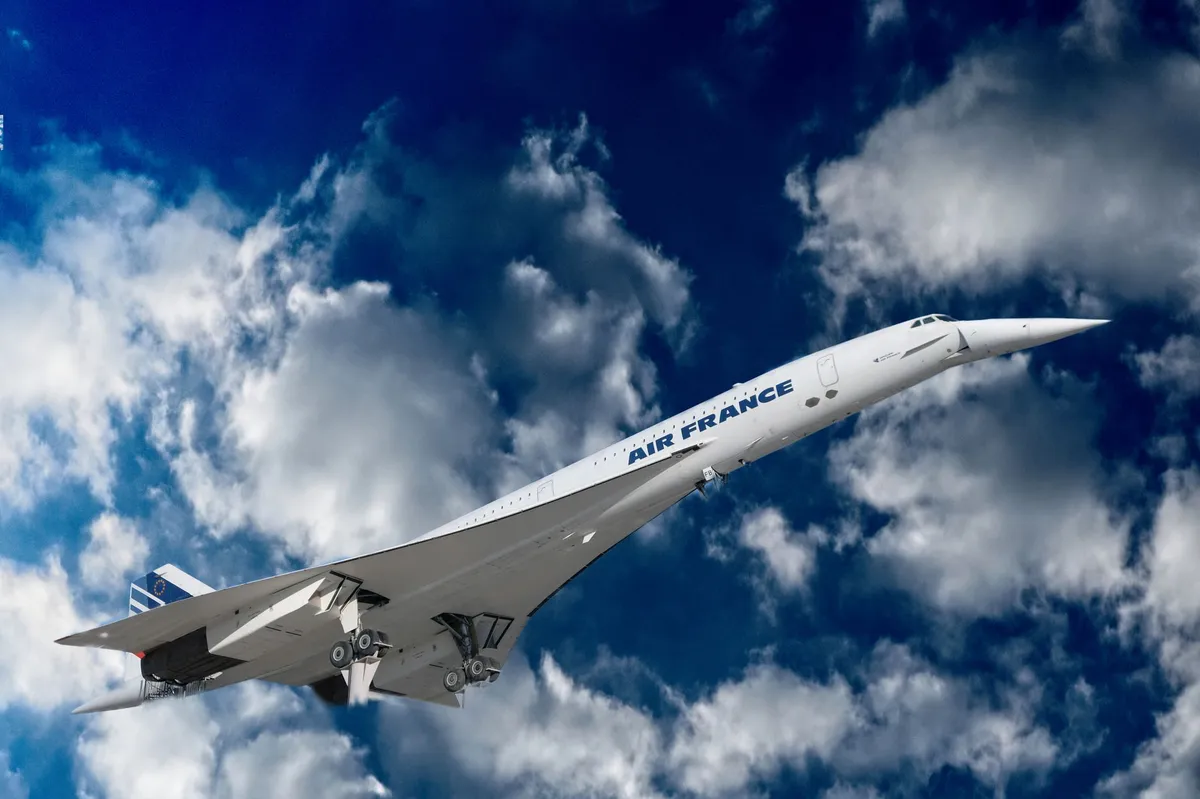
The Concorde, a symbol of aerospace innovation, was a joint venture between British and French manufacturers that revolutionized air travel. First taking to the skies in 1969 and entering commercial service in 1976, the Concorde was capable of flying at speeds exceeding Mach 2, or twice the speed of sound. Its unique design, characterized by its long fuselage and sharply pointed nose, allowed it to soar at altitudes of up to 60,000 feet, well above the majority of atmospheric interference. This altitude was advantageous for scientific observations, as it minimized the effects of humidity and atmospheric distortion.
Genesis of an Idea: Pierre Léna's Vision
The visionary behind this ambitious project was Pierre Léna, an astronomer from the Paris Observatory. Léna had previously conducted astronomical observations from high-altitude aircraft and was keenly aware of the unique opportunities that a total solar eclipse presented for scientific study. Recognizing that the Moon's shadow during an eclipse moves at a speed of over 2.2 times the speed of sound, Léna proposed using the Concorde to follow this shadow across the African continent. The goal was to maximize the duration of totality, which is the fleeting moment when the Sun is completely obscured by the Moon, allowing scientists to study the solar corona—an outer layer of the Sun's atmosphere that is normally hidden from view.
A Collaborative Effort: Building the Team
With the idea in motion, Léna assembled a team of esteemed scientists from various institutions, including the French National Centre for Scientific Research, Queen Mary College in London, and Kitt Peak Observatory in Arizona. Each scientist brought their expertise to the table, contributing to a diverse array of experiments designed to study different aspects of the corona during the eclipse. The mission involved not only observing the corona's structure but also investigating the dynamics of solar particles and the chromosphere, the layer of the Sun just below the corona.
- Duration of Totality: The Concorde was able to achieve a totality duration of 74 minutes, a record that remains unbroken.
- Flight Altitude: The aircraft flew at approximately 17 km, allowing for minimal atmospheric interference.
- Scientific Collaboration: The mission involved scientists from multiple countries and institutions, showcasing international cooperation in scientific research.
Preparation and Execution: A Historic Flight
Before the historic flight, the Concorde underwent significant modifications to accommodate the scientific instruments needed for the mission. Four portholes were installed in the aircraft's ceiling, each dedicated to different experiments. These alterations, along with the careful calibration of instruments, ensured that the team was prepared for the challenges of observing the eclipse from an aircraft in motion.
On the day of the eclipse, the Concorde took off from Las Palmas in the Canary Islands, setting its course for a precise rendezvous with the eclipse's shadow over Mauritania. The flight was meticulously planned, with pilots needing to maintain an accuracy of within one nautical mile and 15 seconds to successfully intersect the eclipse path. Achieving this level of precision was remarkable, especially given the technology of the time, which relied solely on inertial navigation systems.
Witnessing the Eclipse: A Unique Experience
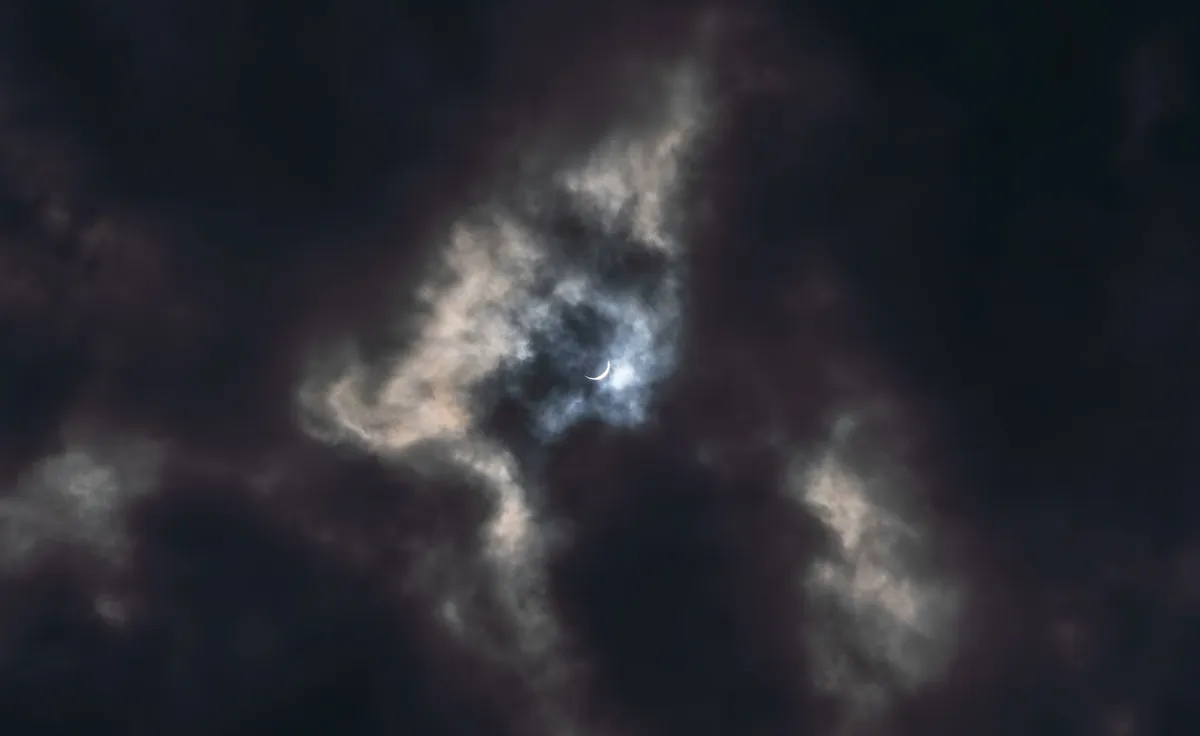
As the Concorde entered the shadow of the eclipse, the atmosphere inside the aircraft was electric with anticipation. Léna later described the moment as surreal, with the sky turning dark and the curvature of the Earth becoming visible from the windows. For a brief period, the observers were treated to a stunning view of the solar corona, a phenomenon that is rarely seen due to the overwhelming brightness of the Sun. They collected invaluable data on the corona's structure and dynamics, which greatly enhanced our understanding of solar activity.
Despite facing headwinds that reduced their observation time, the team managed to collect 74 minutes of totality—an achievement that remains unparalleled in the decades since. The data gathered during this mission has been instrumental in advancing solar physics, and the success of the project paved the way for future airborne astronomy missions.
Legacy and Impact: A Lasting Contribution to Science
The Concorde's chase of the solar eclipse was more than just a remarkable flight; it was a significant contribution to the field of solar research. The data gathered during the mission has been used for numerous studies and has inspired further innovations in airborne and space-based observations. Following the flight, the Concorde landed in N’Djamena, Chad, where the crew was greeted with jubilant celebrations from the locals who had gathered to witness the event.
Today, the Concorde Prototype 001 is preserved at the National Air and Space Museum of France, serving as a testament to the ingenuity of the scientists and engineers who made this extraordinary mission possible. The aircraft stands not only as a relic of aviation history but also as a symbol of the collaborative spirit that drives scientific exploration.
Key Takeaways
- The Concorde's eclipse mission set a world record with 74 minutes of totality.
- Pioneering modifications to the aircraft enabled groundbreaking solar observations.
- The successful collaboration of international scientists advanced the understanding of the solar corona.
Frequently Asked Questions
What made the Concorde suitable for the solar eclipse mission?
The Concorde was uniquely positioned for the mission due to its ability to fly at supersonic speeds and altitudes above most atmospheric interference. This capability allowed scientists to observe the solar corona during a total eclipse, maximizing the duration of totality and providing clearer data for their experiments.
How did the scientists prepare for the flight?
Preparation for the flight involved extensive modifications to the Concorde, including the installation of portholes for scientific instruments and conducting rehearsal flights. The team meticulously planned the flight path to ensure they would intersect the eclipse's shadow with high precision, relying on inertial navigation systems for accuracy.
What were some of the key scientific objectives of the mission?
The primary objective of the mission was to study the solar corona, including its structure, composition, and dynamics. The scientists aimed to gather data on the corona's infrared emissions and the behavior of solar particles, which are critical for understanding solar activity and its impact on space weather.
What is the legacy of the Concorde's eclipse chase?
The legacy of the Concorde's eclipse chase extends beyond the record-setting observations. The data collected has significantly contributed to the field of solar physics and has inspired subsequent airborne and space-based observational missions. The Concorde itself remains an iconic symbol of innovation in both aviation and science.
Comments
Volkswagen's Bold Move: A Pickup Truck for the American Market
Volkswagen aims to reclaim its foothold in the U.S. automotive market with plans to introduce a new pickup truck by 2030. This strategic pivot highlights the growing demand for versatile vehicles in America and VW's commitment to adapting to regional preferences.

Related articles


Popular in Guides
- Boomers Lead the Charge in Alcohol Abstinence: Insights from New Research
- Understanding the Physics of Silly Sprinklers and Feynman's Reverse Sprinkler Puzzle
- Mark Zuckerberg Acquires Strancally Castle: A Look at His New Irish Estate
- Last Chance to Score Discounts for TechCrunch Disrupt 2026
- The Coming Air-Conditioning Revolution in Europe: A Necessity or a Luxury?