Revolutionizing Wearable Tech: The Future of E-Tattoos with Conductive Ink
Penn State researchers have developed innovative conductive e-tattoos that promise to enhance biosensing capabilities. These colorful designs could change the landscape of wearable health technology.
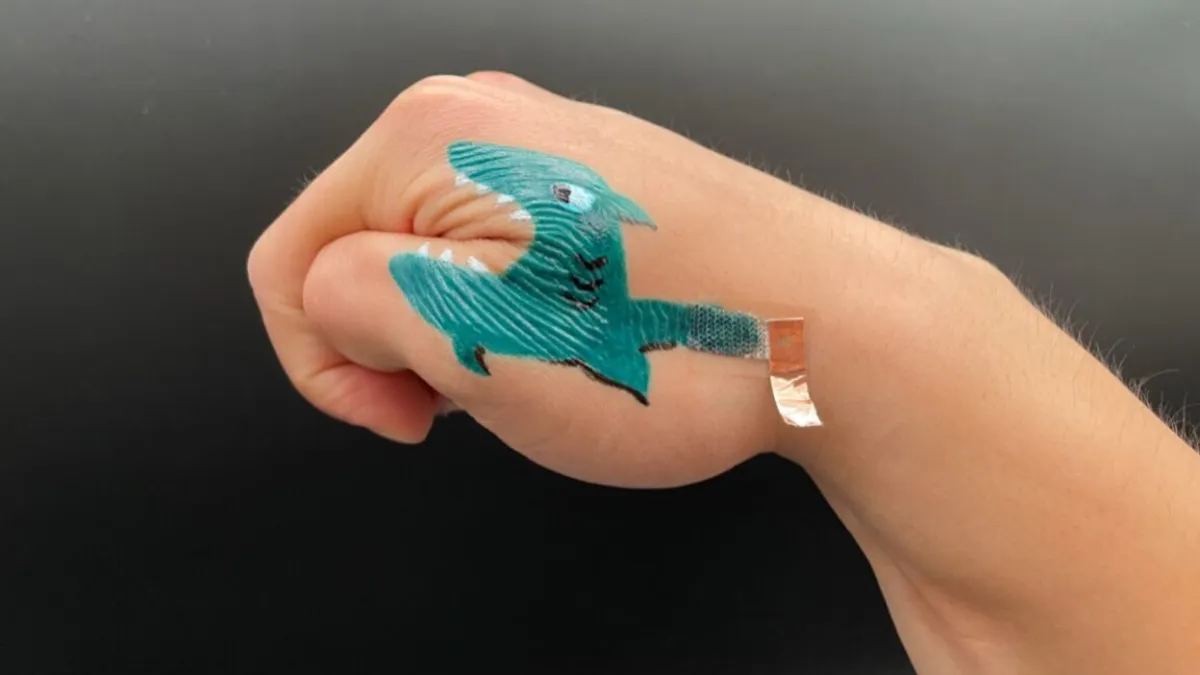
Imagine wearing a tattoo that not only showcases your personality but also monitors your health in real time. Researchers at Pennsylvania State University have taken a significant step towards making this a reality with the development of a novel conductive ink that can be painted directly onto the skin. This ink dries into functional electrodes, capable of monitoring various physiological signals while being customizable to each user’s preference. Published in the Proceedings of the National Academy of Sciences, this innovative approach to wearable biosensors holds the promise of enhancing personal health monitoring and revolutionizing the way we interact with technology.
The evolution of wearable tech has been remarkable, transitioning from simple pedometers to advanced health monitoring systems. Yet, traditional wearables often come with limitations, especially in terms of comfort and accuracy. The new painted e-tattoos could overcome these hurdles, offering a unique solution that blends functionality with personalization.
The Evolution of E-Tattoos
E-tattoos, or electronic tattoos, have been around for over a decade, serving as a bridge between the digital world and human physiology. Traditionally, these devices are made from ultra-thin polymers equipped with circuit elements, allowing them to measure vital signs such as heart activity and muscle contractions. However, previous iterations of e-tattoos faced challenges, particularly when it came to adhering to curved or hairy surfaces, which can interfere with signal accuracy.
For instance, the standard practice of applying commercial electrodes can create air gaps, leading to inaccuracies in biosignal readings. To address these limitations, researchers have been exploring new materials and methods. In 2024, the development of special polymer-based conductive inks for scalp applications showcased the potential for mobile EEG monitoring outside clinical settings. Yet, the quest for a truly adaptable and user-friendly solution continued.

The Breakthrough: WE-PPD Conductive Ink
The Penn State team, led by mechanical engineer Larry Cheng, has taken a significant leap forward by creating a conductive ink known as WE-PPD. Unlike traditional electrodes that may dislodge during physical activity, this new ink behaves much like face paint, allowing users to apply it in vibrant, custom designs directly on their skin.
The formulation combines various polymers and acidic additives in a water-based solution, leveraging poly (3,4-ethylenedioxythiophene): poly (styrene sulfonate) (PEDOT:PSS) for electrical conductivity and plasticizers for flexibility. This unique composition enables the ink to fill the skin's contours, resulting in a strong connection that enhances signal capture. The ability to personalize designs also makes the technology not only functional but aesthetically appealing.
Real-World Applications and Testing
The practicality of the painted e-tattoos has been demonstrated through a series of rigorous laboratory tests. The team successfully monitored heart activity while subjects engaged in various physical activities, such as running and weightlifting. Moreover, the e-tattoos were used for gesture recognition, allowing users to control prosthetic limbs, and to monitor brain activity through hair.
One of the standout features of the WE-PPD ink is its impressive stretchability, accommodating movements up to 170% without failure. It also boasts higher water vapor permeability compared to conventional medical-grade films, an essential quality for comfort during extended wear. Importantly, the painted electrodes do not cause skin irritation even after prolonged use, making them suitable for daily applications.
The Future of E-Tattoos: Disposable and Reusable
One of the most exciting aspects of this technology is the potential for disposability. The painted electrodes can be washed away and reapplied, allowing users to maintain their health monitoring systems easily. A single bottle of WE-PPD ink could provide enough material to create multiple electrodes over several days, offering a flexible and cost-effective solution for ongoing health monitoring.
Cheng envisions a future where expensive sensing modules remain separate from the disposable electrodes, enhancing the overall usability of the technology. This approach not only makes health monitoring more accessible but also encourages users to adopt a more proactive stance towards their well-being.

Challenges and Considerations
Despite the promising advancements, there are still hurdles to overcome before the widespread adoption of painted e-tattoos in clinical settings. A key concern is the need for comprehensive safety evaluations, particularly regarding RF-induced heating during medical imaging procedures. The sensors' strong adhesion properties, while beneficial for signal capture, could pose risks that need thorough investigation.
The team is currently focusing on addressing these safety concerns and exploring additional applications, such as monitoring plant health. The ability of the painted sensors to conform to complex shapes could open new avenues in agricultural technology, further expanding the potential market for this innovative product.
Key Takeaways
- Penn State's WE-PPD ink: A novel conductive ink that can be painted directly onto the skin for biosensing.
- Customization: Users can personalize designs, making health monitoring more appealing.
- Stretchability and Comfort: The e-tattoos can stretch up to 170% and are free from skin irritation.
- Disposable and Reusable: Painted electrodes can be easily removed and reapplied, providing a cost-effective solution.
- Future Applications: Potential expansion into plant health monitoring and other fields.
Frequently Asked Questions
What are e-tattoos and how do they work?
E-tattoos are electronic devices that can be applied to the skin, functioning as sensors to monitor various physiological signals. They typically use conductive materials that establish connections with the skin, allowing for accurate readings of vital signs such as heart rate and brain activity. The recent development of painted e-tattoos allows for greater customization and improved adherence compared to traditional methods.
How do painted e-tattoos differ from traditional wearables?
Painted e-tattoos, like the WE-PPD ink developed at Penn State, offer a more personalized and adaptable approach to health monitoring. Unlike traditional wearables that may be rigid and less comfortable, these tattoos can conform to the skin's contours, providing better signal connectivity and reducing the risk of displacement during movement. Additionally, their customizable designs make them more appealing to users.
What are the potential risks associated with using e-tattoos?
While e-tattoos present exciting opportunities for health monitoring, there are potential risks that need to be addressed. One major concern is the safety of the materials used, particularly during medical imaging procedures like MRI scans. Researchers are actively investigating these risks to ensure that the technology is safe for widespread clinical use.
What are the future applications of this technology?
The future applications of painted e-tattoos are vast, extending beyond personal health monitoring. Researchers are exploring potential uses in agricultural technology, such as monitoring plant health. Additionally, the adaptability of the technology could lead to innovations in various fields, enabling more detailed and personalized insights across diverse applications.
Comments
Google Images Redesign: A New Era of Visual Discovery
Google Images undergoes a significant redesign, shifting its focus towards discovery and inspiration. With features reminiscent of Pinterest, this update aims to enhance user engagement and ad revenue while introducing AI-driven image generation capabilities.

Related articles




Popular in Developer Tools
- Why Greylock Partners Caps Fund Size in a Growing Industry
- Roblox Unleashes AI-Powered Game Creation for Mobile Users
- DeepSeek Launches Open Source Alternative to Claude Code, Ups API Pricing
- Cursor Launches Origin: A New Challenger to GitHub's Dominance
- Apple's Camera-Equipped AirPods: Innovation or Invasion?