DeepSeek Launches Open Source Alternative to Claude Code, Ups API Pricing
DeepSeek has unveiled its new open-source agent harness, DeepSeek Harness, alongside its V4-Pro model, shifting the landscape for AI developer tools and altering API pricing.
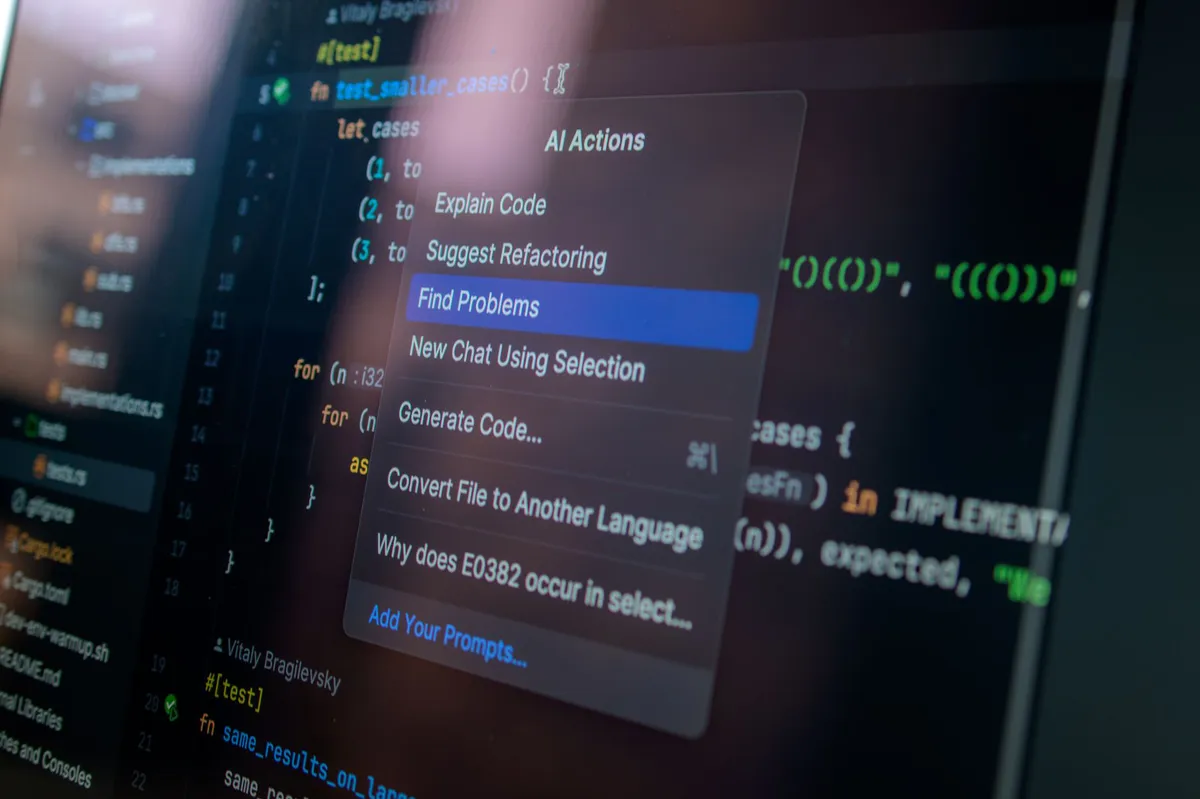
In a significant move that could reshape the landscape for AI developers, DeepSeek has launched its open-source agent harness, DeepSeek Harness, alongside the general availability of its flagship V4-Pro model. This development positions DeepSeek not just as a provider of intelligent models but as a crucial player in the ecosystem surrounding AI development tools. By introducing these innovations, DeepSeek is challenging established players like Anthropic and OpenAI, particularly their Claude Code and Codex products. This article delves into the implications of these releases, the technical features of DeepSeek Harness, and the shift in API pricing that could impact developers and businesses alike.
DeepSeek, a Chinese AI lab, has been making waves in the AI community, and with the launch of DeepSeek Harness v0.1, the company is expanding its reach into the software developers utilize to implement AI agents. The open-source nature of Harness presents a compelling alternative to integrated coding-agent environments, and the launch comes with a strategic decision to increase API pricing, a move that signals a shift in how DeepSeek plans to compete in the burgeoning AI development space.

DeepSeek Harness: An Open-Source Alternative
DeepSeek Harness, also referred to as dsh, is built on the Cordis framework and is designed with modularity at its core. The premise of Harness is straightforward: everything is a plugin. This allows developers to mix and match various components of the agent runtime, including models, tools, and workflows, without being locked into a single system. Such flexibility is a stark contrast to the more rigid structures often associated with existing competitors like Claude Code and OpenAI’s Codex.
A Modular Ecosystem
With a focus on extensibility, DeepSeek Harness enables developers to create highly customized environments tailored to their specific needs. The architecture allows for:
- **Model Integration**: Developers can incorporate various models, including DeepSeek, Anthropic, and OpenAI, into their workflows.
- **Custom Plugins**: Users can build and swap out tools, skills, and user interfaces as needed.
- **Enhanced Control**: The harness supports features such as planning, execution of shell commands, and repository inspection.
- **Security Features**: Plugin-based permission controls allow users to configure approval policies and sandbox environments.
V4-Pro: Enhanced Agent Capabilities
Alongside the launch of Harness, DeepSeek introduced the general availability of its V4-Pro model. This model, featuring 1.6 trillion parameters and supporting up to one million tokens in context windows, is explicitly optimized for agent-oriented tasks. The enhancements in V4-Pro focus on agent capabilities, positioning it as a powerful tool for developers working with complex coding tasks.
Performance Metrics
DeepSeek has publicly shared its performance benchmarks for V4-Pro, which, while company-reported, indicate substantial improvements across agent-oriented tests. The model now offers:
- **Improved Reasoning Effort Controls**: Developers can manage the intensity of reasoning applied to tasks, optimizing performance based on the complexity of the problem.
- **Higher Benchmark Scores**: V4-Pro-0813 achieved notable scores on several key benchmarks, although competitors like Fable 5 still showed stronger performance in some areas.
- **Integration with OpenAI Tools**: Support for the OpenAI Responses API reduces integration overhead for existing applications.
API Pricing Changes: A Strategic Shift
Perhaps the most striking change accompanying the launch of DeepSeek Harness and V4-Pro is the restructuring of API pricing. Starting August 16, developers accessing DeepSeek's API will encounter a new pricing model that introduces peak and off-peak rates, significantly increasing costs for both cache-miss and output tokens. This shift marks a departure from the previous flat pricing model, which had made DeepSeek's services more accessible.
Implications for Developers
The new pricing structure raises important questions for developers already utilizing DeepSeek in their workflows. The costs for V4-Flash and V4-Pro are now set at:
- **V4-Flash**: $0.14 per million cache-miss input tokens and $0.28 per million output tokens.
- **V4-Pro**: $0.435 for cache-miss input and $0.87 for output.
- **Cache Hits**: Prices are significantly lower, with V4-Flash at $0.0028 and V4-Pro at $0.003625.
These changes could compel developers to reassess their usage of DeepSeek services, particularly in production environments where cost management is critical. Additionally, the introduction of off-peak rates may incentivize users to adjust their usage patterns to minimize expenses.
Competitive Landscape: DeepSeek vs. The Giants
In launching DeepSeek Harness and V4-Pro, DeepSeek is clearly positioning itself against established players like Anthropic and OpenAI. While the capabilities of Harness are not yet fully comparable to the comprehensive developer experiences provided by Claude Code and Codex, its modular architecture and open-source nature give it a unique edge. This flexibility could attract developers seeking alternatives to the more rigid, commercial offerings from larger companies.
Market Reactions
The initial reception of DeepSeek Harness on GitHub has been promising, with approximately 27,500 stars and 2,000 forks reported shortly after launch. However, it is essential to recognize that these figures, while indicative of interest, do not necessarily reflect long-term adoption or viability. Developers are likely to evaluate the features of Harness against the backdrop of their existing tools and workflows.
Key Takeaways
- DeepSeek Harness offers a modular, open-source alternative to coding-agent environments.
- V4-Pro enhances agent capabilities, optimizing performance for complex tasks.
- API pricing restructuring could impact cost management for developers.
- DeepSeek is competing directly with established players like Anthropic and OpenAI.
- The developer community's initial response suggests significant interest but requires further evaluation.
Frequently Asked Questions
What is DeepSeek Harness, and how does it differ from Claude Code and Codex?
DeepSeek Harness is an open-source agent harness that emphasizes modularity and flexibility, allowing developers to create custom environments by mixing various plugins. Unlike Claude Code and Codex, which offer more integrated solutions, Harness allows developers to swap out components freely, making it an attractive option for those seeking more control over their AI implementations.
What are the key features of the V4-Pro model?
The V4-Pro model boasts 1.6 trillion parameters and is designed for complex agent-oriented tasks. It supports extensive context windows and includes advanced reasoning effort controls, enabling developers to optimize performance based on the complexity of the task at hand. Additionally, V4-Pro integrates seamlessly with the OpenAI Responses API, facilitating easier integration into existing workflows.
How will the new API pricing affect developers using DeepSeek?
The new API pricing introduces peak and off-peak rates, significantly increasing costs for both cache-miss and output tokens. Developers will need to reassess their usage patterns and potentially adjust how they utilize DeepSeek's services to manage costs effectively, particularly in production environments where budget constraints are critical.
Is DeepSeek Harness ready for production use?
Currently, DeepSeek Harness is in developer preview and is not presented as a stable production-ready platform. The developers have warned that compatibility-breaking changes may occur, which means enterprise developers should exercise caution before fully integrating it into their existing systems.
Comments
Popular in Developer Tools
- Why Greylock Partners Caps Fund Size in a Growing Industry
- Roblox Unleashes AI-Powered Game Creation for Mobile Users
- Cursor Launches Origin: A New Challenger to GitHub's Dominance
- Apple's Camera-Equipped AirPods: Innovation or Invasion?
- Google’s Motion Assist Dots: A Game-Changer for Motion Sickness on Android