India's Skyroot Aerospace Celebrates Vikram-1 Rocket's Historic Launch
Skyroot Aerospace's Vikram-1 has made history as India's first privately-developed rocket to reach orbit, marking a significant milestone in the country's space industry. This achievement opens new avenues for commercial satellite launches and highlights India's growing capabilities in the global aerospace sector.
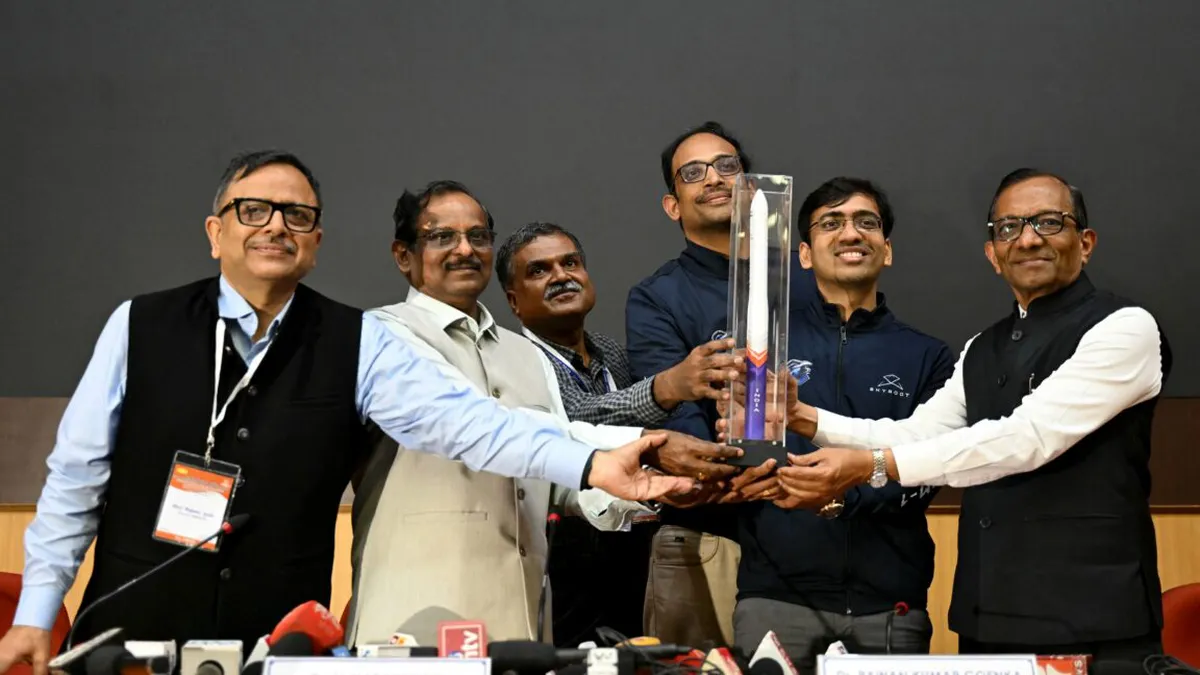
The world of space exploration witnessed a remarkable achievement as India's Skyroot Aerospace successfully launched its Vikram-1 rocket into orbit, marking a watershed moment for the nation’s burgeoning private space sector. The launch, celebrated as a "grand success" by Indian space officials, occurred on a Saturday morning from the island spaceport of Sriharikota. The rocket's ascent into a 280-mile-high orbit showcased not only technical prowess but also the potential for commercial satellite launches that could transform the landscape of the aerospace industry in India.
The Vikram-1 lifted off at 1:35 AM EDT (06:35 UTC), amid a backdrop of excitement and anticipation. Although the launch faced a slight delay due to a last-minute technical issue, the countdown was resumed and culminated successfully with the ignition of the rocket’s solid-fueled booster. This moment was not just about the launch; it symbolized India's growing ambition in the global space arena.

The Significance of Vikram-1's Launch
Vikram-1 is not just another rocket; it is India's first fully commercial satellite launcher, and its successful debut is a milestone that could redefine the country’s space capabilities. Standing approximately 72 feet (22 meters) tall, the Vikram-1 has the capacity to carry payloads of up to 770 pounds (350 kilograms) into low-Earth orbit (LEO). This positions it as a competitive player in the small satellite launch market, a segment that has gained immense traction globally in recent years.
Strategic Implications for India's Space Industry
The successful launch of Vikram-1 signifies more than just a technical achievement; it has strategic implications for India's space industry. With the private sector now playing a pivotal role, India can enhance its competitiveness in the global market where companies like SpaceX and Rocket Lab have already established strong footholds. The Vikram-1’s capabilities allow it to compete directly with smaller rockets, such as Rocket Lab’s Electron, which has dominated the dedicated small satellite launch sector.
Market Context: The Rise of Private Space Entrepreneurs
The launch of Vikram-1 is indicative of a broader trend where private companies are increasingly entering the space exploration arena. In the past, space missions were predominantly the domain of government agencies, but the landscape has shifted dramatically. Private enterprises are now innovating rapidly, creating more cost-effective and efficient methods for satellite deployment. The rise of companies like SpaceX, Blue Origin, and now Skyroot Aerospace reflects a significant democratization of access to space.
The Role of Skyroot Aerospace
Founded with the vision of making space accessible for everyone, Skyroot Aerospace is among the first few Indian startups to focus on space technology. The company has leveraged advanced engineering practices and innovative technologies to develop the Vikram series of rockets. Skyroot’s approach combines the agility of a startup with deep technical expertise, enabling it to respond quickly to market demands.
Challenges Ahead: Navigating the Commercial Space Landscape
While the Vikram-1’s launch has set a positive precedent, challenges remain. The commercial space industry is highly competitive and requires continuous innovation to stay relevant. Factors such as regulatory frameworks, safety standards, and the need for reliable launch schedules play critical roles in determining the success of private space ventures.
- Regulatory Challenges: Navigating the complex legal and regulatory environments can be daunting for private companies. Ensuring compliance with national and international laws is essential for operations.
- Funding and Investment: Securing adequate funding is crucial for research and development, as well as for scaling operations. Investors are increasingly interested in space technology, but the market is still volatile.
- Market Competition: Competing with established players necessitates constant innovation and differentiation. New entrants must find unique value propositions to capture market share.
Looking Forward: The Future of Indian Space Exploration
The successful launch of Vikram-1 is just the beginning for Skyroot Aerospace and India's private space sector. With plans for future missions and the potential for a range of applications, including communications, Earth observation, and scientific research, the prospects are bright. As the global demand for satellite launches continues to rise, India’s entry into this market could lead to significant economic benefits, including job creation and technological advancements.
Collaboration and Partnerships
To harness the full potential of this opportunity, collaboration between government agencies and private companies will be crucial. The Indian Space Research Organisation (ISRO) has been supportive of private initiatives, and partnerships can lead to enhanced capabilities and shared resources. Such collaborations could enable faster development cycles and more ambitious projects, ultimately benefiting the entire space ecosystem.
Key Takeaways
- The Vikram-1 rocket represents India's first fully commercial satellite launcher.
- Skyroot Aerospace's launch signifies a shift towards private sector involvement in space exploration.
- Challenges remain, including regulatory hurdles and market competition.
- Future collaborations with ISRO could enhance capabilities and accelerate growth.
- This launch could open up economic opportunities for India in the global space market.
Frequently Asked Questions
What is the Vikram-1 rocket's payload capacity?
The Vikram-1 rocket can carry payloads of up to 770 pounds (350 kilograms) into low-Earth orbit, making it a competitive option for launching small satellites.
How does Vikram-1 compare to other small satellite launch vehicles?
Standing at approximately 72 feet (22 meters) tall, the Vikram-1 is larger than the Electron rocket developed by Rocket Lab, which is currently one of the leading dedicated small satellite launch vehicles.
What challenges does Skyroot Aerospace face moving forward?
Skyroot Aerospace must navigate regulatory challenges, secure funding, and compete with established players in the commercial space sector. Continuous innovation will be key to their success.
How important is collaboration with ISRO for Skyroot Aerospace?
Collaboration with ISRO is vital for Skyroot Aerospace as it can provide access to resources, expertise, and support that can accelerate their development and growth in the Indian space market.
Comments
Navigating the Future of Robotaxis: The Clash of Industry Giants
As autonomous vehicle regulations heat up, major players like Uber and Waymo clash over robotaxi policies in Washington, D.C. This article explores the implications of their rivalry and the future of autonomous transportation.

Related articles


Popular in Cloud Computing
- SK Hynix's Historic $26.5 Billion IPO: A New Era for Memory Chips
- Kubernetes and the Future of Desktop Infrastructure: A Paradigm Shift
- Amazon Expands Partnership with Nvidia, Tripling GPU Orders Amid AI Demand Surge
- Elon Musk's Evolving Relationship with Anthropic: A New Era for AI Hosting
- Emerging Rocket Launches: A New Era for Space Exploration