Europe's Space Dilemma: Caught Between American Innovation and Domestic Limitations
As SpaceX revolutionizes the space launch market with cost-effective solutions, Europe faces a critical challenge: how to compete in a landscape dominated by American technology. This article explores the implications for Europe's space strategy and its dependence on costly domestic alternatives.
As the global space launch landscape evolves, Europe finds itself at a crossroads. The rise of SpaceX and its innovative Falcon 9 rocket has dramatically reshaped the economics of space launches, creating a significant disparity in costs and capabilities between the United States and Europe. With more than 75% of all mass launched into orbit now attributed to SpaceX, Europe faces a pressing dilemma: rely on American launch technology or invest in its own, albeit more expensive, domestic solutions. This article delves into the nuances of this situation, examining the implications for Europe’s strategic position in space.
The Falcon 9 Revolution
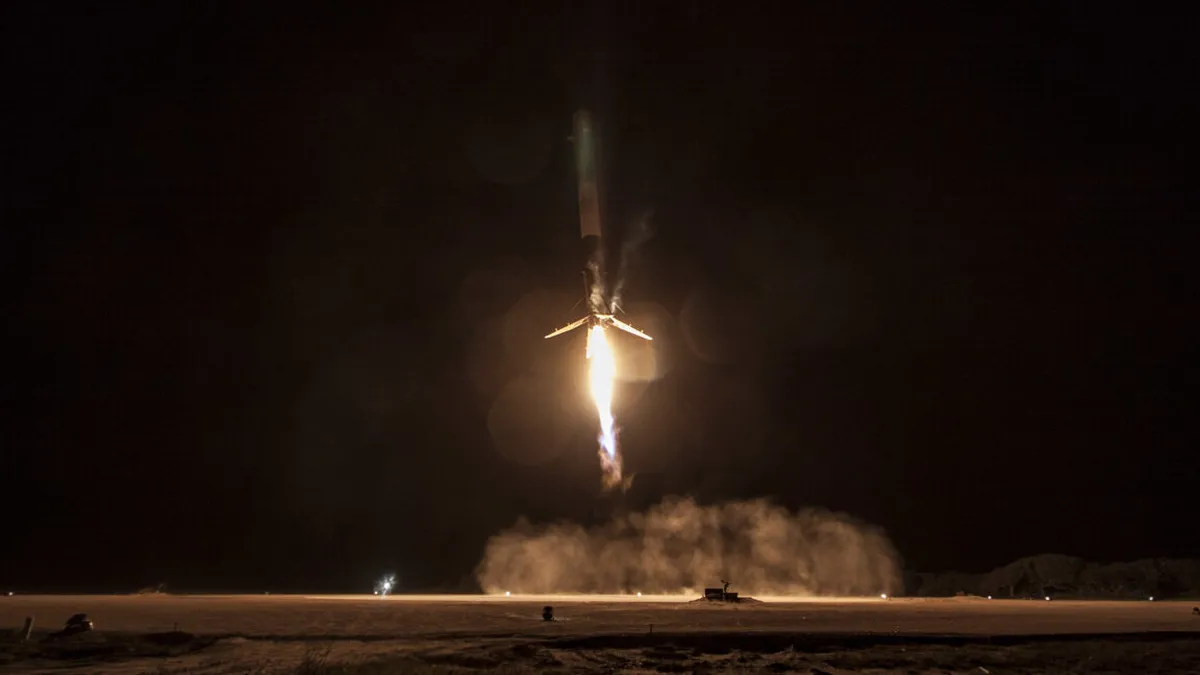
SpaceX has fundamentally transformed the space launch industry since it successfully landed its Falcon 9 rocket for the first time in December 2015. This achievement marked the beginning of a new era in which reusable rockets became a viable option, allowing for significant cost reductions and increased launch frequency. Over the past decade, SpaceX has ramped up its launch cadence to the point where it now conducts dozens, if not hundreds, of launches each year, primarily for its Starlink satellite constellation but also for a range of commercial and governmental payloads.
According to recent research published in Economics Letters, the impact of the Falcon 9’s introduction and the broader adoption of reusable rocket technology has been profound. By analyzing a dataset of over 6,700 launches from 1960 to 2025, researchers revealed how the U.S. has regained its position as a leader in global payload capacity. After a period of decline in the early 2000s, the U.S. now dominates the market, substantially outpacing not only Russia but also China and Europe.
Changing Economics of Space Launches
One of the most striking elements of SpaceX's influence is the significant reduction in launch costs. A decade ago, the United States and Europe maintained comparable launch expenses. Today, however, European launch costs have soared to three times higher than U.S. prices. Current estimates indicate that the average cost of sending a kilogram of payload to orbit in the U.S. is approximately $3,225. In stark contrast, costs in Europe reach nearly $9,897 per kilogram, while nations like India and Russia see even higher figures at $15,000 and $6,682 respectively.
This disparity can largely be attributed to several key factors:
- Rocket Size: Larger rockets allow for more payload capacity, reducing the cost per kilogram.
- Increased Launch Cadence: Higher launch rates spread operational costs over more missions.
- Rocket Reusability: The ability to reuse rocket components dramatically cuts costs.
Despite India's reputation for a frugal space program, its high costs stem from a focus on smaller rocket sizes, which leads to higher fixed costs per payload. This illustrates the broader challenge of scaling space launch capabilities effectively.
Europe's Strategic Dilemma
For European nations, the future of their space ambitions hangs in the balance. The researchers argue that relying solely on domestic rocket technology will lead to escalating costs and slow the development of critical space-based infrastructures, such as satellite constellations. This situation creates a precarious choice: continue to depend on cost-effective American technology or invest in developing homegrown solutions that are currently expensive and less efficient.
Europe's dilemma is exacerbated by a sluggish response to the rapid advancements made by American and Chinese companies in reusable launch technology. Initiatives like the European Space Agency's Themis program, which was intended to test suborbital hops by 2022, have yet to yield results, highlighting the slow pace of innovation within Europe’s space sector.
Global Implications of the Launch Market Shift
The implications of these developments extend beyond Europe. As SpaceX continues to dominate the launch market, other spacefaring nations are also feeling the pressure to innovate. China's space industry is aggressively pursuing reusable launch technology, further intensifying competition in an already dynamic market. The reliance of various global entities on SpaceX for launches raises questions about the long-term sustainability of this model and its potential to stifle the development of independent capabilities in other countries.
To remain competitive, emerging spacefaring nations must prioritize the development of modern launch technologies. This not only involves investing in research and development but also fostering collaboration between public and private sectors to leverage the strengths of both.
Looking Ahead: What Should Europe Do?
Given the current landscape, what steps should European policymakers consider? First and foremost, there is an urgent need for a unified strategy that balances the use of American launch services with the development of domestic capabilities. This could involve:
- Investment in R&D: Prioritizing funding for innovative launch technologies that can compete with SpaceX.
- Public-Private Partnerships: Encouraging collaboration between governmental agencies and private companies to accelerate technological advancements.
- International Collaboration: Working with other nations to share knowledge and resources in space technology.
Ultimately, Europe must navigate its way through these challenges to maintain a significant presence in the global space arena. By embracing innovation and fostering collaboration, European nations can develop the capabilities needed to thrive in an increasingly competitive environment.
Key Takeaways
- SpaceX's Falcon 9 has transformed the space launch industry, dominating over 75% of launches.
- The cost of launching payloads in Europe is now three times higher than in the U.S.
- European nations face a critical choice between relying on American technology or investing in expensive domestic alternatives.
- Innovation and collaboration are essential for Europe to enhance its space capabilities.
Frequently Asked Questions
Why has SpaceX been so successful in the space launch industry?
SpaceX's success can be attributed to its pioneering approach to rocket reusability, which significantly reduces launch costs. The company's ability to rapidly iterate and scale its technology has allowed it to achieve a high launch cadence, which further drives down costs and increases efficiency. This combination of innovation and operational excellence has positioned SpaceX as a leader in the space launch market.
What are the implications of high launch costs for European countries?
High launch costs can hinder the growth of Europe’s space industry by making it less competitive on a global scale. As other nations, particularly the U.S. and China, continue to lower their launch costs through innovative technologies, European countries may struggle to maintain their strategic presence in space. This could slow down the development of crucial infrastructures, such as satellite constellations, which are essential for various applications, including communication, navigation, and Earth observation.
How can Europe improve its space launch capabilities?
To improve its space launch capabilities, Europe needs to invest in research and development of new technologies that can compete with the likes of SpaceX. This involves fostering collaboration between public and private sectors, ensuring that innovative companies have the support they need to succeed. Additionally, Europe must consider international partnerships to share resources and knowledge, helping to accelerate advancements in space technology.
Comments
Google Faces Pressure to Open Play Store to Third-Party Apps
A recent court ruling mandates Google to enhance the visibility and accessibility of third-party app stores in its Play Store, indicating significant shifts in app distribution dynamics.

Related articles




Popular in Cloud Computing
- SK Hynix's Historic $26.5 Billion IPO: A New Era for Memory Chips
- Kubernetes and the Future of Desktop Infrastructure: A Paradigm Shift
- Amazon Expands Partnership with Nvidia, Tripling GPU Orders Amid AI Demand Surge
- Elon Musk's Evolving Relationship with Anthropic: A New Era for AI Hosting
- Emerging Rocket Launches: A New Era for Space Exploration