Breakthrough in Particle Physics: Evidence of Glueballs Found
Recent findings from the BES III experiment in China provide compelling evidence for the existence of glueballs—exotic particles made entirely of gluons. This discovery offers new insights into the fundamental forces that govern matter and challenges our understanding of the universe.
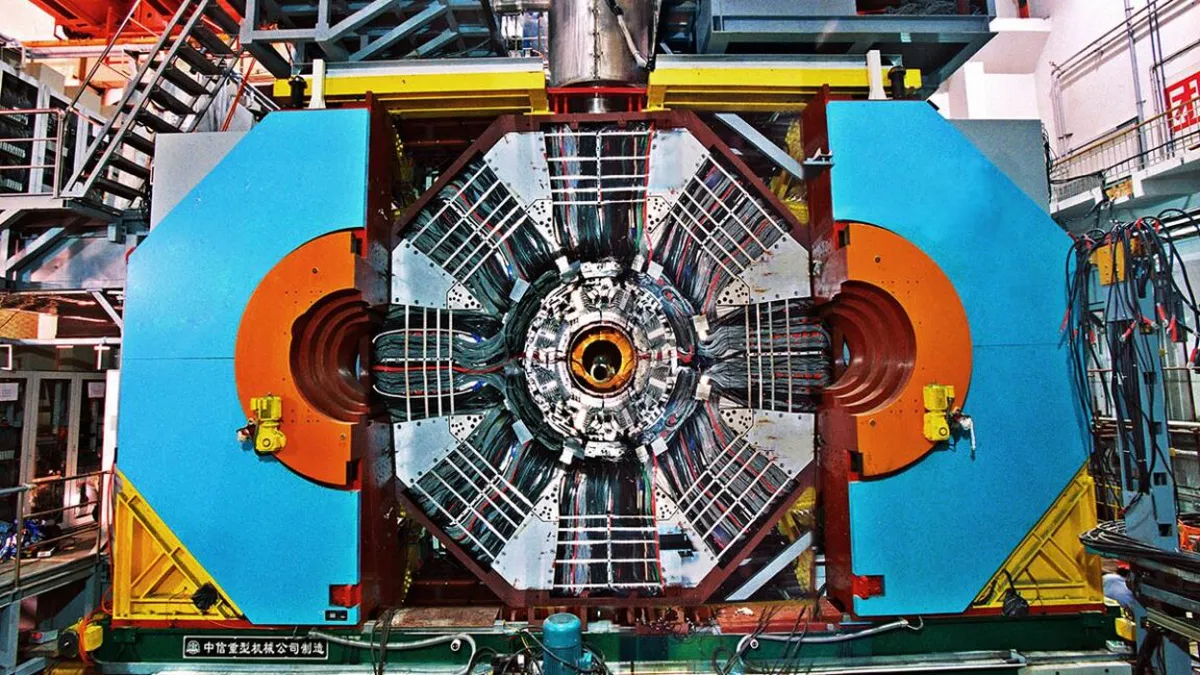
The world of particle physics is often likened to a complex puzzle, with each piece representing a fundamental particle or force that shapes our understanding of the universe. Among these elusive pieces, glueballs—exotic particles composed solely of gluons—have long been a subject of intrigue and speculation. Recent findings from the Beijing Spectrometer III (BES III) experiment have provided some of the strongest evidence yet for the existence of these mysterious particles, offering new insights into the fundamental forces that govern matter.
Gluons, the carriers of the strong nuclear force, are essential in holding quarks together to form protons and neutrons, the building blocks of atoms. The existence of glueballs is predicted by quantum chromodynamics (QCD), the theory describing the interactions of quarks and gluons. Despite being a theoretical prediction, glueballs have remained elusive, raising questions about their role in the universe and the nature of mass itself. The recent advancements from the BES III collaboration showcase a pivotal moment in particle physics, as researchers inch closer to unraveling the mysteries surrounding glueballs.
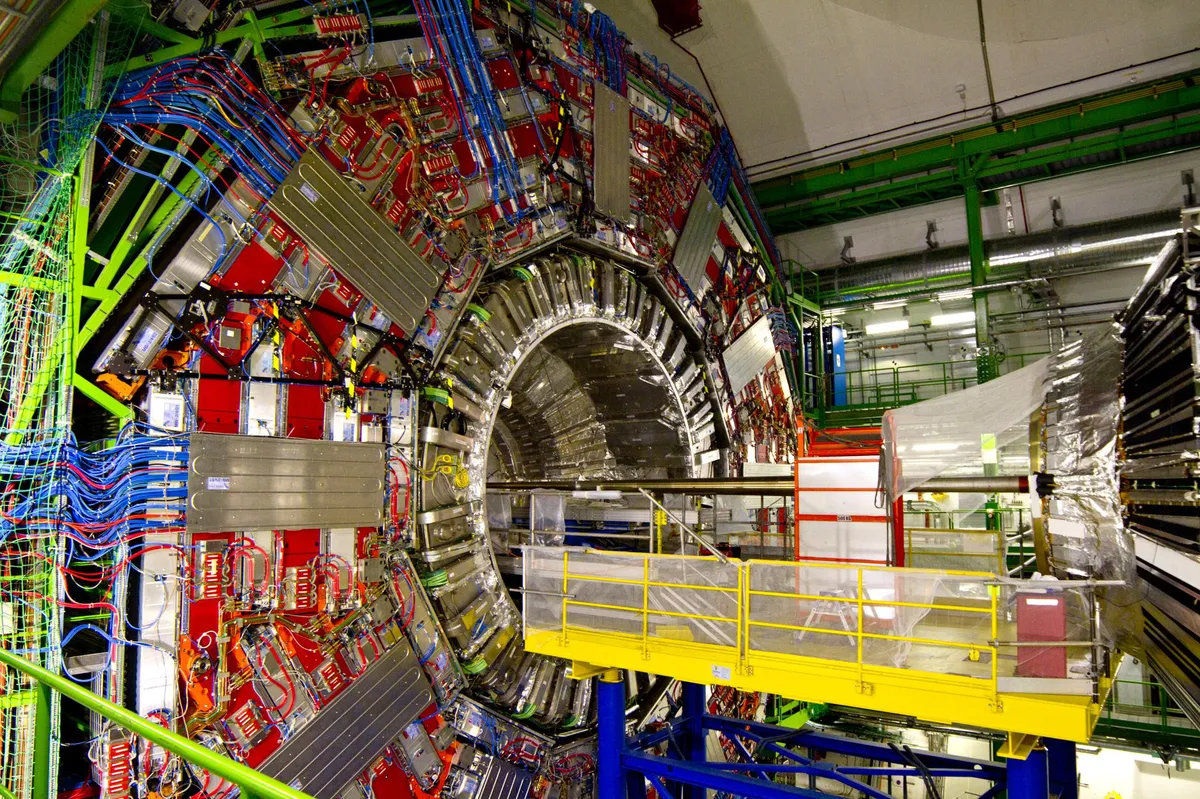
The Significance of Glueballs in Particle Physics
Understanding glueballs is essential for completing the framework of the Standard Model of particle physics. The Standard Model is a well-established theory that describes how fundamental particles interact through three of the four known fundamental forces: electromagnetic, weak, and strong forces. While the discovery of the Higgs boson in 2012 marked a critical milestone in this domain, the existence of glueballs remains a significant unanswered question. Physicists posit that glueballs could help explain the mass of protons and neutrons, which predominantly arises not from the mass of quarks but rather from the energy of the gluons binding them together.
To comprehend the relevance of glueballs, it's crucial to recognize their defining characteristics. For a particle to qualify as a glueball, it must:
- Have zero spin, indicating it does not rotate.
- Exhibit no electric charge, ensuring it does not interact electromagnetically.
- Display odd parity, reflecting its symmetry properties.
The Journey to Discover Glueballs
The pursuit of glueballs has primarily focused on the study of certain mesons, particularly the J/ψ particle, which consists of a charm quark and its antiparticle. Discovered in 1974, the J/ψ particle is known to decay into a multitude of gluons and hadrons, making it an ideal candidate for searching for glueball signatures. The BES III experiment, an electron-positron collider, has been at the forefront of this research since it began collecting data in 2008.
As the experiment progressed, researchers recorded over 10 billion events involving J/ψ particles, significantly increasing the likelihood of identifying rare occurrences and exotic states, including glueballs. Among the particles of interest, the X(2370) emerged as a leading candidate for the lightest glueball state. Its mass, initially measured at 2.370 GeV/C², aligned closely with theoretical predictions from lattice QCD, reinforcing the notion that glueballs could exist.
Recent Findings from the BES III Experiment
The latest findings from the BES III collaboration have been described as an experimental triumph, presenting compelling evidence that glueballs may indeed exist. Researchers focused on analyzing several previously unreported decay modes of the X(2370) particle, leading to the conclusion that it is a “flavor singlet.” This means the particle is not associated with any particular quark flavor, which is a crucial indicator that it may be predominantly composed of gluons.
According to estimates from the BES III team, the X(2370) consists of approximately 90 percent gluons. This discovery matches the predicted properties of glueballs, providing a robust case for their existence. Colin Morningstar, a physicist at Carnegie Mellon University, remarked on the significance of the evidence, stating, “It’s the strongest evidence yet that particles dominated by a glueball component can exist in nature.”
Continuing Research and Future Directions
While the findings from BES III are groundbreaking, they are only the beginning of a long journey toward confirming the existence of glueballs. The next steps involve independent verification of the results by other research groups, potentially at facilities like the proposed Super Tau-Charm Facility (STCF) in China or the Electron-Ion Collider being constructed at Brookhaven National Laboratory in the United States.
Currently, BES III stands as the only machine dedicated entirely to searching for gluons, which means that independent confirmation could take some time. However, the excitement surrounding this discovery has reignited interest in the study of glueballs and their implications for our understanding of the universe.
Implications for the Future of Physics
The potential discovery of glueballs carries significant implications for the future of particle physics and our understanding of fundamental forces. If confirmed, the existence of glueballs could not only fill a critical gap in the Standard Model but also shed light on the nature of mass and the interactions between quarks and gluons. Moreover, glueballs might play a role in unifying the theories of quantum mechanics and gravity, a long-sought goal in theoretical physics.
Additionally, these findings could pave the way for new research avenues in high-energy physics, encouraging scientists to explore previously uncharted territories within the subatomic realm. As researchers continue to investigate the properties and behaviors of glueballs, they may uncover insights that revolutionize our comprehension of the universe and the fundamental forces governing it.
Key Takeaways
- The BES III experiment has provided compelling evidence for the existence of glueballs, exotic particles made entirely of gluons.
- Glueballs are significant for understanding the mass of protons and neutrons and the strong nuclear force.
- Independent verification of the findings is needed to confirm the existence of glueballs.
- The discovery could have profound implications for the future of particle physics and our understanding of fundamental forces.
Frequently Asked Questions
What exactly are glueballs?
Glueballs are exotic composite particles made solely of gluons, the carriers of the strong nuclear force. Unlike protons and neutrons, which are made up of quarks held together by gluons, glueballs do not contain any quarks. Their existence is predicted by quantum chromodynamics (QCD), the theory that describes how quarks and gluons interact. Glueballs have unique properties, including zero spin, no electric charge, and odd parity, which set them apart from other particles.
Why is the discovery of glueballs important?
The discovery of glueballs is crucial for completing the Standard Model of particle physics. While the Higgs boson provided important insights into the mechanism of mass, glueballs could help explain a significant portion of the mass of protons and neutrons, which arises from gluon interactions rather than quark mass. Additionally, confirming the existence of glueballs could lead to new understanding of the fundamental forces governing matter and potentially bridge gaps between quantum mechanics and gravity.
What are the next steps in researching glueballs?
The next steps involve independent verification of the evidence presented by the BES III collaboration. Other research groups may conduct experiments at facilities like the Super Tau-Charm Facility (STCF) in China or the Electron-Ion Collider at Brookhaven National Laboratory. Continued research will focus on analyzing the properties and decay modes of the X(2370) particle and other potential glueball candidates to confirm their existence and understand their implications for particle physics.
How do gluons contribute to the mass of protons and neutrons?
While quarks contribute a small amount of mass to protons and neutrons, the majority of their mass comes from the energy associated with the strong force that binds them together, as described by Einstein's equation E=mc². Gluons, which mediate this strong force, are massless but carry energy, and this energy manifests as mass within protons and neutrons. Understanding this relationship is vital for comprehending the overall mass of matter in the universe.
Comments
Form Energy Secures $750M for Revolutionary 100-Hour Batteries
Form Energy's recent $750 million funding round marks a significant milestone in long-duration energy storage technology, aimed at transforming the grid and enhancing renewable energy integration.

Related articles


Popular in Cloud Computing
- SK Hynix's Historic $26.5 Billion IPO: A New Era for Memory Chips
- Kubernetes and the Future of Desktop Infrastructure: A Paradigm Shift
- Amazon Expands Partnership with Nvidia, Tripling GPU Orders Amid AI Demand Surge
- Elon Musk's Evolving Relationship with Anthropic: A New Era for AI Hosting
- Emerging Rocket Launches: A New Era for Space Exploration