Joby Aviation Expands Defense Footprint with $500M Acquisition of Resonant Sciences
Joby Aviation's recent acquisition of Resonant Sciences for $500 million marks a significant step in its defense sector ambitions, allowing the electric air taxi company to leverage advanced technology while focusing on its urban air mobility goals.
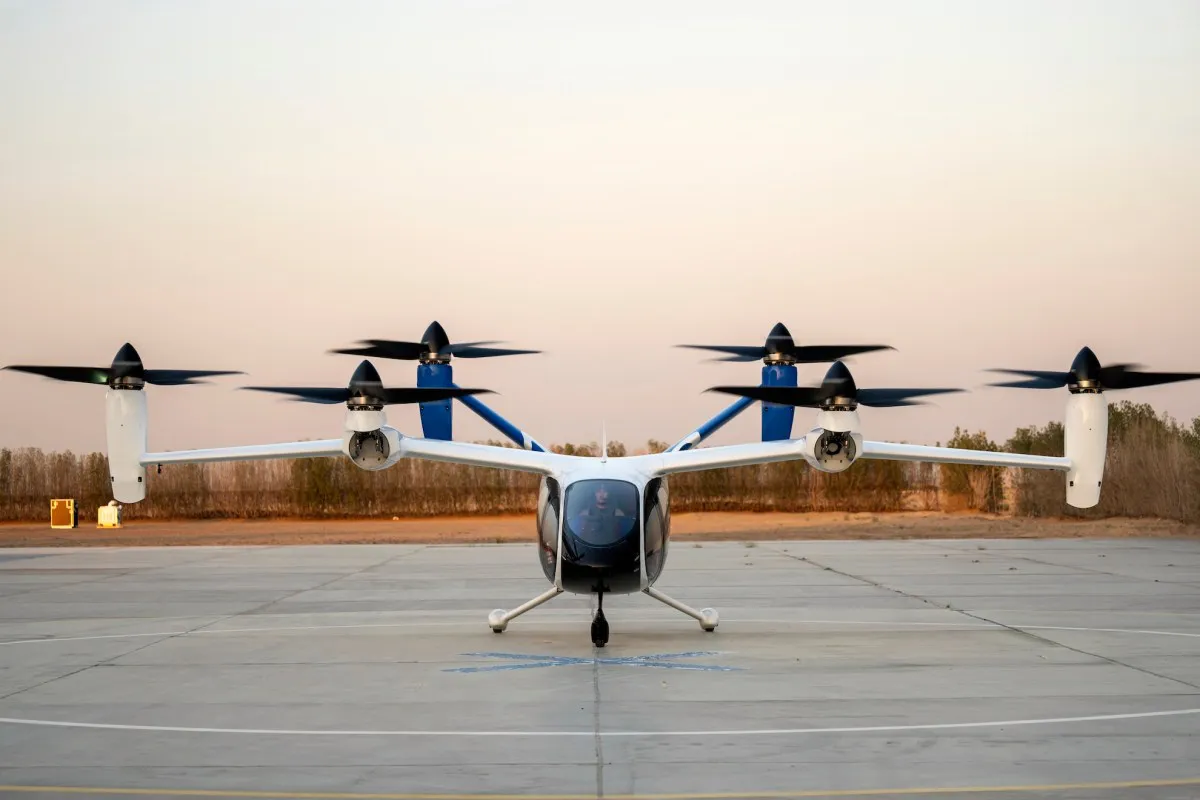
In a strategic move to strengthen its foothold in the defense sector, Joby Aviation, an innovative leader in electric air taxi development, has announced the acquisition of Resonant Sciences for a staggering $500 million in cash and stock. This acquisition represents not only a significant financial investment but also a calculated step towards diversifying Joby’s business portfolio and enhancing its technological capabilities in both defense and urban air mobility.
Founded in 2009, Joby Aviation has been at the forefront of the electric vertical takeoff and landing (eVTOL) industry, primarily focused on creating a network of urban air taxis designed to revolutionize short-distance air travel. However, their ambitions have recently extended beyond civil aviation, as illustrated by their growing interest in defense applications. This latest acquisition of Resonant Sciences, based in Ohio, which specializes in radio frequency and sensor systems, aligns perfectly with Joby’s strategy of tapping into lucrative government contracts and classified projects.
The Strategic Implications of the Acquisition
Resonant Sciences will become a dedicated defense business unit within Joby, allowing the company to streamline its efforts in developing innovative technologies that cater to military needs. This division will be spearheaded by J. Micah North, co-founder and CEO of Resonant Sciences, who brings valuable experience and insights into the defense market. By consolidating its defense projects, including the development of turbine-electric and hydrogen-electric aircraft, Joby aims to sharpen its focus on certifying and launching its electric air taxi services, while leveraging Resonant’s technological prowess.
Recent Developments in Joby’s Defense Initiatives
Joby’s expansion into defense has been underlined by previous collaborations, most notably a partnership with defense contractor L3Harris Technologies. This alliance is aimed at exploring new aircraft classes, specifically a gas-turbine hybrid vertical take-off and landing (VTOL) aircraft capable of autonomous flight. The hybrid aircraft, based on Joby’s existing S4 platform, showcases the company’s commitment to advancing both military and civilian aviation technologies.
In 2024, Joby successfully demonstrated a hydrogen-electric hybrid version of its aircraft under a government contract, achieving a remarkable range of 521 miles—significantly outperforming its battery-electric model. This success not only underscores Joby’s engineering capabilities but also positions the company favorably within the defense sector, where range and operational efficiency are critical.
Financial Health and Revenue Generation
Resonant Sciences is not just a technological asset; it also presents a robust financial opportunity for Joby. The company reported $100 million in trailing 12-month revenue, which provides a substantial revenue stream that Joby can leverage to support its ambitious projects. This acquisition is particularly crucial given the lengthy and expensive journey of developing, certifying, and mass-producing eVTOL technology.
- Acquisition Cost: $500 million in cash and stock
- Resonant Sciences Revenue: $100 million in the past year
- Key Leadership: J. Micah North to lead the new defense division
- Joby’s Revenue (Q2 2026): $38.6 million, with $36.2 million from previous acquisitions
Joby’s previous strategic acquisitions, such as Blade Air Mobility’s helicopter rideshare business for approximately $125 million, have demonstrated the company’s ability to generate revenue quickly. This deal provided immediate access to critical infrastructure, including terminals in major urban markets like New York City and revenues that significantly mitigated financial concerns from stakeholders.
Future Prospects for Joby Aviation
The acquisition of Resonant Sciences could be a game-changer for Joby Aviation, as it not only enhances its technological capabilities in the defense sector but also allows the company to better address the growing demand for advanced aerial solutions in military applications. As defense budgets continue to expand, particularly in emerging technologies that leverage artificial intelligence and autonomous systems, Joby’s strategic positioning as a hybrid technology developer could yield lucrative contracts and partnerships.
Additionally, this acquisition could pave the way for further innovations in urban air mobility, as Joby balances its dual focus on civilian and defense applications. The synergies between Joby’s eVTOL technology and Resonant’s sensor systems could lead to breakthroughs that enhance both sectors.

Key Takeaways
- Joby Aviation's acquisition of Resonant Sciences for $500 million bolsters its defense capabilities.
- Resonant Sciences brings in $100 million in revenue, enhancing Joby’s financial stability.
- The new defense unit will focus on critical projects, including hybrid aircraft development.
- Joby aims to leverage synergies between defense and urban air mobility technologies.
Frequently Asked Questions
What does Joby's acquisition of Resonant Sciences mean for its future?
This acquisition signifies Joby Aviation's commitment to expanding its defense sector operations while simultaneously enhancing its electric air taxi initiatives. By integrating Resonant Sciences, Joby aims to better position itself in the competitive landscape of advanced aerial technologies, potentially leading to new government contracts and revenue streams from both defense and civilian markets.
How will this acquisition impact Joby's financial situation?
With Resonant Sciences reporting $100 million in revenue, the acquisition provides Joby with a significant boost in its financial health. This added revenue stream is critical as Joby continues to develop its eVTOL technologies, which require substantial investment and time to bring to market. The additional income from Resonant can help offset development costs and reassure investors about Joby's financial viability.
What are the implications for the urban air mobility market?
The integration of defense technologies into Joby’s offerings could lead to innovations that enhance urban air mobility solutions. For instance, advancements in sensor systems and autonomous flying capabilities could make Joby’s electric air taxis safer and more efficient, ultimately attracting more customers and facilitating wider adoption of this mode of transport.
Comments
Brad Lightcap Leaves OpenAI: What It Means for the Future of AI
OpenAI's COO Brad Lightcap has announced his departure to pursue new ventures, prompting speculation about the company's future amidst an IPO and executive shakeups.

Related articles

Popular in Cloud Computing
- SK Hynix's Historic $26.5 Billion IPO: A New Era for Memory Chips
- Kubernetes and the Future of Desktop Infrastructure: A Paradigm Shift
- Amazon Expands Partnership with Nvidia, Tripling GPU Orders Amid AI Demand Surge
- Elon Musk's Evolving Relationship with Anthropic: A New Era for AI Hosting
- Emerging Rocket Launches: A New Era for Space Exploration