Perseverance Rover Sets New Milestone as Mars' First Self-Driving Vehicle
NASA's Perseverance rover is redefining exploration on Mars, achieving record distances through advanced autonomous navigation. With 90% of its travel being self-driven, it opens new frontiers for scientific discovery.
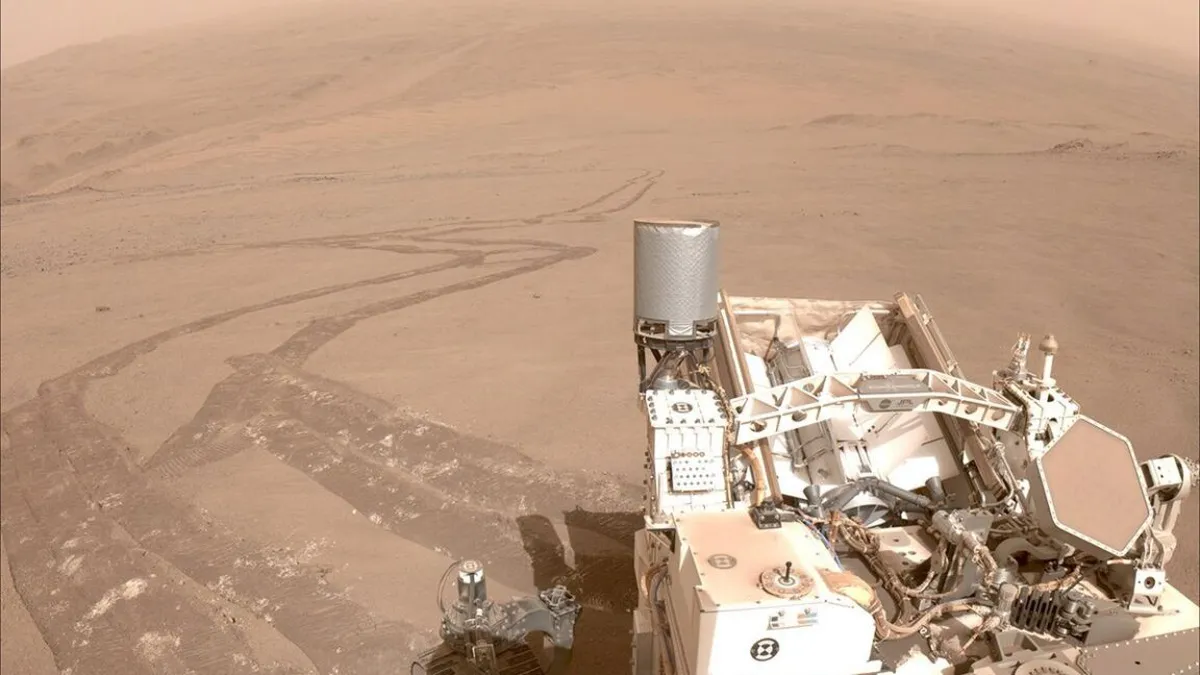
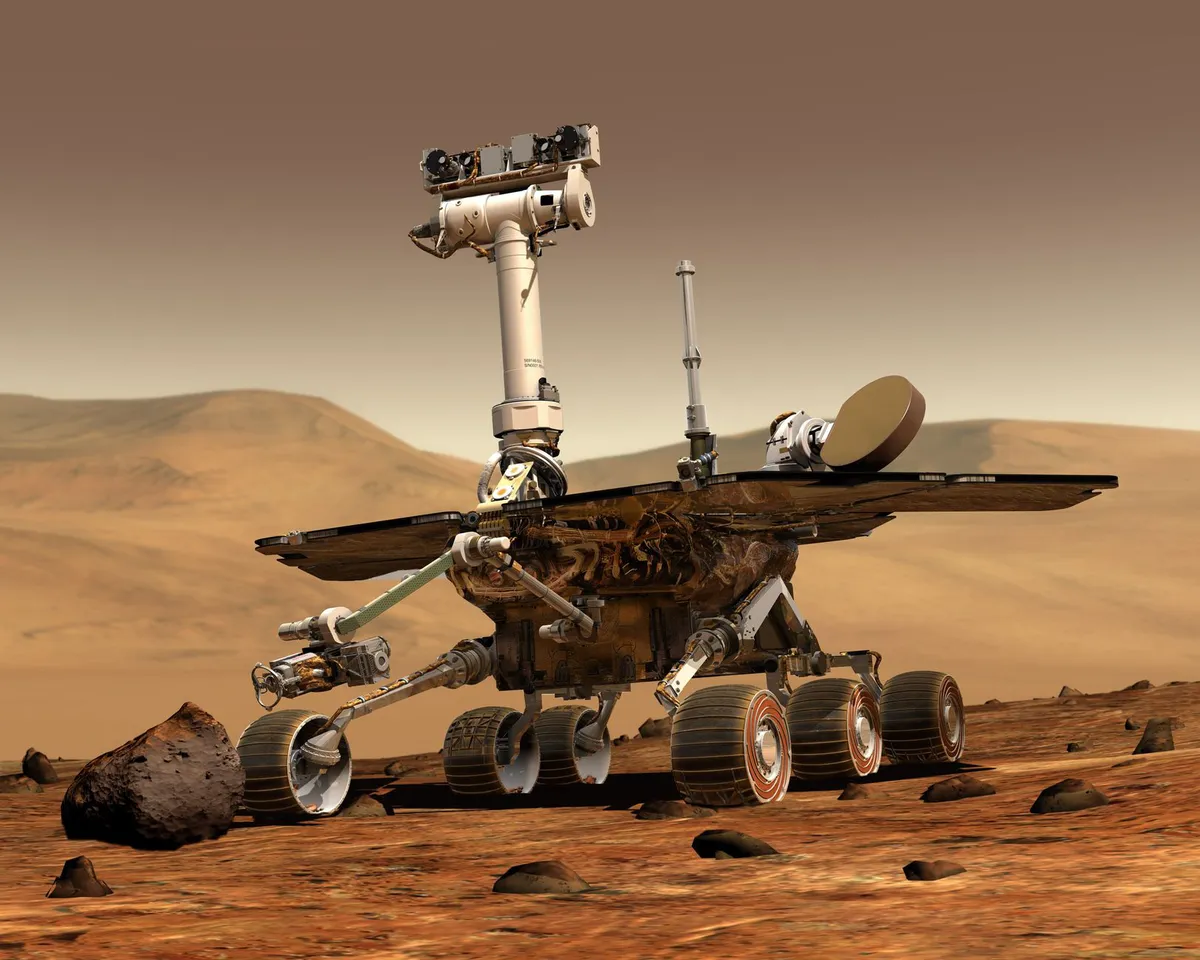
In an unprecedented achievement that highlights human ingenuity and technological advancement, NASA's Perseverance rover has become the first self-driving vehicle to traverse the Martian landscape successfully. With approximately 90% of its journeys executed autonomously, this remarkable feat has not only set a new distance record for vehicles on another planet but has also paved the way for a new era of scientific exploration. As Perseverance prepares to surpass 45.16 kilometers (28.06 miles) across Mars’ surface, it leaves behind the legacy of the Opportunity rover, which operated until 2018 and covered 45.16 kilometers in its lifetime.
Launched in February 2021, Perseverance's journey has been marked by its ability to navigate the rugged Martian terrain without constant human intervention. This capability is a testament to the sophisticated technologies embedded within the rover, particularly its advanced auto-navigation system, which allows it to chart a course through an environment filled with unpredictable obstacles.
The Technology Behind Autonomous Navigation
The success of Perseverance can be largely attributed to its state-of-the-art onboard navigation technology, which includes a suite of cameras and advanced algorithms. According to Steven Lee, the project manager for Perseverance at NASA's Jet Propulsion Laboratory, the rover’s auto-navigation system functions similarly to self-driving cars on Earth. It captures images of the surrounding terrain and processes them using its onboard computer to determine the safest and most efficient path forward.
Enhancements Over Previous Rovers
Unlike its predecessor, Curiosity, which has been operational since 2012 and has driven a total of 38.6 kilometers, Perseverance boasts a significantly more advanced processing capability. Curiosity's navigation systems, while groundbreaking at the time of its launch, were hindered by older technology that limited its autonomous driving to only 10% of its total distance traveled. The newer rover, equipped with the Vision Compute Element, can process data in real-time as it moves, allowing for a staggering 90% of its driving to be autonomous. This advancement means Perseverance can spend less time waiting for commands from Earth and more time conducting scientific investigations.
Scientific Missions and Discoveries
The scientific objectives of Perseverance are ambitious and diverse, particularly due to its landing site in Jezero Crater. This region is believed to contain some of the oldest geological formations in the Solar System, dating back nearly four billion years. During this time, Mars experienced significant environmental changes, transitioning from a volatile period filled with asteroid impacts to a more stable climate that may have supported bodies of water.
Exploring Ancient Environments
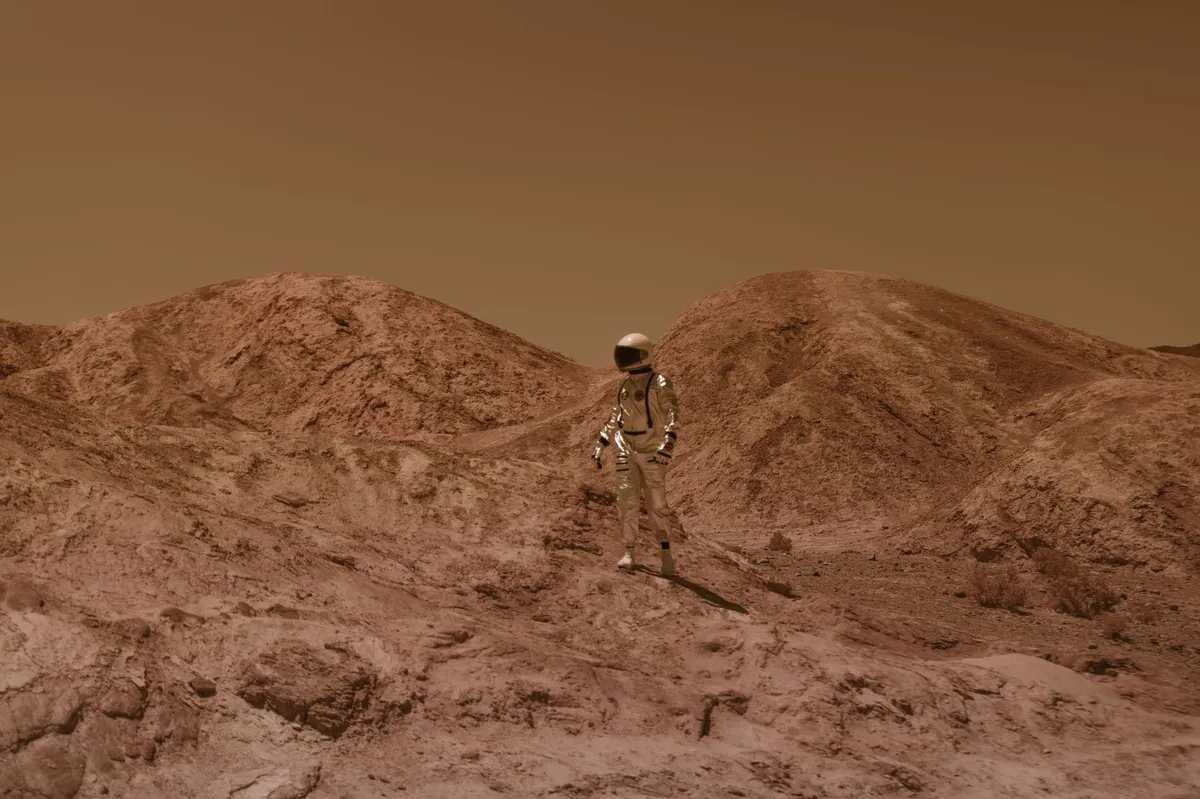
The rover is tasked with studying these ancient rocks to understand the planet's geological history and assess its past habitability. Scientists theorize that during the time these rocks formed, Mars may have bore a resemblance to the Mojave Desert on Earth, with flowing water shaping the landscape. Investigating these possibilities could provide crucial insights into whether life ever existed on Mars.
Vivian Sun, the mission's deputy project scientist, emphasized the importance of Perseverance's autonomous driving capabilities, stating, “It is very enabling for the science.” The rover's ability to swiftly navigate between multiple research sites allows scientists to gather data at an unprecedented pace, potentially leading to groundbreaking discoveries about the planet.
Durability and Longevity
As Perseverance continues to explore Mars, one question on many minds is how it will withstand the harsh Martian environment over time. Curiosity's prolonged mission has demonstrated that wear and tear can be an issue, particularly with its wheels. In response, NASA’s engineers have designed Perseverance's wheels to be more resilient, and so far, there have been no significant signs of deterioration. The only concern lies with the actuators in the rover's wheels, which were initially tested for 20 kilometers of driving. NASA is currently working on certifying these components for a lifespan of at least 100 kilometers, possibly more.
Equipped with a Radioisotope Thermoelectric Generator (RTG) for power, Perseverance has the advantage of operating without the need for propellants, consumables, or lubricants, significantly extending its operational lifespan. This strategic design means the rover could continue to explore Mars autonomously for many years, revealing new insights into the planet’s geology and potential for past life.
Key Takeaways
- First Self-Driving Rover on Mars: Perseverance has achieved 90% autonomous driving capability.
- Record Distance: It is set to surpass 45.16 kilometers, breaking the previous record held by the Opportunity rover.
- Advanced Technology: Uses sophisticated navigation systems that allow real-time processing of terrain data.
- Scientific Significance: Investigating ancient Martian rocks to better understand the planet's history and potential for life.
- Durability: Redesigned wheels and RTG power source enhance the rover's longevity on Mars.
Frequently Asked Questions
How does Perseverance's autonomous driving technology work?
Perseverance utilizes a combination of advanced cameras and algorithms to navigate the Martian landscape. It captures images of the terrain and processes them to determine the safest route. This capability allows the rover to travel autonomously, minimizing the time spent waiting for commands from Earth and maximizing its scientific endeavors.
What scientific goals does Perseverance aim to achieve?
The primary scientific objectives of Perseverance include studying ancient rock formations in Jezero Crater to understand Mars' geological history and assess its past habitability. Scientists are particularly interested in determining whether the environment during the time these rocks formed could have supported life.
What challenges does Perseverance face on Mars?
While Perseverance is equipped to handle many challenges, it must navigate a landscape filled with potential hazards, including large boulders and sandy slopes. Additionally, the longevity of its mechanical components, particularly the wheel actuators, poses a concern that NASA is actively addressing by testing their durability for extended distances.
How does Perseverance compare to the Curiosity rover?
Perseverance significantly outperforms Curiosity in terms of autonomous driving, with 90% of its distance traveled being self-driven compared to Curiosity's 10%. This is largely due to Perseverance's advanced processing capabilities. Additionally, their missions differ in focus, with Perseverance exploring a broader range of geological features in Jezero Crater while Curiosity has primarily focused on climbing Mount Sharp in Gale Crater.
Comments
Situational Awareness Hedge Fund Bets Big on Chip Startup with $400M Investment
Despite recent challenges, Situational Awareness hedge fund makes a bold move by investing $400 million in Source Foundry, a chip startup focused on innovation in manufacturing. This article explores the implications of this investment and the future of AI in semiconductor technology.

Related articles


Popular in Cloud Computing
- SK Hynix's Historic $26.5 Billion IPO: A New Era for Memory Chips
- Kubernetes and the Future of Desktop Infrastructure: A Paradigm Shift
- Amazon Expands Partnership with Nvidia, Tripling GPU Orders Amid AI Demand Surge
- Elon Musk's Evolving Relationship with Anthropic: A New Era for AI Hosting
- Emerging Rocket Launches: A New Era for Space Exploration