Joshua Kushner Critiques Silicon Valley's AI Investment Frenzy
In a revealing investor letter, Thrive Capital's Joshua Kushner offers a critical perspective on Silicon Valley's approach to AI investments, emphasizing discipline over hype. His firm aims for concentrated, high-quality investments that challenge conventional VC norms.
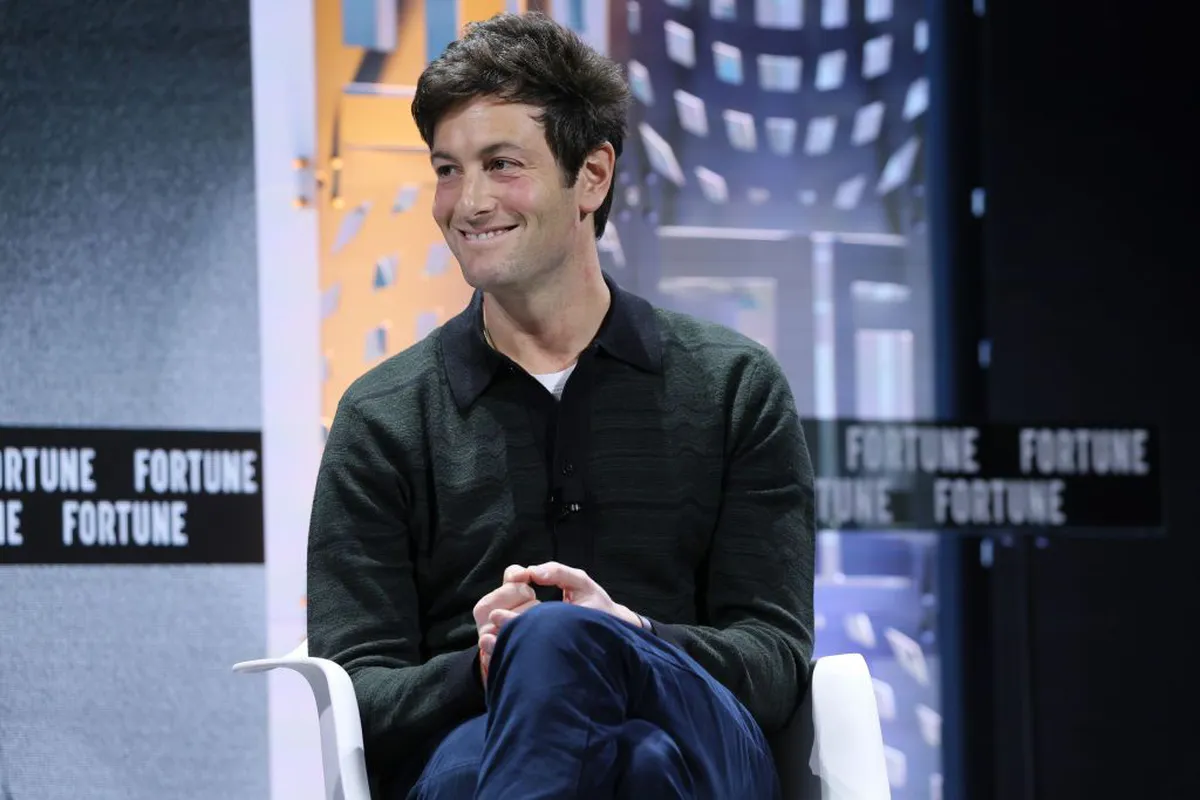
The excitement surrounding artificial intelligence (AI) has reached a fever pitch, particularly in Silicon Valley, where tech enthusiasts and venture capitalists are racing to capitalize on its potential. Yet, amid this fervor, Joshua Kushner, founder of Thrive Capital, has chosen to take a step back and critique the prevailing investment strategies of his peers in a revealing investor letter. His insights shed light on a more measured approach to AI investments, contrasting sharply with the often chaotic and speculative atmosphere that characterizes much of Silicon Valley's venture capital landscape.
Kushner's remarks, leaked to Bloomberg, emphasize the risks of allowing excitement to compromise investment discipline. He warns that the focus on incremental technological advancements can overshadow the broader implications of these innovations. In his view, it is essential for investors to maintain a critical perspective, especially as they navigate the rapidly evolving AI sector.

Understanding Thrive Capital's Investment Philosophy
Thrive Capital's investment strategy diverges significantly from the traditional venture capital model that many in Silicon Valley embrace. Typically, venture capitalists operate on the principle of "outliers," where they place numerous bets across a wide array of startups, anticipating that a handful will yield substantial returns to offset the inevitable losses. Marc Andreessen, a prominent figure in the VC community, has championed this approach, arguing that it is necessary to find the next unicorn.
In contrast, Kushner advocates for a more concentrated investment strategy. He points out that Thrive invests heavily in a select number of companies, with approximately 90% of its capital allocated to the top 15 investments in each fund. This method allows Thrive to dedicate more time, energy, and resources to the companies it believes in most, fostering deeper relationships and more significant support.
Concentration vs. Diversification
The rationale behind concentrating investments is rooted in the belief that quality trumps quantity. Kushner argues that a focus on fewer companies enables investors to better understand the businesses and their potential for growth. He states, "We believed an investment firm could be opportunistic across stage, sector, and geography, while remaining deeply concentrated in a small number of people and ideas." This strategy has proven successful for Thrive, which has amassed $60 billion in assets under management.

The Role of AI in Thrive's Strategy
AI has become a focal point for Thrive Capital, and Kushner's firm has made notable investments in leading AI companies. Their relationship with OpenAI exemplifies this commitment. Thrive has been a significant investor in the AI research lab, and in a unique twist, OpenAI has also taken an ownership stake in Thrive Holdings, the firm's spinout that focuses on acquiring companies and integrating AI technologies.
Through Thrive Holdings, Kushner's team has purchased over 70 businesses, utilizing OpenAI's expertise to enhance operations and accelerate growth. For instance, one of Thrive's ventures has developed an accounting platform that utilizes AI agents to produce tax returns 30% faster with 98% accuracy, while another IT services firm employs AI to resolve half of its help desk tickets independently. These examples illustrate the tangible benefits of integrating AI into traditional business models, aligning with Kushner's vision of transforming industries from within rather than solely disrupting them from the outside.

Performance and Future Prospects
Thrive's performance metrics speak volumes about the effectiveness of its investment strategy. The firm's early-stage fund, launched in 2022, has seen remarkable growth, with an estimated worth of over $3.7 billion as of mid-2026. This fund included early investments in industry giants like OpenAI, Anduril, and SpaceX, highlighting Thrive's ability to identify and capitalize on high-potential opportunities.
Moreover, Kushner reported an impressive gross internal rate of return (IRR) of 41% across all funds, with a net IRR of 33%. The firm has returned more than $1 billion in liquidity to investors in just the past year, with promising prospects for future exits, particularly with companies like SpaceX and OpenAI moving toward public offerings. This financial success underscores the viability of Thrive's concentrated investment model, even as it challenges the more conventional, diversified approach favored by many of its competitors.
Challenges in the Current Investment Landscape
While Kushner's critique of Silicon Valley's AI investment euphoria holds merit, the practicality of his approach may not be universally applicable. The venture capital landscape is diverse, with many smaller funds lacking the resources and connections that Thrive Capital enjoys. Kushner himself acknowledges that his family's background has afforded him access to opportunities that many emerging fund managers may not have.
As the AI sector continues to grow, it is crucial for investors to discern between genuine innovation and mere hype. Kushner aptly notes, "Not every fast-growing business is exceptional. And not every exceptional company is a great investment at every price." This statement serves as a reminder for investors to exercise caution and maintain a disciplined approach, regardless of market trends.

Key Takeaways
- Concentration over Diversification: Thrive Capital focuses on a small number of investments, enhancing engagement and support for its portfolio companies.
- AI Integration: Thrive's partnership with OpenAI allows for transformative enhancements in acquired companies.
- Impressive Returns: Thrive has achieved notable financial success, with a gross IRR of 41% across its funds.
- Investment Discipline: Kushner emphasizes the importance of maintaining judgment amidst market enthusiasm.
- Challenges Ahead: The venture capital landscape presents unique challenges for smaller funds attempting to replicate Thrive's strategy.
Frequently Asked Questions
What is Thrive Capital's investment strategy?
Thrive Capital employs a concentrated investment strategy, dedicating a significant portion of its capital to a limited number of companies. This approach contrasts with the traditional venture capital model of diversifying investments across many startups, allowing Thrive to focus on building strong relationships and providing more substantial support to its portfolio companies.
How has Thrive Capital performed financially?
Thrive Capital has reported impressive financial results, with a gross internal rate of return (IRR) of 41% and a net IRR of 33%. In the past year alone, the firm has returned over $1 billion in liquidity to its investors, highlighting the effectiveness of its investment strategy and its ability to identify high-potential opportunities.
What role does AI play in Thrive Capital's strategy?
AI is a central focus for Thrive Capital, with the firm making significant investments in leading AI companies like OpenAI. Through its spinout, Thrive Holdings, the firm integrates AI technologies into acquired businesses, enhancing their operations and driving growth. This approach aligns with Kushner's philosophy of transforming industries from within rather than solely disrupting them from the outside.
What challenges do smaller venture funds face in the current market?
Smaller venture funds often struggle to replicate the concentrated investment strategy employed by Thrive Capital due to limited resources and access to high-potential opportunities. The competitive landscape and the need for substantial capital can hinder their ability to make significant investments in a few companies, making it challenging to achieve similar levels of success.
Comments
Apple's Proposed 15% Commission: Implications for Developers and the App Store Landscape
Apple has proposed a new 15% commission structure for purchases made outside its App Store, stirring debates on its competitive practices and developer relationships. This change comes amidst ongoing legal battles and could reshape the app ecosystem significantly.

Related articles


Popular in SaaS Reviews
- Roost: The 'Slow-cial' App Redefining Digital Communication
- Uber's Expansion Beyond Ride-Hailing: The Future of Travel and Services
- Sweden's Startup Surge: The Forces Behind a Booming Ecosystem
- X's Algorithm Update: Creating a More Community-Focused Experience
- Elon Musk's Vision for X: Real-Time Misinformation Corrections via DMs