Fruit Flies and the Science of Smell: Navigating the Invisible Ribbons
Fruit flies exhibit remarkable navigation skills in tracking scents, revealing advanced cognitive abilities that challenge previous models of olfactory navigation. This article delves into their unique methods and the implications for understanding sensory processing in animals.
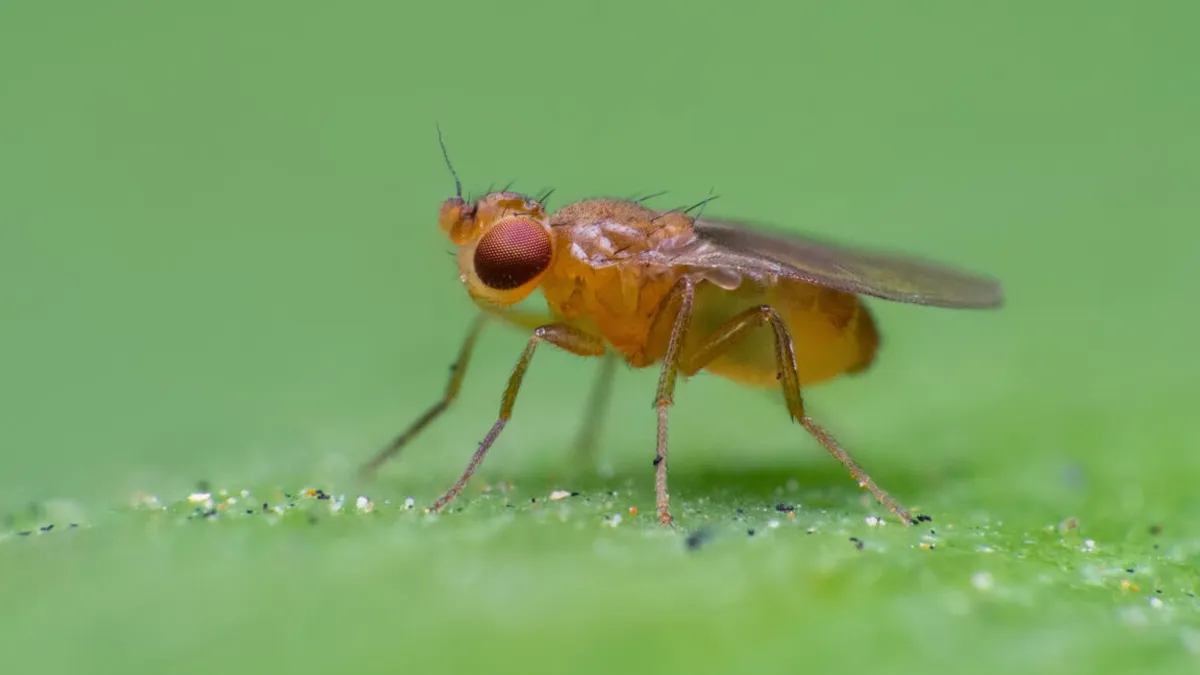
Imagine standing in a bustling fruit market, where the scent of ripe bananas and overripe apples competes for your attention. As you navigate through the tangy air, you realize that some scents feel closer, while others seem to dissipate. Much like us, fruit flies (Drosophila) are adept at navigating their environment through scent, but their methods are a marvel of biological engineering. Recent research has illuminated how these tiny insects track invisible ribbons of smell in turbulent air, using a sophisticated blend of memory and instinctual navigation that challenges long-held scientific models. This exploration sheds light not only on the capabilities of fruit flies but also on the fundamental mechanisms of sensory processing across species.
The Challenge of Tracking Scents
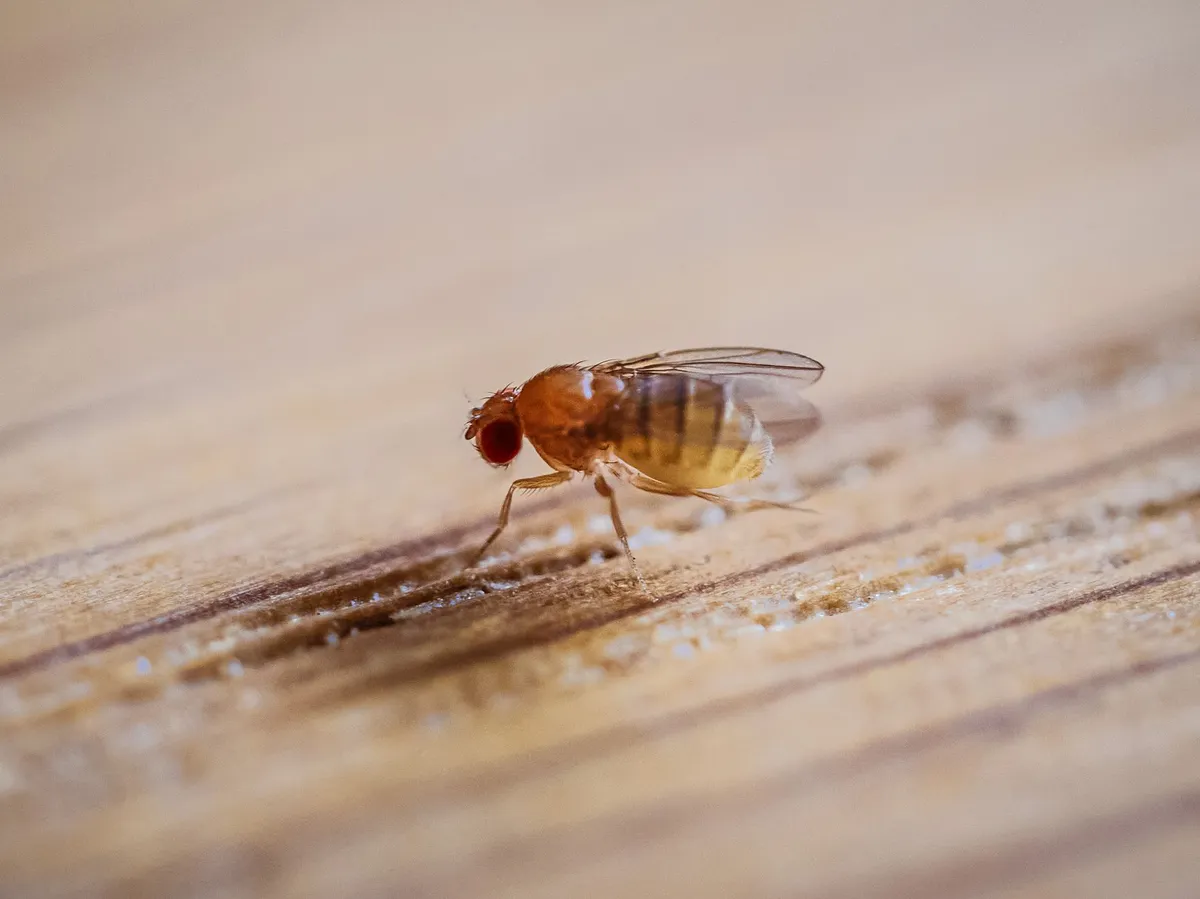
Fruit flies are often seen buzzing around decomposing fruit, drawn in by the seductive aroma of fermentation. Yet, the journey to their food source or potential mates is far from straightforward. In nature, the air is rarely still; it swirls and shifts, carrying chemical cues in unpredictable directions. This turbulence creates a complicated olfactory landscape. Historically, scientists believed that fruit flies relied primarily on a simplistic “surge and cast” model for navigation. This model suggested that when a fly detects a scent, it instinctively flies upwind until the smell fades, then veers side to side to catch it again. But as researchers, led by neuroscientist Vanessa Ruta of Rockefeller University, have discovered, the reality is much more intricate.
Innovative Experimentation: A Treadmill for Flies
To unravel the mystery of how fruit flies navigate through chaotic scents, Ruta's team devised a unique experimental setup. They tethered a fruit fly above a small ball floating on a cushion of air in a completely dark environment, effectively creating a fly-sized treadmill. This setup allowed the researchers to control the airflow and scent exposure precisely. As the fly walked on the ball, it faced a fixed wind direction, similar to navigating an open field.
The researchers introduced apple cider vinegar into this airstream, simulating the scent of rotting fruit. By controlling the strength and direction of the odor, they created a dynamic olfactory landscape that mimicked natural conditions. This innovative approach allowed the team to observe how the flies reacted to scents in real time, revealing the inadequacies of the traditional surge and cast model.

Edge Tracking: A New Understanding of Olfactory Navigation
In a critical experiment, the researchers created a 50-millimeter-wide corridor of vinegar flowing with wind. Rather than moving up the center, the flies consistently hugged one edge of the odor plume, a behavior the team termed “edge tracking.” Upon entering the scent, the flies would quickly veer out and loop back to the boundary, spending more time in clean air than in the scent itself. Surprisingly, their progress toward the source occurred during those brief moments of dipping into the smell.
Initially, the researchers hypothesized that the flies were following a rising gradient of odor. However, when they reversed the gradient, the flies continued to track the edge just as effectively. The team also experimented with genetically modified flies whose olfactory neurons could be activated by light. Even in the absence of actual odor, the flies adeptly tracked the edge of the light plume, further illustrating that their navigation was based not on reflexes but on more complex cognitive processes.
Memory and Navigation: The Role of Stored Olfactory Cues
One of the most fascinating discoveries from the research was the role of olfactory memories in navigation. When the researchers removed the scent while the fly was outside the plume, the insects still headed back to where the edge should have been. This behavior suggested that the flies retained a memory of the scent’s location, guiding them even in the absence of immediate sensory information.
Delving deeper, the researchers identified specific neurons in the fruit fly's brain responsible for this navigational memory. The central complex, a brain structure known to function as a navigation hub, contained neurons that acted like a compass, maintaining a connection to the wind direction regardless of whether the fly was within the scent or not. Silencing these neurons rendered the flies unable to navigate effectively, demonstrating their significance in olfactory tracking.
Updating Olfactory Memories: A Dynamic Process
To understand how flies update their olfactory memories, the team created a computer model simulating the flies' behavior. The model indicated that the entry angle—the direction from which the fly last encountered the plume—was crucial for successful edge tracking. Without this angle, the simulated flies lost their ability to navigate effectively.
When the researchers tested real flies by altering the angle of the odor plume, the flies initially struggled to adapt. However, after a single training session, they quickly adjusted their internal memory to the new angle, demonstrating their remarkable ability to rewrite navigational goals based on new experiences.
Implications for Understanding Sensory Processing
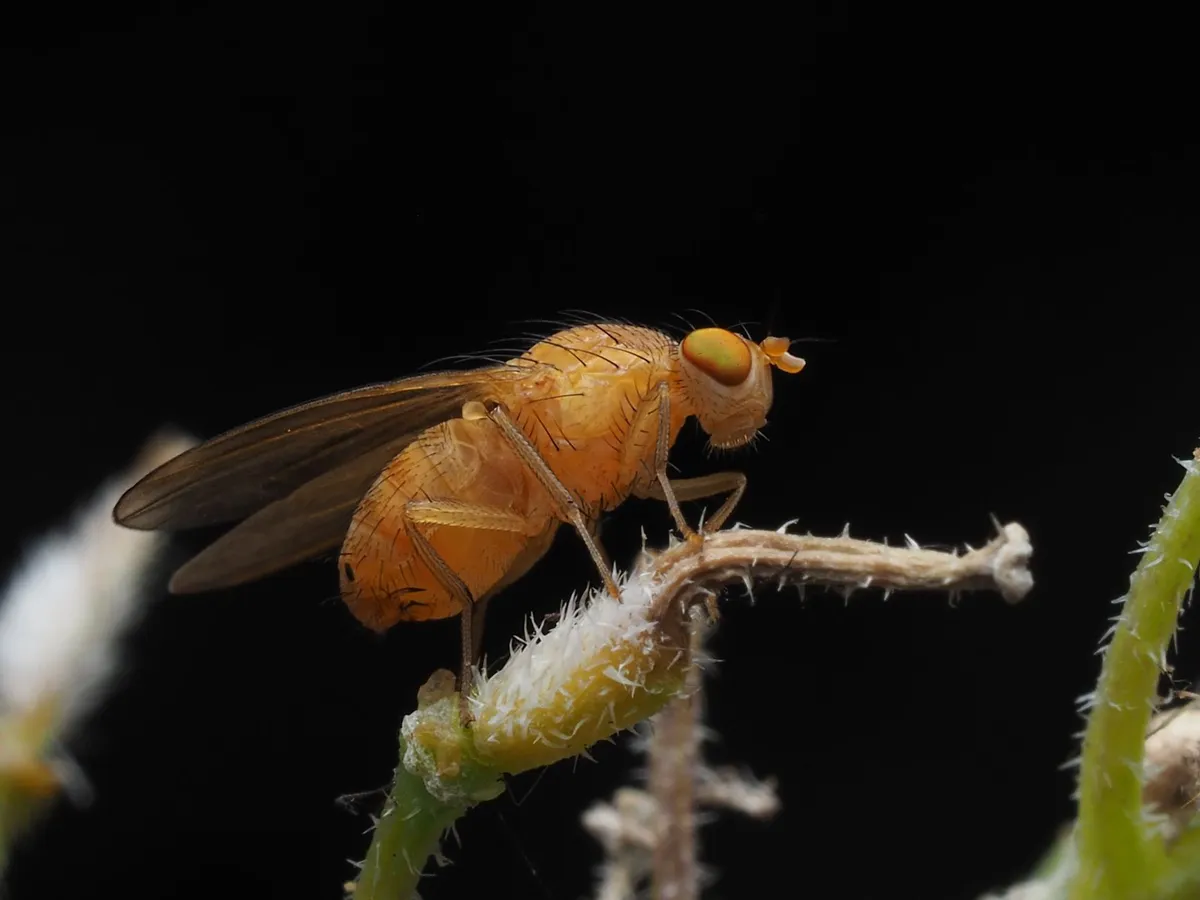
The implications of this research extend beyond the realm of fruit flies. As Ruta suggests, the insights gained from studying Drosophila can inform our understanding of sensory processing across the animal kingdom. The combination of instinctual responses and stored memories in navigation highlights a fundamental feature that likely exists in more complex brains, including our own. As scientists continue to explore the cognitive abilities of fruit flies, they uncover a fascinating narrative of how even the smallest creatures navigate the complexities of their environments.
Key Takeaways
- Fruit flies use advanced navigation techniques that involve both reflexes and memory to track scents effectively.
- The traditional “surge and cast” model is insufficient to explain the sophisticated behaviors observed in fruit flies.
- Edge tracking allows flies to navigate through turbulent scents by relying on their memory of the plume’s location.
- Neurons in the fruit fly brain play crucial roles in maintaining navigational memory and directionality.
- Insights from fruit fly studies may have broader implications for understanding sensory processing in more complex animals.
Frequently Asked Questions
How do fruit flies detect odors in turbulent air?
Fruit flies utilize a combination of sensory input from their olfactory neurons and memory to navigate through turbulent air. Their ability to track odors relies on recognizing patterns in their environment and recalling previous experiences of scent locations, which allows them to adjust their flight paths accordingly.
What is edge tracking, and why is it significant?
Edge tracking is a behavior observed in fruit flies where they follow the edge of a scent plume rather than moving directly toward its center. This strategy enables them to navigate more effectively in chaotic environments, demonstrating a sophisticated understanding of their surroundings that goes beyond simple reflexive behavior.
What role does memory play in a fruit fly’s ability to navigate?
Memory is crucial for a fruit fly’s navigation as it allows the insect to retain information about the location and characteristics of odor plumes. By updating their internal memory based on new sensory experiences, fruit flies can modify their navigational strategies to find food or mates more efficiently.
What can this research tell us about other animals?
The insights gained from studying fruit flies can provide valuable information about sensory processing in other species, including mammals. The mechanisms that enable fruit flies to navigate using memory and sensory input may be fundamental across different animal kingdoms, shedding light on how more complex brains handle similar challenges.
Comments
The New Era of Smartphone Ownership: Buy or Subscribe?
As premium smartphones become increasingly expensive, a shift toward subscription and leasing models is emerging. This article explores the implications of these changes for consumers and manufacturers alike.

Related articles


Popular in Guides
- Boomers Lead the Charge in Alcohol Abstinence: Insights from New Research
- Understanding the Physics of Silly Sprinklers and Feynman's Reverse Sprinkler Puzzle
- Mark Zuckerberg Acquires Strancally Castle: A Look at His New Irish Estate
- Last Chance to Score Discounts for TechCrunch Disrupt 2026
- The Coming Air-Conditioning Revolution in Europe: A Necessity or a Luxury?