Revolutionizing Night Vision: The Dawn of Full-Color Infrared Goggles
Researchers at the Beijing Institute of Technology have developed groundbreaking full-color night vision goggles that redefine how we perceive infrared light, offering new possibilities in technology and applications.
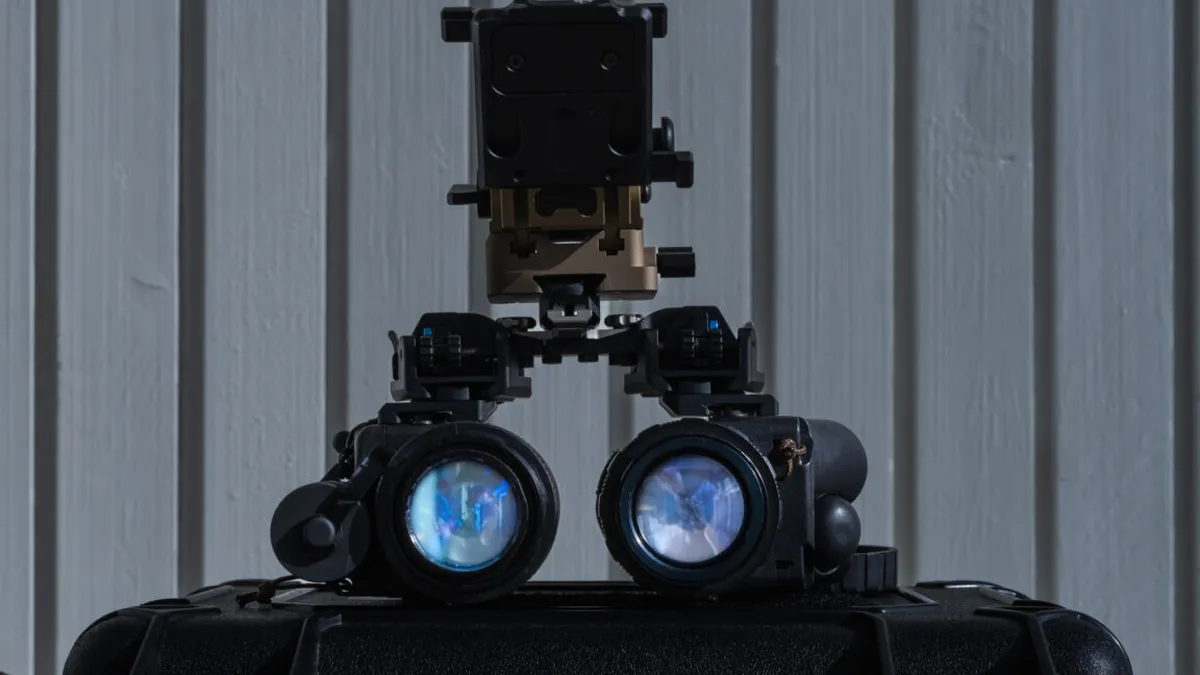
In an era where technological advancements are rapidly reshaping our world, the latest development from the Beijing Institute of Technology stands out as a game-changer in the realm of night vision technology. Researchers led by Xin Tang and Ge Mu have successfully created a device that not only allows us to see in infrared light but does so in full color, transcending the monochrome limitations of traditional night vision goggles. This breakthrough not only enhances our ability to perceive the invisible spectrum but also opens up new avenues for applications in various fields, from military operations to medical imaging.
The conventional approach to night vision has always relied on translating infrared light, which is invisible to the human eye, into visible shades of green. This method, while functional, limits our ability to distinguish subtle differences in the infrared spectrum, as human vision is significantly more adept at discerning colors than brightness. The newly developed goggles, however, utilize a sophisticated system of quantum dots and dual-layer organic light-emitting diodes (OLEDs) to provide a full-color representation of infrared light, thus enhancing our visual experience in low-light conditions.
Understanding the Science Behind the Technology
At the core of this innovative night vision technology are mercury telluride colloidal quantum dots, which play a crucial role in transforming infrared light into visible colors. Unlike traditional infrared detectors that absorb a broad spectrum of wavelengths and provide a single brightness output, these quantum dots operate on the principle of quantum confinement. This allows them to absorb specific wavelengths of infrared light and emit corresponding colors, effectively encoding information about both the wavelength and intensity of incoming infrared radiation.
The Mechanism of Color Translation
When infrared light interacts with the quantum dots, it excites electrons within the dots, leading to the generation of charge carriers. The intensity of the incoming infrared light determines how many charge carriers are produced, which in turn influences the color output on the OLED screen. The goggles are designed with two layers of emissive materials: one that emits red light and another that emits cyan light. This dual-layer system, combined with a carefully calibrated energy barrier, enables the device to produce a spectrum of colors depending on the infrared light it receives.
- Shorter wavelengths result in more charge carriers being generated, leading to a mixture of colors being emitted.
- The system can distinguish infrared power differences 200 times more accurately than traditional monochrome designs.
- The eyeglass prototype weighs only 23 grams and has an active viewing area of 3.57 square centimeters.

Applications and Implications of Full-Color Night Vision
The potential applications of these full-color night vision goggles are vast and varied. One of the most significant implications is in the field of military and security operations, where enhanced visibility can be crucial for situational awareness during nighttime missions. With the ability to discern different objects and their heat signatures through color coding, soldiers and security personnel can make faster, more informed decisions in the field.
Beyond military use, this technology can also revolutionize industries such as search and rescue, medical imaging, and even augmented reality (AR). For instance, in search and rescue operations, rescuers can better identify heat sources in dark or obscured environments, increasing the chances of locating missing persons. In medical imaging, this technology could enhance the visualization of tissue temperature variations, aiding in the diagnosis of various conditions.
Challenges Ahead
While the technology presents exciting possibilities, several challenges remain before it can be widely adopted. The current prototypes have primarily been tested under controlled conditions, raising questions about their performance in real-world scenarios with more complex infrared environments. Furthermore, the need for an external power supply limits their portability, as they resemble powered displays more than traditional passive lenses.
There are also significant safety and biocompatibility concerns regarding the use of mercury telluride, a heavy metal, especially if such devices were to be implanted as retinal prosthetics. Researchers still have much work to do to ensure that long-term exposure does not pose health risks.

Future Prospects and the Path Forward
Looking ahead, the team at the Beijing Institute of Technology envisions a future where full-color infrared vision could be an integral part of visual prosthetics, enhancing the quality of life for individuals with visual impairments. This prospect would indeed represent a significant leap forward in the realm of assistive technologies.
However, achieving this vision requires further research and development to address the aforementioned challenges. The team will need to explore how to effectively integrate the technology into practical applications while ensuring safety and usability in diverse environments.
Key Takeaways
- Researchers have developed full-color night vision goggles that utilize quantum dots and OLED technology.
- The device can distinguish infrared light with 200 times greater accuracy than traditional monochrome designs.
- Potential applications span military, search and rescue, medical imaging, and augmented reality.
- Challenges include performance in real-world conditions, power supply limitations, and safety concerns regarding materials used.

Frequently Asked Questions
What is the significance of using quantum dots in night vision technology?
Quantum dots are critical in this new night vision technology because they can absorb specific wavelengths of infrared light and emit corresponding visible colors. This capability allows the goggles to provide a more nuanced and detailed visual representation of the infrared spectrum compared to traditional methods that only translate infrared light into varying shades of brightness.
How do the goggles enhance situational awareness in military operations?
By providing a full-color view of infrared light, these goggles enable military personnel to differentiate between various heat signatures and objects more effectively. This color-coded information can lead to quicker decision-making in high-stakes situations, improving situational awareness and operational effectiveness during nighttime missions.
What are the potential risks associated with the materials used in the goggles?
The primary concern lies with mercury telluride, a heavy metal used in the quantum dots. Prolonged exposure to such materials may pose health risks, particularly if the technology advances to the point of being used in implantable devices. Researchers must conduct extensive studies to ensure the biocompatibility and safety of the materials before widespread adoption.
When can we expect to see commercial applications of this technology?
While the technology shows great promise, significant challenges remain to be addressed. Researchers are still in the experimental phase and need to ensure that the device functions effectively in real-world conditions. As advancements are made and challenges are overcome, we may start seeing commercial applications within the next few years, particularly in defense and security sectors.
Comments
The Rise of AI in Scamming: A New Era of Deception
Recent research highlights how AI chatbots, particularly in scams like 'pig butchering,' can build trust more effectively than human scammers, raising significant concerns about online fraud.
Related articles





Popular in Cybersecurity
- Federal Mandate for Autonomous Vehicles: A Call for Safety Compliance
- EU Mandates Google to Share Data and Open AI on Android: What It Means
- GitHub Revamps Bug Bounty Program: Implications for Developers and Security
- Australian Government Disables Thousands of Functional Broadband Routers: A Wasteful Decision
- Exploiting Redis: Understanding Zero-Day Vulnerabilities and Their Mitigation