China-Linked Hackers Unleash StormEncryptor Ransomware via N-central Vulnerability
Recent reports reveal that hackers linked to China are deploying a new ransomware variant known as StormEncryptor, exploiting a vulnerability in N-central. This development raises serious concerns about cybersecurity vulnerabilities and the need for proactive measures.
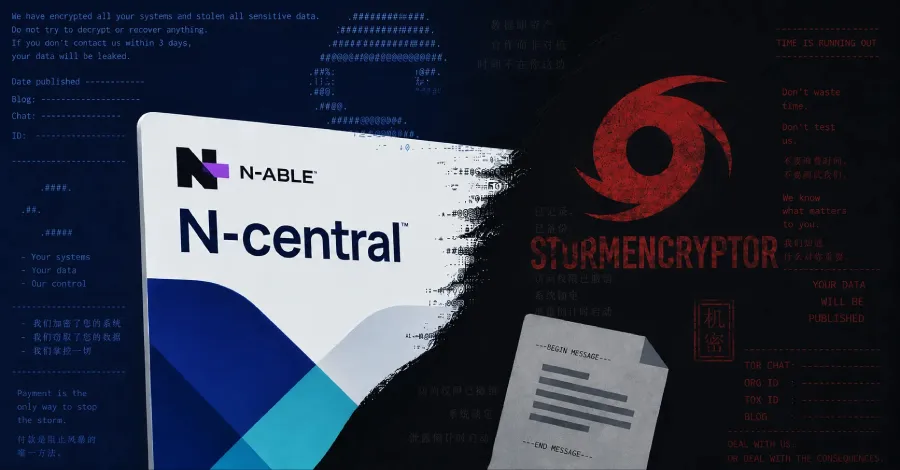
In the ever-evolving landscape of cybersecurity threats, a new variant of ransomware has emerged that poses significant risks to organizations globally. Known as StormEncryptor, this malware is reportedly linked to Chinese hackers and has been identified exploiting vulnerabilities in a widely used remote monitoring and management tool, N-central. This alarming trend not only highlights the sophistication of cybercriminals but also underscores the critical importance of robust cybersecurity measures.
As organizations increasingly rely on digital infrastructure, they become attractive targets for cyberattacks. The deployment of StormEncryptor via the N-central flaw illustrates how vulnerabilities in seemingly benign software can be weaponized, leading to devastating consequences for businesses. This article delves into the details of the StormEncryptor ransomware, its implications for cybersecurity, and actionable steps organizations can take to safeguard their systems.
Understanding StormEncryptor Ransomware
Ransomware has become a prominent tool for cybercriminals, enabling them to encrypt victims' data and demand a ransom for its release. StormEncryptor is a new entrant in this malicious arena, characterized by its advanced encryption techniques and stealthy deployment methods. Once installed on a target system, it can effectively lock users out of their files, rendering critical data inaccessible until the ransom is paid.
Key Characteristics of StormEncryptor
- Advanced Encryption: Utilizes robust encryption algorithms, making it challenging for victims to recover data without the decryption key.
- Stealth Deployment: Exploits vulnerabilities in software like N-central to gain unauthorized access to systems.
- Targeted Attacks: Often focuses on organizations with significant data assets, including healthcare, finance, and technology sectors.

The N-central Vulnerability: A Gateway for Attack
N-central, developed by N-able, is a remote monitoring and management platform used by IT service providers to manage client networks and devices. While it offers numerous benefits, it is not immune to vulnerabilities. Recent findings have indicated that hackers have exploited a specific flaw in the N-central software, allowing them to deploy StormEncryptor effectively.
This vulnerability highlights a critical concern in cybersecurity: the reliance on third-party software solutions. Organizations often prioritize functionality and cost over security, leaving them exposed to potential threats. The N-central flaw serves as a stark reminder for businesses to conduct thorough security assessments and regularly update their software to mitigate risks.
Implications for Businesses and Organizations
The emergence of StormEncryptor ransomware linked to Chinese hackers presents several implications for businesses, particularly regarding their cybersecurity posture. As cyber threats continue to evolve, organizations must adapt their defenses accordingly. The potential consequences of a ransomware attack can be severe:
- Financial Loss: Ransom payments can range from thousands to millions of dollars, depending on the size of the organization and the sensitivity of the data.
- Operational Disruption: An attack can halt business operations, leading to a loss of revenue and customer trust.
- Reputational Damage: Organizations that fall victim to ransomware attacks may face long-term reputational harm, affecting customer relationships and stakeholder trust.
Proactive Measures to Enhance Cybersecurity
To combat the rising threat of ransomware like StormEncryptor, organizations must adopt a proactive approach to cybersecurity. Here are essential steps to enhance security measures:
1. Regular Software Updates
Ensure that all software, including third-party applications like N-central, is regularly updated to patch vulnerabilities. Use automated systems to manage updates and minimize human error.
2. Employee Training and Awareness
Educate employees about cybersecurity best practices, including recognizing phishing attempts and the importance of strong passwords. Regular training sessions can significantly reduce the likelihood of successful attacks.
3. Incident Response Plan
Develop and maintain a comprehensive incident response plan that outlines steps to take in the event of a ransomware attack. This plan should include data backup protocols, communication strategies, and recovery procedures.
4. Multi-Factor Authentication (MFA)
Implementing MFA can add an extra layer of security by requiring multiple forms of verification before granting access to sensitive systems.
5. Regular Security Audits
Conduct regular security audits to identify vulnerabilities in your systems and networks. This proactive measure can help organizations address potential weak points before they are exploited by cybercriminals.

Key Takeaways
- StormEncryptor ransomware is a new threat linked to Chinese hackers, exploiting vulnerabilities in N-central software.
- Organizations must prioritize cybersecurity by regularly updating software and educating employees.
- The consequences of ransomware attacks can be severe, including financial loss and reputational damage.
- Implementing proactive measures such as MFA and incident response plans can significantly enhance security.
Frequently Asked Questions
What makes StormEncryptor ransomware different from other ransomware variants?
StormEncryptor distinguishes itself through its advanced encryption techniques and stealthy deployment methods. Unlike some ransomware that may operate openly, StormEncryptor is designed to infiltrate systems quietly, often exploiting software vulnerabilities to gain access without detection. This ability to remain undetected while executing its malicious activities makes it particularly dangerous.
How can organizations protect themselves from ransomware attacks?
Organizations can bolster their defenses against ransomware by implementing a multi-faceted approach to cybersecurity. This includes regular software updates, employee training, and the establishment of incident response plans. Additionally, adopting technologies such as multi-factor authentication can provide an extra layer of protection against unauthorized access.
What should an organization do if it falls victim to a ransomware attack?
If an organization falls victim to a ransomware attack, it is crucial to follow the incident response plan. This plan should include notifying relevant stakeholders, assessing the extent of the attack, and determining whether to pay the ransom. In many cases, law enforcement should also be notified to assist in the investigation. Recovery efforts should focus on restoring data from backups and reinforcing security measures to prevent future attacks.
Comments
AWS's Bold AI Security Strategy: Integrating with Rivals for Code Safety
Amazon Web Services (AWS) is revolutionizing the AI security landscape by integrating its Continuum platform with OpenAI Codex and Anthropic Claude Code. This strategic move positions AWS as a leader in safeguarding enterprise software development against a backdrop of escalating code vulnerabilities.

Related articles


Popular in Cybersecurity
- Federal Mandate for Autonomous Vehicles: A Call for Safety Compliance
- EU Mandates Google to Share Data and Open AI on Android: What It Means
- GitHub Revamps Bug Bounty Program: Implications for Developers and Security
- Australian Government Disables Thousands of Functional Broadband Routers: A Wasteful Decision
- Exploiting Redis: Understanding Zero-Day Vulnerabilities and Their Mitigation