Unlocking Quantum Potential: Innovations in Trustworthy Quantum Computing
IBM's recent breakthroughs in quantum computing promise a new era of verification and trust in quantum results. Discover how these advancements tackle long-standing challenges and what they mean for the technology's future.
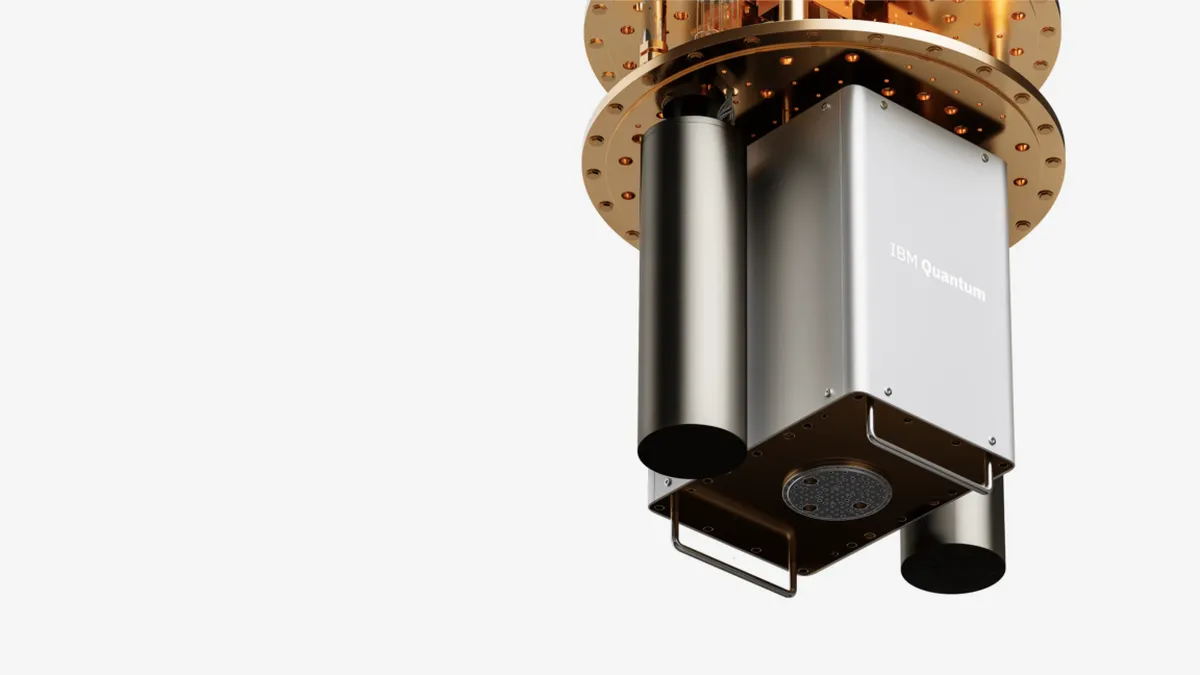
The world of quantum computing is on the brink of a revolution, as researchers strive to harness the unparalleled potential of quantum algorithms that could outperform classical counterparts. However, the journey toward tangible results has been fraught with challenges, particularly in the realm of verification and trust. Recent developments from IBM illustrate how the company is tackling these challenges head-on, introducing innovative approaches to ensure that quantum results are not only groundbreaking but also verifiable.
As quantum computers evolve, their ability to process information in ways that classical computers cannot is becoming increasingly evident. Yet, the noisy and error-prone nature of current quantum hardware poses significant hurdles. IBM's latest advancements showcase how researchers can now demonstrate a quantum advantage, offering a glimpse into a future where trust in quantum computations is not just an aspiration but a reality.
The Quest for Quantum Advantage
For years, computer scientists have grappled with the question of how to effectively demonstrate the capabilities of quantum computers using existing, limited hardware. Many quantum algorithms have been proposed that theoretically allow quantum computers to solve problems intractable for classical machines, but executing these algorithms on current quantum systems remains a challenge.
IBM's recent announcement introduces three innovative approaches that showcase a quantum advantage, each employing different methods to mitigate errors and validate results. As Jay Gambetta, IBM's Quantum Vice President, stated, "Trusted computing when you can’t do classical simulations is a big deal." This statement captures the essence of the breakthroughs: demonstrating results that cannot be easily replicated by traditional computing methods.
Addressing Verification Challenges
One of the primary hurdles faced by quantum computing researchers is the verification of results. Traditional verification methods often fall short when it comes to confirming the accuracy of quantum outputs, especially when those results are derived from complex quantum states. Current quantum systems can generate outputs that, while theoretically sound, are difficult to validate through classical means.
As a solution, researchers have begun employing simplified calculations using fewer qubits, which can be verified on classical hardware. This method operates under the assumption that if the simpler calculations yield correct results, the more complex computations with additional qubits will also be valid. However, this approach is not foolproof and can lead to misleading conclusions.
IBM's new quantum advantage tracker aims to bridge this gap, providing a framework for researchers to verify quantum results in a more robust manner. This initiative is particularly significant given that previous claims of quantum advantage have sometimes been undermined by advancements in classical algorithms that close the performance gap.
Innovative Algorithms and Collaborations
Modeling Complex Quantum Behaviors
One of the notable advancements comes from a collaboration between IBM, RIKEN in Japan, and Qedma, a software development company focused on error mitigation. This team tackled the challenge of modeling a Floquet process—a system that oscillates under external forces—to better understand quantum behavior.
By modeling an Ising model, which represents a grid of magnets whose orientations affect one another, the researchers were able to run simulations that revealed discrepancies between classical and quantum outputs. The classical algorithms indicated diverging results, while the quantum processor, equipped with Qedma's error-mitigation software, demonstrated consistent oscillations in magnetism.
This result was confirmed using a different quantum processor, illustrating the effectiveness of the error-mitigation techniques in addressing the inherent noise of quantum systems. The ability to model and verify complex behaviors is a significant step forward in establishing trust in quantum results.
Statistical Sampling Innovations
Another breakthrough emerged from a partnership between IBM and the University of Chicago, focusing on statistical sampling methods. This approach involved running variations of an algorithm multiple times to garner statistical insights into quantum outputs. By primarily utilizing Clifford gates—easier to simulate on classical machines—while incorporating specific non-Clifford gates to enhance computational complexity, the team created an algorithm that is significantly harder for classical computers to replicate.
This methodology also utilized additional qubits to monitor errors during computations. If errors were detected, the results would be discarded, ensuring that only reliable outputs were considered. The combination of sampling and error detection represents a substantial advancement in the quest for reliable quantum computations.
Echoes of Quantum Performance
The final noteworthy achievement comes from Algorithmiq, which developed an algorithm inspired by Google's quantum echoes work. This technique modifies a quantum system through a set of gates and then reverses the process, creating a noise-based echo of the original state. By optimizing control signals and monitoring qubit states, the researchers minimized noise and provided estimates of error rates in their calculations.
Although challenges remain in achieving practical, real-world applications for these algorithms, the techniques developed hold promise for improving performance in future quantum systems. The ongoing refinement of noise reduction and error detection strategies will be pivotal as quantum technology advances.
Looking Ahead: The Future of Quantum Computing
While the recent advancements from IBM and its collaborators are promising, the journey toward practical quantum computing is far from over. Many of the algorithms developed thus far are not immediately applicable to real-world problems, and concerns about the validity of previous claims of quantum advantage linger. As researchers strive to improve quantum hardware and error correction methods, it is essential to maintain a balanced perspective on the current state of quantum computing.
In the coming years, as error-corrected qubits become more prevalent, we can expect a shift in the landscape of quantum computing. Companies are increasingly hesitant to release publicly accessible quantum hardware until this technology matures, as the reliability of outputs is paramount for establishing trust in quantum results.
Nevertheless, the insights gained from these recent developments will undoubtedly contribute to the evolution of quantum computing. Understanding the nature of noise, developing effective error mitigation techniques, and pushing the boundaries of quantum algorithms are all critical steps toward realizing the full potential of quantum technology.
Key Takeaways
- IBM's advancements in quantum computing showcase innovative methods to verify results.
- Collaborations with institutions like RIKEN and the University of Chicago enhance error mitigation and modeling techniques.
- Statistical sampling and error detection strategies are pivotal for establishing trust in quantum computations.
- Future developments will focus on error-corrected qubits for more reliable quantum hardware.
Frequently Asked Questions
What is quantum advantage?
Quantum advantage refers to a scenario where a quantum computer can solve problems faster or more efficiently than the best classical computers. This concept is central to the development of quantum technology, as it demonstrates the unique capabilities of quantum systems in tackling complex computational challenges. However, achieving quantum advantage in practical applications remains a significant hurdle, as many algorithms have yet to be successfully executed on current quantum hardware.
Why is verification important in quantum computing?
Verification is crucial in quantum computing because the results produced by quantum systems can be difficult to confirm using classical methods. As quantum computers are inherently noisy and error-prone, ensuring that the outputs are accurate is essential for building trust in the technology. Without reliable verification, the potential of quantum computing cannot be fully realized, and skepticism about its capabilities may persist.
What are the challenges facing current quantum hardware?
Current quantum hardware faces several challenges, including high error rates, limited qubit coherence times, and difficulties in executing complex algorithms. These issues hinder the ability to run large-scale quantum computations and verify results. As researchers work to develop error-corrected qubits and improve noise mitigation techniques, the performance and reliability of quantum systems are expected to improve significantly.
What is the future of quantum computing?
The future of quantum computing is promising, with ongoing research focused on enhancing hardware reliability, developing error correction methods, and creating practical applications for quantum technology. As advancements continue, we can expect to see increased interest from industries seeking to leverage quantum computing for solving complex problems, particularly in areas like cryptography, optimization, and material science. However, achieving widespread practical use will require overcoming significant technical challenges in the coming years.
Comments
Florida Redirects $200 Million EV Funds to Electric Air Taxi Network
In a surprising move, Florida plans to allocate federal funds intended for electric vehicle chargers to develop an electric air taxi network. This shift raises questions about infrastructure priorities and the future of urban mobility.

Related articles
Popular in Cloud Computing
- SK Hynix's Historic $26.5 Billion IPO: A New Era for Memory Chips
- Kubernetes and the Future of Desktop Infrastructure: A Paradigm Shift
- Amazon Expands Partnership with Nvidia, Tripling GPU Orders Amid AI Demand Surge
- Elon Musk's Evolving Relationship with Anthropic: A New Era for AI Hosting
- Emerging Rocket Launches: A New Era for Space Exploration