Pacific Fusion Breaks Ground on Revolutionary Fusion Power Facility
Pacific Fusion has launched a groundbreaking facility in New Mexico aimed at achieving commercial fusion power by the mid-2030s, a significant leap in energy technology. This facility is designed to generate more energy than it consumes, a key milestone in the fusion energy industry.
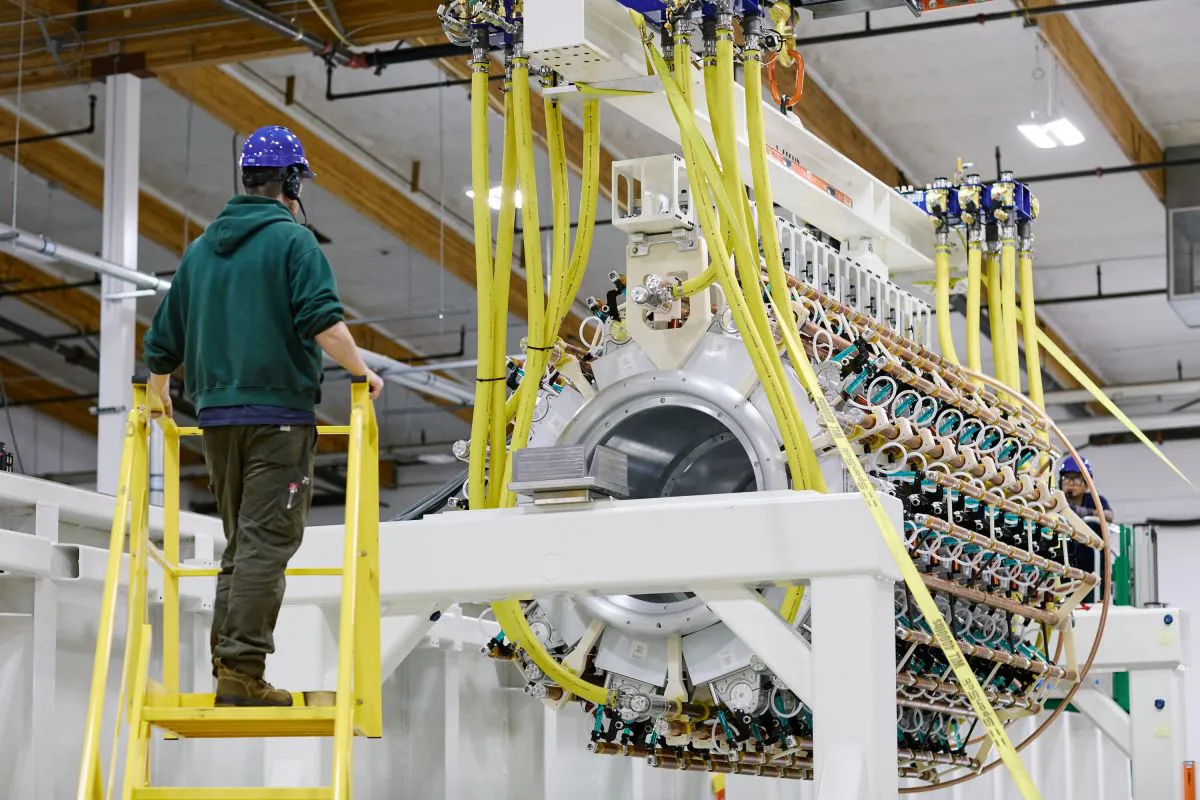
The dream of harnessing the power of fusion—a process that powers the sun and stars—has tantalized scientists and engineers for decades. Today, Pacific Fusion is making significant strides toward turning this dream into reality. On August 25, 2026, the company broke ground on a revolutionary facility in New Mexico, specifically designed to generate as much energy as it consumes. This milestone is being hailed as a major leap forward for commercial fusion power, a sector that has long been seen as the holy grail of clean energy.
According to Carrie von Muench, co-founder and COO of Pacific Fusion, this facility represents a pivotal moment in the quest for sustainable energy. “To our knowledge, there’s no such facility being constructed in the country,” she stated. This endeavor aims not just to advance fusion technology, but to set a precedent for future commercial power plants that rely on this promising energy source.

The Promise of Fusion Power
Fusion power is often described as the ultimate clean energy source. By fusing hydrogen atoms, it produces vast amounts of energy with minimal environmental impact. Unlike fossil fuels, fusion generates no greenhouse gases and produces only low-level radioactive waste. To put the potential of fusion into perspective, consider that just a few grams of fuel could power a city for a year.
The Current Landscape of Fusion Technology
Despite the promise that fusion holds, the technology has faced substantial hurdles. Historically, no fusion experiment has achieved what the industry calls net facility gain, where a facility generates more energy than it consumes. The National Ignition Facility (NIF) has demonstrated controlled fusion reactions, but it still falls short of being able to power a facility sustainably.
Pacific Fusion aims to become a pioneer in overcoming this challenge. By targeting a net facility gain by 2030 and a fully operational commercial power plant by the mid-2030s, they are positioning themselves at the forefront of the fusion race. The company’s commercial-scale reactor will need to produce approximately five times more energy than its demonstration system, necessitating significant advancements in technology and engineering.

Innovative Technology Behind the Facility
The New Mexico facility will leverage a highly innovative approach to fusion energy generation. Pacific Fusion employs intense, tightly coordinated pulses of electricity to create a magnetic field around a fuel target roughly the size of a pencil eraser. This technique squeezes the fuel atoms until they fuse, releasing energy.
How the Technology Works
The demonstration facility will be capable of firing a limited number of “shots” each day, with each shot generating around 100 megajoules of energy—ten times the output currently achieved by the NIF. However, a full-scale power plant will need to achieve a shot about once every second. This requires a complex system of 156 pulser modules, each containing 32 circular stages made up of 10 bricks. Each brick is composed of two capacitors, which store energy, and one switch, which releases it when needed.
Earlier this year, Pacific Fusion successfully tested a one-third-scale version of its pulser module, achieving a peak power output of 440 gigawatts in just 80 nanoseconds. This milestone has paved the way for the construction of the new demonstration facility, signifying confidence in the technology's viability.

The Competitive Landscape
Pacific Fusion is not alone in its quest for commercial fusion power. The field is rapidly filling with other well-funded startups, including Commonwealth Fusion Systems, Helion Energy, Proxima Fusion, and Inertia Enterprises. Each of these companies aims to connect a fusion power plant to the grid by the mid-2030s, if not sooner.
With over $1 billion raised in a milestone-based Series A funding round, Pacific Fusion is among the best-funded players in the industry. This substantial financial backing allows the company to plan for the long term without the frequent fundraising that can hinder innovation and progress. Von Muench has emphasized the importance of having a robust capital stack: “I don’t think it would have been possible to move at this speed if we hadn’t designed the capital stack the way that we have.”
Implications for Energy Policy and Security
The successful development of fusion power has far-reaching implications beyond just energy production. It could revolutionize energy policy, allowing countries to reduce their reliance on fossil fuels and enhance energy security. The U.S. government has recognized the potential of fusion technology, as evidenced by its plans to conduct related experiments at the new facility, which will also focus on high-yield fusion related to national security.
As fusion technology progresses, it could change the dynamics of energy markets, create jobs, and stimulate economic growth. The potential for low-cost, clean energy could make fusion a cornerstone of future energy strategies, especially as nations grapple with climate change.
Key Takeaways
- Pacific Fusion has begun constructing a facility in New Mexico aimed at achieving net facility gain in fusion power by 2030.
- The facility will utilize innovative technology to generate significant energy output, far exceeding current capabilities.
- Fusion energy promises to provide a clean, sustainable alternative to fossil fuels, with minimal waste.
- The company has secured substantial funding, positioning it well against other emerging players in the sector.
- The development of fusion technology could reshape energy policy and enhance national security.
Frequently Asked Questions
What is fusion power and why is it important?
Fusion power is a form of energy generation that involves fusing hydrogen atoms to create helium and energy. It is significant because it offers a nearly limitless source of clean energy with minimal environmental impact when compared to fossil fuels. The potential for fusion to help mitigate climate change and energy shortages makes it a critical area of research and development.
How does Pacific Fusion's technology differ from previous attempts at fusion power?
Pacific Fusion's approach utilizes highly coordinated electric pulses to create magnetic fields that facilitate the fusion of hydrogen atoms, aiming for net facility gain. Unlike earlier efforts that have struggled to produce more energy than consumed, Pacific Fusion’s facility intends to be the first in the world to achieve this milestone, setting a new standard for fusion energy generation.
What are the potential impacts of successful fusion power development on global energy markets?
If successful, fusion power could drastically alter the global energy landscape. It could reduce reliance on fossil fuels, lower energy costs, and provide countries with energy security. The widespread adoption of fusion technology could lead to job creation across various sectors and stimulate economic growth, all while addressing climate change challenges.

Comments
SpaceX's Cape Canaveral: Transitioning from Launch Hub to Starship Era
SpaceX is reducing its launch frequency at Cape Canaveral as it prepares for the Starship era. This shift marks a significant change for the world's busiest spaceport, impacting satellite connectivity and commercial space operations.

Related articles
Popular in Cloud Computing
- SK Hynix's Historic $26.5 Billion IPO: A New Era for Memory Chips
- Kubernetes and the Future of Desktop Infrastructure: A Paradigm Shift
- Amazon Expands Partnership with Nvidia, Tripling GPU Orders Amid AI Demand Surge
- Elon Musk's Evolving Relationship with Anthropic: A New Era for AI Hosting
- Emerging Rocket Launches: A New Era for Space Exploration