Relativity Networks Secures $22 Million to Revolutionize Data Center Fiber Technology
Relativity Networks has raised $22 million to advance hollow-core fiber technology, promising to enhance data transmission speeds and reshape the data center landscape. This innovation aims to address the growing challenges in data center operations amidst a booming market.
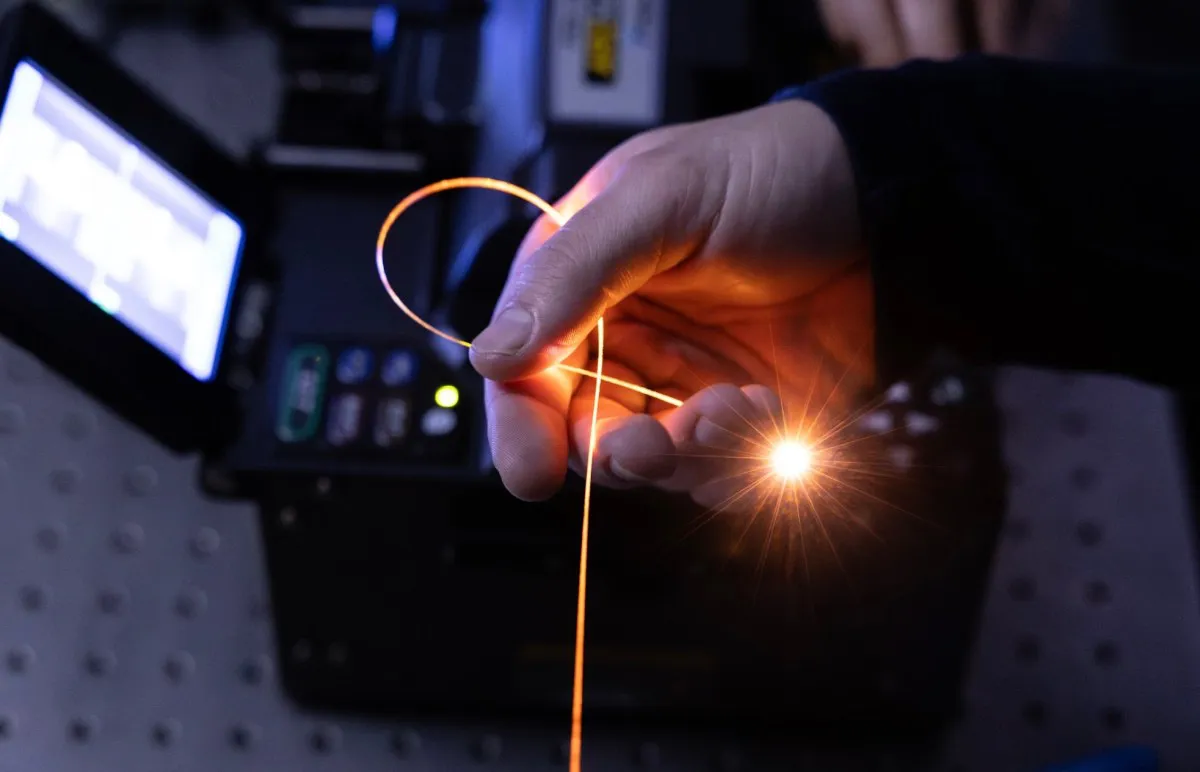
In an age where data is the lifeblood of modern enterprises, the infrastructure that supports this data is undergoing significant evolution. Relativity Networks, a company focusing on next-generation fiber technology, has recently raised $22 million in funding to enhance data transmission speeds through its innovative hollow-core fiber solutions. This funding, coupled with a substantial follow-on order from a leading hyperscaler, highlights the urgent need for faster and more efficient connectivity in the rapidly expanding realm of data centers.
The global data center market is projected to experience a staggering investment surge, reaching up to $4 trillion by the end of the decade. However, developers face mounting challenges due to political restrictions, power grid limitations, and the ever-increasing demand for faster data processing. Relativity Networks aims to address these challenges head-on by introducing a technology that could redefine the geographical calculus of data center design and operation.
Understanding Hollow-Core Fiber Technology
At the heart of Relativity Networks' innovation lies hollow-core fiber, a technology that significantly outpaces traditional fiber-optic systems. Conventional fiber transmits data using a glass medium, where light travels through the fiber-optic strands. In contrast, hollow-core fiber utilizes a vacuum chamber at its center, allowing light to travel at speeds that can approach the theoretical limits of light speed.
Why Speed Matters
The difference in performance is striking. In practical terms, while traditional fiber transmits signals at approximately five microseconds per kilometer, hollow-core fiber reduces that latency to about three and a half microseconds. This 30% improvement in latency may seem minor in isolation, but it has profound implications as data centers grow in scale and complexity.
The Impact on Data Centers
As data centers evolve, they are increasingly sprawling across vast campuses, often encompassing hundreds of acres and multiple buildings. This physical separation can introduce latency challenges that hinder the efficiency of operations, particularly in applications that rely on tightly synchronized processes. Jason Eichenholz, CEO of Relativity Networks, emphasizes that the shift to hollow-core fiber could enable multi-campus deployments to function cohesively as a single unit.
Key benefits of hollow-core fiber for data centers include:- Reduced latency: Faster signal transmission enhances real-time data processing capabilities.
- Scalability: Allows for larger distances between data centers without compromising performance.
- Improved synchronization: Facilitates better coordination between distributed computing resources.
The Future of AI and Networking
As artificial intelligence (AI) and machine learning continue to redefine industries, the demand for optimized networking solutions within data centers is becoming increasingly vital. The evolution of AI computing has transitioned from a singular focus on processing power (GPU, GPU, GPU) to an integrated approach that emphasizes networking efficiency. Eichenholz suggests that we are now entering a third era of AI, one that prioritizes geographical optimization to maximize the benefits of advanced computing technologies.
By leveraging hollow-core fiber, data centers can extend their operational reach while minimizing latency, creating opportunities for more efficient AI-driven applications. This approach is particularly valuable for organizations that require extensive computational power to process large datasets and complex algorithms.
Market Implications and Investment Landscape
Relativity Networks' successful funding round, backed by notable investors such as Rhapsody Venture Partners and Bell Ventures Inc., underscores a growing interest in innovative infrastructure solutions. The company’s $40 million follow-on order from a major hyperscaler further validates the market potential for hollow-core fiber technology.
Investment Trends in Data Center Infrastructure
The data center market is witnessing a surge in investment, driven by the increasing reliance on cloud computing, AI, and big data analytics. As organizations strive to enhance their digital capabilities, the demand for faster, more reliable connectivity is paramount. Investors are keen on supporting companies that offer transformative technologies capable of addressing these challenges.
Key investment trends include:- Focus on speed: Investors are prioritizing technologies that reduce latency and enhance data transmission.
- Sustainable solutions: There is a growing emphasis on environmentally friendly practices in data center operations.
- Multi-modal capabilities: Solutions that facilitate better integration of diverse computing resources are in high demand.
Challenges and Considerations
While the promise of hollow-core fiber is compelling, there are several challenges that Relativity Networks and similar companies must navigate. The technology is still in its infancy, and widespread adoption will depend on overcoming technical hurdles and demonstrating clear value propositions to potential customers.
Technical Hurdles
Developing and deploying hollow-core fiber networks requires significant investment in research and development, as well as collaboration with existing infrastructure providers. Moreover, the transition from traditional fiber to hollow-core solutions necessitates retraining of personnel and adaptation of existing systems to accommodate the new technology.
Market Adoption
For Relativity Networks to succeed, it must effectively communicate the advantages of hollow-core fiber and establish partnerships with key players in the data center ecosystem. Educating potential customers about the long-term benefits, including cost savings and efficiency gains, will be critical to driving adoption.

Key Takeaways
- Relativity Networks raised $22 million to advance hollow-core fiber technology.
- Hollow-core fiber offers a significant reduction in latency compared to traditional fiber-optic solutions.
- The technology could reshape data center operations by enabling larger multi-campus deployments.
- Investment in data center infrastructure is surging due to demand for faster connectivity and enhanced computational capabilities.
- Challenges remain in terms of market adoption and technical implementation.
Frequently Asked Questions
What is hollow-core fiber, and how does it differ from traditional fiber?
Hollow-core fiber is a type of optical fiber that utilizes a vacuum chamber at its center to transmit light, allowing for faster data transmission compared to traditional fiber, which relies on glass. This technology can reduce latency significantly, making it ideal for applications requiring real-time data processing.
What implications does this technology have for data center design?
The introduction of hollow-core fiber can change the way data centers are designed and operated. It allows for greater distances between components without compromising performance, enabling multi-campus setups to function as cohesive units. This flexibility can lead to more efficient resource utilization and improved synchronization across distributed systems.
How can businesses benefit from investing in this technology?
Investing in hollow-core fiber technology can provide businesses with a competitive edge by enhancing their data processing capabilities. As organizations increasingly rely on AI and big data analytics, faster connectivity can lead to improved performance, reduced operational costs, and the ability to scale operations more effectively.
What challenges does Relativity Networks face in bringing this technology to market?
Relativity Networks must navigate several challenges, including technical hurdles related to the development and deployment of hollow-core fiber networks. Additionally, they need to establish market adoption by educating potential customers about the advantages of the technology and forming strategic partnerships within the data center ecosystem.
Comments
Valuing AI Compute: The Startup Transforming Wall Street's Approach
Silicon Data is revolutionizing the financial landscape by providing a benchmark for AI compute costs. With a $30 million Series A funding, they aim to launch compute futures trading, addressing a critical need in the rapidly evolving AI sector.
Related articles

Popular in Cloud Computing
- SK Hynix's Historic $26.5 Billion IPO: A New Era for Memory Chips
- Kubernetes and the Future of Desktop Infrastructure: A Paradigm Shift
- Amazon Expands Partnership with Nvidia, Tripling GPU Orders Amid AI Demand Surge
- Elon Musk's Evolving Relationship with Anthropic: A New Era for AI Hosting
- Emerging Rocket Launches: A New Era for Space Exploration