Asana's AI Agents: A New Era in Intelligent Work Management
Asana is revolutionizing the way teams collaborate with its new AI agents that enhance productivity while safeguarding sensitive information. Learn how their innovative Agentic Work Management system redefines workplace efficiency.
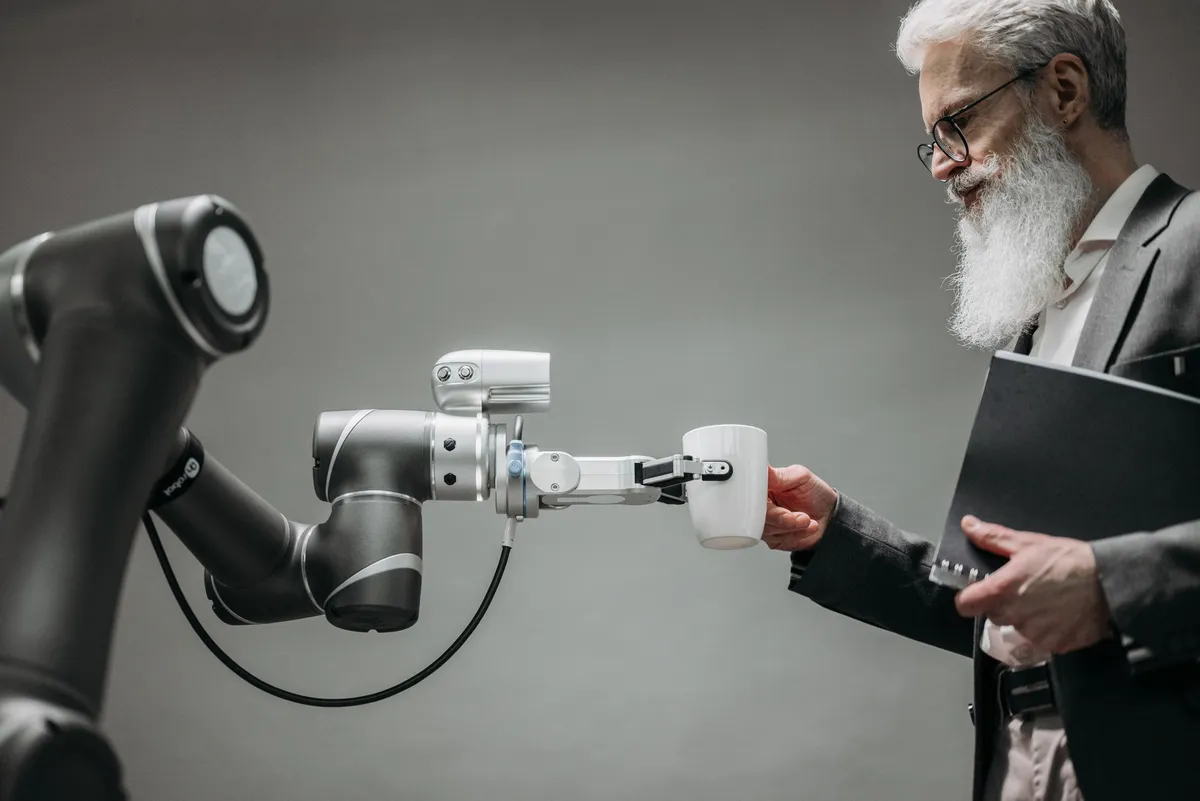
In an era marked by rapid technological advancement, companies are increasingly seeking ways to leverage artificial intelligence (AI) to enhance productivity and streamline workflows. Asana, a leader in task and project management solutions, is making significant strides in this arena with its new Agentic Work Management (AWM) system. This innovative approach allows AI agents to function as collaborative teammates rather than just assistants, tackling longstanding challenges in workplace efficiency while ensuring the confidentiality of sensitive information. Asana's Chief Product Officer, Arnab Bose, recently detailed the intricacies of this revolutionary system during a fireside chat at VB Transform 2026.
The core issue that AWM addresses is the persistent limitation of traditional AI chatbots: their inability to retain context across multiple interactions. Current deployments often result in interactions that are disjointed and stateless, leading to inefficiencies that hinder collaboration. AWM aims to change this by integrating AI agents into a cohesive operating framework that can engage with data, remember past interactions, and contribute to ongoing tasks in a meaningful way.
The Work Graph: A Foundation for AI Collaboration
At the heart of Asana's AWM is the Work Graph, a powerful database that organizes information in a structured format known as the Pyramid of Clarity. For over 18 years, Asana has been developing this architecture, which allows tasks to be linked to broader projects and company-wide goals. In this structure, tasks are the smallest unit of work, connected to projects, which in turn roll up into portfolios that relate to overarching corporate objectives.
This graph-based approach enables AWM to create a memory of interactions that informs future actions. For instance, suppose a design task is delayed; the Work Graph can illustrate how this setback impacts a critical revenue goal, allowing teams to make informed decisions. AWM leverages this interconnectedness to allow AI agents to act as collaborative teammates, providing insights and updates based on a shared understanding of company objectives rather than operating in isolation.

Guardrails for Confidentiality: Data Governance Challenges
While the potential benefits of AWM are significant, Asana faced several technical hurdles in its development, particularly in the realm of data governance. Given that AI agents will be interacting with sensitive company data, it was crucial to ensure that the information shared among agents did not lead to unauthorized access or leaks.
Arnab Bose emphasized the importance of implementing robust access controls in AWM. The system must distinguish between creating shared memory from workflow interactions and executing standard tasks. For example, if an executive uses AWM to manage a confidential merger and acquisition project, that information must remain inaccessible to employees without the proper clearance. Asana's solution is to implement strict controls that govern when and how memories are created, ensuring that sensitive information is compartmentalized and protected.
Dynamic Task Routing: Simplifying User Experience
Another innovative feature of AWM is its dynamic model routing capability, which streamlines the user experience by abstracting away the complexities of prompt engineering. Users can assign tasks to AI agents without needing to understand the underlying technical intricacies.
When a user, for example, requests an AI teammate to draft a job description, AWM automatically assesses the complexity of the task and routes it to the appropriate AI model. For simple tasks, it may use a lightweight model, while more complex assignments are sent to advanced models like Anthropic's Opus or OpenAI's offerings. This ensures that the user experience feels seamless, akin to assigning a task to a human colleague.
Moreover, Asana has developed a billing architecture that simplifies cost management for enterprises. Instead of charging based on the computational complexity of tasks, AWM employs a static cost per task completion. This predictable pricing model helps organizations avoid the pitfalls of fluctuating costs associated with AI usage, allowing them to effectively manage budgets without having to throttle usage based on credit consumption.

Addressing the Limitations of Stateless Chatbots
A significant drawback of traditional AI deployments is their stateless nature. Most chat-based agents operate independently, meaning they fail to build a collective memory that could enhance future interactions. For example, if a user asks a stateless chatbot to draft a marketing campaign, the agent can only respond to that specific request without retaining any context for future inquiries.
AWM addresses this challenge by creating a permanent state for interactions. When an AI agent completes a task, AWM records vital metadata, such as whether the completion positively impacted project status or contributed to larger company goals. This permanent record not only improves accountability but also facilitates ongoing collaboration, allowing teams to build on previous work rather than starting from scratch.

Real-World Applications: Success Stories
CoreWeave, a cloud provider, is one of the early adopters of AWM, utilizing the system to streamline new product launches. Previously, product managers had to fill out intricate forms detailing infrastructure requirements and costs, which were then manually evaluated and transformed into tasks for various teams. With AWM, the process has been dramatically simplified.
Now, a product manager can simply draft a standard Google document outlining product requirements. The AWM system reads this document, automatically creates a project structure, and assigns tasks accordingly. Specialized AI agents then manage the execution of these tasks, monitoring project status, identifying bottlenecks, and forecasting costs based on historical data. This transformation allows CoreWeave's teams to focus on evaluating the AI's outputs rather than getting bogged down in administrative tasks.
Key Takeaways
- Agentic Work Management (AWM) allows AI agents to function as collaborative teammates rather than mere assistants.
- The Work Graph serves as a foundational architecture, linking tasks to broader company goals and enabling shared memory.
- Robust data governance measures ensure that sensitive information remains confidential within AWM.
- Dynamic task routing simplifies the user experience, allowing non-technical users to effectively engage with AI.
- Fixed pricing for task completion helps enterprises manage budgets without unpredictable costs.
Frequently Asked Questions
What is Agentic Work Management (AWM)?
Agentic Work Management (AWM) is an innovative system developed by Asana that allows AI agents to act as collaborative teammates within a work environment. Unlike traditional chatbots, AWM integrates AI into a framework that enables persistent memory and shared understanding of company goals, enhancing team collaboration and productivity.
How does AWM ensure the confidentiality of sensitive information?
AWM incorporates strict data governance measures that define access controls for AI agents. This ensures that information created during confidential projects is not accessible to unauthorized users, maintaining the integrity and security of sensitive data across the organization.
What benefits does dynamic task routing provide?
Dynamic task routing allows users to assign tasks to AI agents without needing to understand complex technical details. AWM automatically assesses the complexity of each task and routes it to the appropriate AI model, streamlining the user experience and making it feel as intuitive as assigning a task to a human teammate.
How does Asana handle billing for AWM?
Asana has designed a fixed pricing model for task completion within AWM, eliminating the unpredictability of costs associated with AI usage. This allows enterprises to manage their budgets effectively without the need to throttle usage based on fluctuating credit consumption rates.
Comments
Bending Spoons Acquires Airtable for $1.28 Billion: What It Means for Tech
Bending Spoons has announced its acquisition of Airtable for $1.28 billion, marking a significant move in the tech landscape. This article explores the implications of this deal and what it means for the future of data management tools.
Related articles


Popular in SaaS Reviews
- Roost: The 'Slow-cial' App Redefining Digital Communication
- Uber's Expansion Beyond Ride-Hailing: The Future of Travel and Services
- Sweden's Startup Surge: The Forces Behind a Booming Ecosystem
- X's Algorithm Update: Creating a More Community-Focused Experience
- Elon Musk's Vision for X: Real-Time Misinformation Corrections via DMs