AI's Ripple Effect: How Memory Chip Demand is Reshaping India's Smartphone Market
The surge in AI-driven demand for memory chips is significantly impacting India's smartphone market, leading to rising prices and decreased shipments. This article explores the broader implications for consumers and manufacturers amid these shifts.
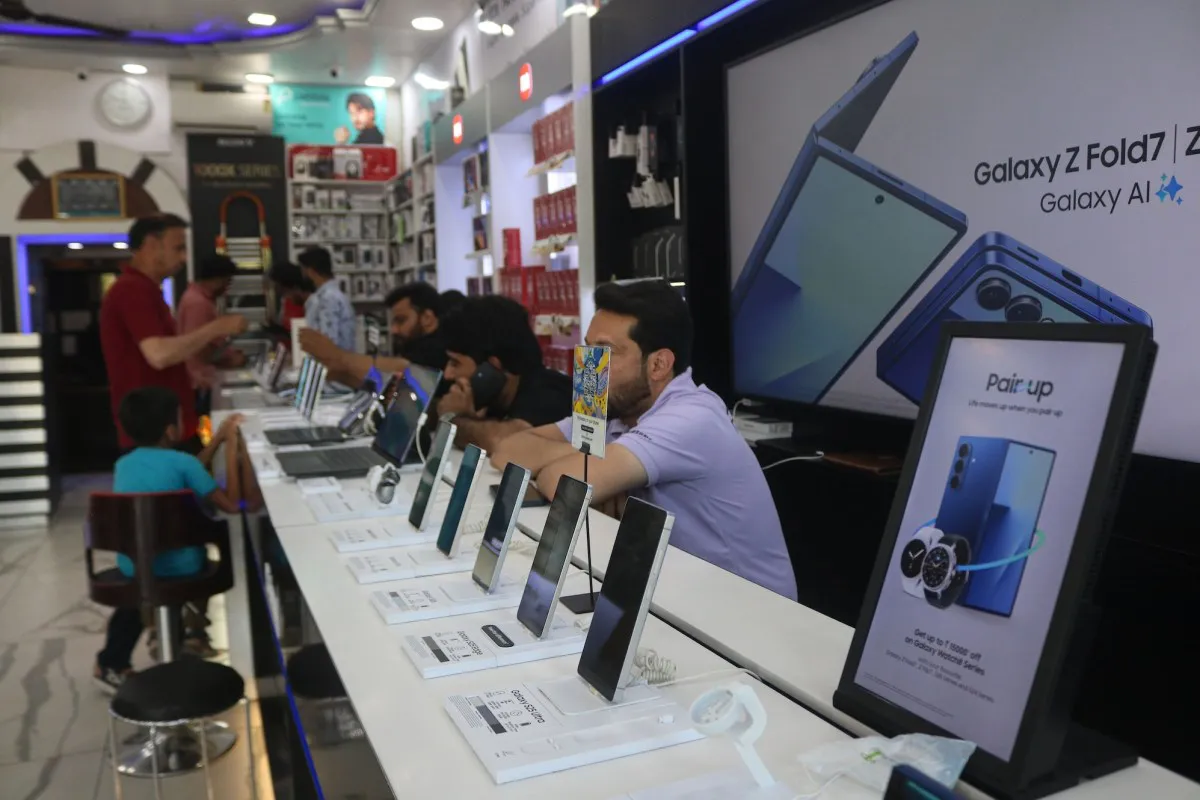
The smartphone market in India is undergoing a seismic shift, driven largely by the burgeoning demand for AI-capable memory chips. As the world’s second-largest smartphone market, India serves as a crucial barometer for consumer behavior in emerging economies. Recent reports indicate that the rising costs associated with essential memory components such as RAM and storage are reshaping the landscape, leading to increased prices and decreased shipments. This phenomenon is indicative of a broader trend that could have lasting implications for both consumers and manufacturers in a market characterized by its price sensitivity.
As global tech giants pivot to meet the high demands of AI data centers, manufacturers like Samsung, SK Hynix, and Micron have begun reallocating their production capacities towards high-bandwidth memory. This specialized type of memory, essential for AI applications, offers significantly higher profit margins compared to the standard memory chips used in consumer electronics. Consequently, this shift has left a void in the supply chain for everyday devices, forcing smartphone manufacturers to grapple with increased costs that they inevitably pass on to consumers.
The Current State of India's Smartphone Market
According to Counterpoint Research, smartphone shipments in India fell by 10% year-over-year during the April to June quarter of 2026, marking the steepest decline in six years. This stark drop highlights the profound impact that rising memory costs are having on the market. Notably, while China experienced a relatively modest decline of 2%, India’s smartphone market is far more vulnerable due to its concentration in the sub-₹20,000 (approximately $210) segment, which accounts for around 60% of total shipments.

Price Sensitivity and Consumer Behavior
As smartphone prices in India have surged between 4% and 68%, depending on the model, consumers are adapting to these increases in various ways. Many are opting to delay smartphone upgrades, extending replacement cycles from 3.5 years to nearly four years. This shift in consumer behavior suggests a significant recalibration of the market, emphasizing the importance of affordability in a predominantly price-sensitive environment.
Premium brands like Apple and Samsung appear to be somewhat insulated from the downturn, as consumers in higher income brackets remain less sensitive to price hikes. On the other hand, the lower-end market has taken a severe hit, with shipments for devices priced under ₹15,000 falling by an astonishing 45% year-over-year. This decline has been particularly detrimental for Chinese brands, which have historically focused on the entry and mid-tier smartphone segments. Their combined market share has dropped to its lowest point since 2020.
Strategic Shifts Among Manufacturers
The economic pressures exerted by rising memory costs are prompting manufacturers to reassess their strategies. For example, OnePlus, a prominent Chinese smartphone brand, recently announced it would halt new product launches in Europe and North America, choosing instead to concentrate on its Indian operations. This decision reflects a careful evaluation of market dynamics, as the brand aims to focus on regions where it can maintain profitability.
According to Counterpoint data, OnePlus's shipments in India have decreased significantly, from 30% of total global shipments a year ago to just 19% in the most recent quarter. This retreat from certain markets signals a broader trend among budget-focused brands, which are struggling to maintain profitability in the face of declining margins.
Value Over Volume
As the Indian smartphone market transitions from a volume-driven growth model to one focused on value, manufacturers are prioritizing revenue generated per device sold over sheer sales numbers. Kiranjeet Kaur, the associate research director for mobile phones research at IDC, notes that this shift means fewer units will be sold overall, but the revenue from each unit will be higher as consumers gravitate towards more expensive models or even the secondhand market.
Financing options have become increasingly important in facilitating purchases of higher-priced devices, allowing consumers to spread out the cost over time. Brands are also proactively building inventory ahead of the festive season to mitigate the effects of rising component prices, ensuring they can still provide options to consumers before prices potentially increase further.
Long-Term Implications for the Smartphone Ecosystem
The current memory shortages and elevated smartphone prices are expected to persist until at least the end of 2027. As consumers adapt to these new price points, the market could stabilize, but the effects will likely be felt for years to come. The dual pressures of a weaker currency, which makes imports more expensive, and rising component costs are converging to create an environment where manufacturers must navigate tighter margins.
The implications of these trends are significant: manufacturers may need to innovate and streamline their operations to stay competitive. For consumers, the choices available in the smartphone market may become more limited, with an increasing focus on higher-end models or alternative purchasing avenues like refurbished devices.

Key Takeaways
- Smartphone shipments in India fell by 10% year-over-year in Q2 2026, the steepest decline in six years.
- About 60% of the smartphone market is concentrated in the sub-₹20,000 segment, which has been significantly affected by rising memory costs.
- Premium brands remain insulated, while lower-end models face a 45% drop in shipments.
- Manufacturers are shifting strategies, focusing on profitability over market share.
- Financing options are becoming essential for consumers purchasing higher-priced devices.
Frequently Asked Questions
What factors are driving the increase in smartphone prices in India?
The primary factor driving smartphone prices up is the rising cost of memory chips, particularly RAM and storage components, which have become more expensive due to increasing demand from AI data centers. Manufacturers are reallocating production resources to prioritize high-bandwidth memory, which leaves less supply for consumer electronics and results in higher prices for smartphones.
How are consumers reacting to the rising prices?
Consumers in India are adjusting to rising smartphone prices by delaying upgrades, extending replacement cycles, and exploring options in the secondhand market. Many are opting for higher-priced devices through financing, which allows them to manage costs more effectively. This is indicative of a broader trend where consumers are prioritizing value over volume in their purchasing decisions.
What strategic shifts are manufacturers making in response to these changes?
In light of the rising costs and declining shipments, manufacturers are reassessing their market strategies. For instance, some brands are choosing to retreat from less profitable markets while focusing on regions where they can maintain profitability. Additionally, there is a growing emphasis on producing higher-value devices that can command better margins, rather than simply increasing volumes.
Will the situation improve for the smartphone market in India?
While the current trends suggest that memory shortages and elevated prices will persist until at least 2027, there is potential for stabilization as consumers adjust to the new pricing landscape. However, manufacturers will need to continue innovating and maintaining competitive pricing structures to navigate the evolving market dynamics effectively.
Comments
FuboTV Raises Prices After NBCUniversal Channels Return: What You Need to Know
FuboTV has announced a $15 price increase following the restoration of some NBCUniversal channels, but not all. This article explores the implications for subscribers and the streaming landscape.

Related articles

Popular in SaaS Reviews
- Roost: The 'Slow-cial' App Redefining Digital Communication
- Uber's Expansion Beyond Ride-Hailing: The Future of Travel and Services
- Sweden's Startup Surge: The Forces Behind a Booming Ecosystem
- X's Algorithm Update: Creating a More Community-Focused Experience
- Elon Musk's Vision for X: Real-Time Misinformation Corrections via DMs