Aina's Ambitious Leap: $5.5 Million to Control AI Agents Through Hardware
Aina, a startup co-founded by former Ultrahuman VP Apoorv Shankar, has raised $5.5 million to develop innovative devices designed to control AI agents. This article explores the implications of their first product, the Dune macro keyboard, and the future of human-computer interaction.

The burgeoning field of AI has ignited a fierce competition among startups striving to create the next generation of human-computer interfaces. Amidst this vibrant landscape, Aina, a startup founded by Apoorv Shankar—formerly the VP of Hardware at Ultrahuman—has emerged with a fresh perspective on how we can interact with artificial intelligence. With a recent funding round of $5.5 million led by Redstart Labs and other notable investors, Aina aims to pivot the narrative from passive recording devices to active controllers of AI agents.
As technology continues to evolve, the demand for intuitive interfaces that can seamlessly integrate AI capabilities into our daily tasks grows stronger. The rise of products like Aina's Dune, a context-aware macro keyboard, represents a significant shift in how we might engage with AI, moving from simple data capture to empowering users to control and orchestrate AI-driven workflows efficiently.
The Vision Behind Aina: A New Kind of Interface
Aina, which translates to "mirror" in Hindi, was born from Shankar's desire to innovate beyond the limitations of existing AI interfaces. With prior experience at Ultrahuman and LazyCo—where he designed hardware solutions that enhanced user-device interactions—Shankar is well-positioned to make a mark in this competitive space. He underscores the need for devices that do not merely record interactions but actively participate in the user's workflow.
Shifting the Paradigm
Reflecting on his departure from Ultrahuman, Shankar expressed, "I was just super curious about the space of AI interfaces. Devices like Rabbit and Humane Pin had launched, and I had my own disappointments with them." His insights into the market indicate a growing understanding that users are not satisfied with passive gadgets; they seek tools that can enhance their productivity and control over AI systems.
Aina's Product Lineup: Dune and Beyond
Aina's flagship product, Dune, is a compact, three-key macro keyboard designed to enhance communication and productivity during meetings. Unlike traditional keyboards, Dune is context-aware and can execute pre-set shortcuts tailored to the application in use. This design allows users to operate the microphone and camera seamlessly, making it an essential tool for remote work and virtual meetings.
Features of Dune
- Context Awareness: Adjusts functionalities based on the application in use.
- Multi-Functionality: Bundles features from Aina's other devices, Radiance and Shift.
- User-Centric Design: Developed based on user feedback during initial testing.
Aina also developed two additional devices: Radiance, which serves as a tabletop remote for video calls, and Shift, a single-tap button that triggers AI agents to perform specific tasks. However, the positive feedback for Dune led Aina to prioritize its release, allowing the company to gather real-time user data to inform future product development.

The Emergence of AI Control Devices
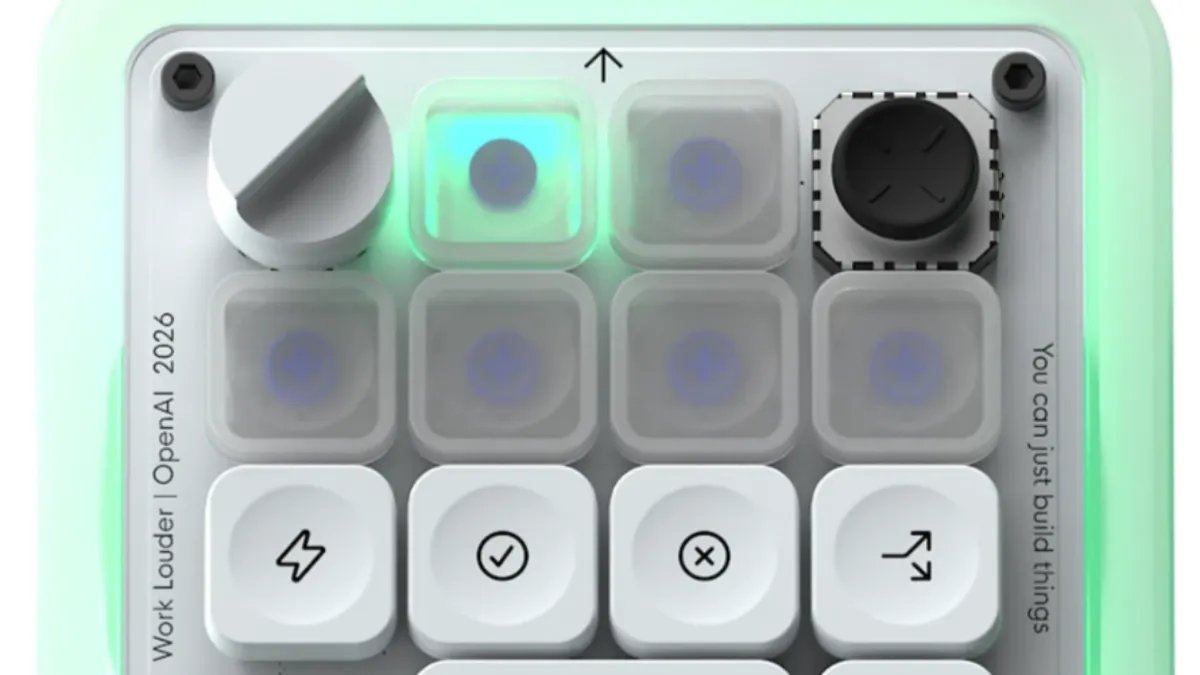
The landscape of AI interaction is rapidly evolving. As more businesses and individuals adopt AI coding tools like OpenAI's Codex, the demand for specialized hardware to control these agents is on the rise. Aina is one of many companies exploring this frontier. Other players include OpenAI, which recently launched a custom keypad for Codex, and Qualcomm, which is experimenting with over 40 devices designed for AI interaction.
The Market Landscape
With no clear dominance in terms of device form factors—be it rings, pins, glasses, keypads, or speakers—the market is flooded with inventive solutions. This presents both an opportunity and a challenge as startups vie for attention and funding in a crowded arena. Aina's approach of focusing on active control rather than passive data capture positions it uniquely among its competitors.
What Lies Ahead for Aina
Looking forward, Aina is gearing up to test new devices with a select group of early adopters. Shankar hinted that these upcoming products will further push the boundaries of what's possible with AI interaction. He emphasizes the importance of action-oriented devices that leverage the abundant context available from users' phones and laptops to streamline and automate workflows.
Future Developments
Aina plans to incorporate lessons learned from its existing products into future devices. The company is focused on creating tools that not only respond to user commands but anticipate needs based on contextual cues. This reflects a broader trend in tech towards creating more intelligent, responsive systems that enhance productivity and user experience.

Key Takeaways
- Aina has raised $5.5 million to develop devices that control AI agents.
- Its first product, Dune, is a context-aware macro keyboard aimed at enhancing productivity.
- The startup is focused on active AI interaction, moving beyond passive recording devices.
- Aina plans to test future devices with select users to refine its product offerings.
- The market for AI control devices is rapidly evolving, with significant competition and innovation.
Frequently Asked Questions
What is Aina's main goal with its devices?
Aina aims to create hardware that enhances user interaction with AI, allowing for active control and automation of tasks rather than merely capturing data. This approach addresses a growing demand for tools that can integrate seamlessly into users' workflows and improve productivity.
How does Dune differentiate itself from other products in the market?
Dune's context-aware functionality sets it apart from traditional input devices. By adapting its functions based on the application in use, it allows users to streamline their tasks more effectively. This feature is particularly beneficial for remote workers and knowledge workers who rely on various tools for communication and collaboration.
What future developments can we expect from Aina?
Aina is focused on expanding its product line based on user feedback from existing devices. The company plans to introduce new products that leverage contextual data to create action-oriented tools, further enhancing the user experience with AI. Testing with early adopters will play a crucial role in shaping these developments.
Why is the market for AI control devices growing?
The rise of AI tools in workplaces has increased the need for hardware that can effectively control and interact with these technologies. As remote work and digital collaboration become more prevalent, the demand for intuitive devices that facilitate seamless interaction with AI agents continues to expand, making this a lucrative area for innovation and investment.
Comments
OpenAI Launches Codex Micro: A Game-Changer in AI Interaction
OpenAI unveils its first branded hardware, the Codex Micro keyboard, designed for seamless interaction with AI agents. This innovative device may reshape user experience in AI tasks.
Related articles
Popular in Developer Tools
- Why Greylock Partners Caps Fund Size in a Growing Industry
- Roblox Unleashes AI-Powered Game Creation for Mobile Users
- DeepSeek Launches Open Source Alternative to Claude Code, Ups API Pricing
- Cursor Launches Origin: A New Challenger to GitHub's Dominance
- Apple's Camera-Equipped AirPods: Innovation or Invasion?