Humanoid Robots Race Toward Future: Breakthroughs and Limitations at World Games
The World Humanoid Robot Games showcased advancements in robotic technology, featuring thrilling races and practical tasks. While some robots broke speed records, others revealed the challenges still faced in achieving true autonomy.
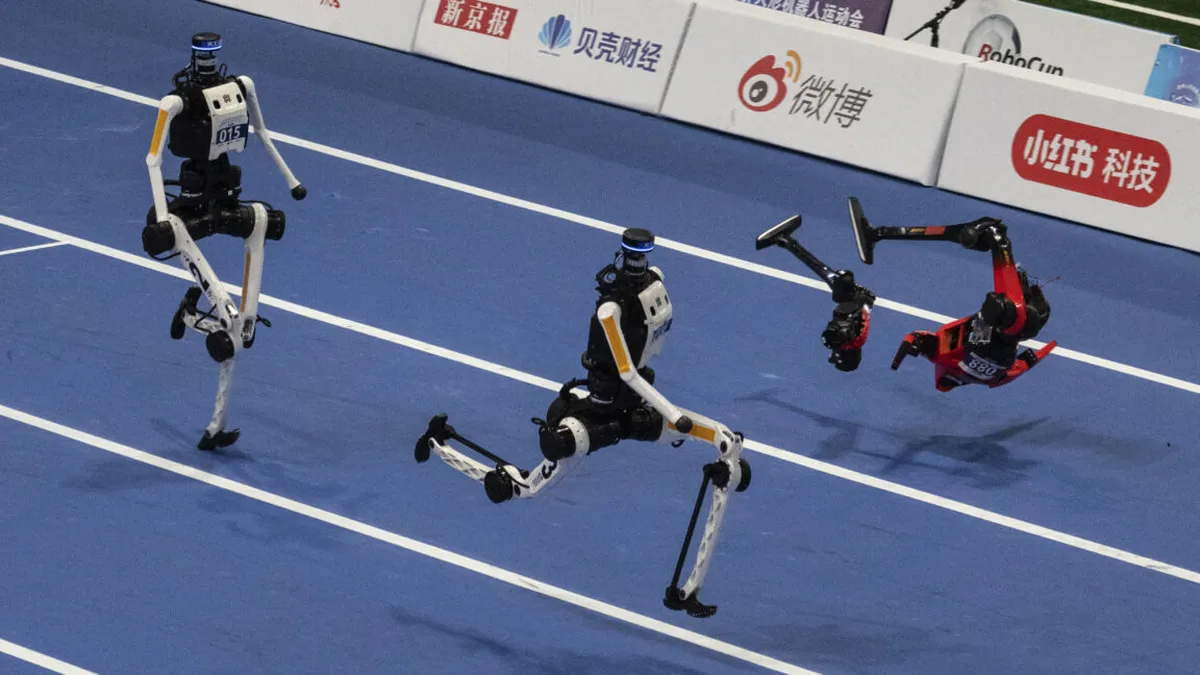
The excitement surrounding the World Humanoid Robot Games, held in Beijing from August 22-26, 2026, was palpable as it showcased the rapid evolution of humanoid robotics. This year's event not only captured the imagination of spectators with record-breaking robot races but also highlighted the stark limitations still facing these mechanical marvels. While some robots sprinted faster than Usain Bolt, others crashed spectacularly into barriers, offering a fascinating glimpse into the dual nature of progress in robotics — both exhilarating and perilous.
The spectacle of humanoid robots running at breakneck speeds, performing kung fu moves, and engaging in sports like soccer and table tennis attracted significant attention. However, amid the flash and excitement, the event revealed the practical challenges of humanoid robots in everyday tasks. As the robotics industry continues to develop, the implications of these advancements and limitations are profound, impacting everything from consumer products to industrial applications.
Record-Breaking Performances
This year's games marked a significant leap in robotic performance, as many humanoid robots surpassed previous world records in speed and agility. For example, the Honor humanoid robot shattered the 100-meter sprint record, a feat previously held by athletes. According to Dipam Patel, a PhD candidate in computer science at Purdue University, this leap is indicative of significant progress in robotic control systems. “These robots have shown that they can achieve fine-tuned whole-body coordination, which is essential for executing complex movements,” he noted.
The Mechanics Behind the Speed
The advancements in humanoid robotics are largely attributed to improved algorithms and hardware designed for specific tasks. Many of the robots were engineered to excel in singular activities, demonstrating remarkable speed but lacking the versatility required for broader applications. For instance, while the running robots could sprint effectively, they struggled to decelerate or navigate turns, often leading to dramatic falls and breakdowns mid-race.
Practical Challenges: Humdrum Tasks
While thrilling races garnered much of the attention, the introduction of practical challenges proved to be equally, if not more, enlightening. Robots were tasked with household chores like washing, folding laundry, and cleaning living areas, where they notably lagged behind human performance. These challenges underscore a critical point: despite impressive speed records, humanoid robots still struggle with the mundane tasks that many people take for granted.
Innovative Yet Inefficient
The practical challenges also included scenarios that mimicked real-life interruptions, such as receiving a delivery while performing chores. This required robots to switch tasks seamlessly, showcasing their adaptability—or lack thereof. For example, while some robots excelled in moving wheeled luggage or restocking hotel supplies, many were still reliant on human operators for teleoperation, revealing a significant gap in autonomous functioning.

Limits of Autonomy and Learning
The reliance on teleoperation during the games highlights a fundamental hurdle in the advancement of humanoid robots. Many robots still require direct human control to perform effectively, which raises questions about the future of robot autonomy. Patel emphasized that while robots can be programmed for specific tasks, achieving true autonomy involves navigating complex, unpredictable environments.
Training and Development Challenges
Training robots to perform tasks autonomously is a time-consuming process that often involves repeated trial-and-error learning. Unlike humans, who can adapt quickly to new situations, robots require extensive datasets and simulations to develop effective decision-making capabilities. “Gathering real-world data for training is resource-intensive and often impractical,” Patel explained. “We are far from having robots that can generalize their learning across various tasks in dynamic environments.”
Global Implications for Robotics
The implications of the advancements showcased at the World Humanoid Robot Games extend far beyond the competition floor. With over $6 billion invested in humanoid robotics in 2025 alone, particularly in China, the industry is poised for rapid commercialization. Companies such as Boston Dynamics and Agility Robotics in the U.S. are ramping up their efforts in deploying robots across factories and warehouses, emphasizing the urgent need for advancements in robot autonomy and reliability.
Government Regulations and Market Dynamics
Additionally, the U.S. government's ban on importing foreign-made robots, including popular models from China, adds another layer of complexity to the market dynamics. This regulatory environment could impact how quickly innovations are shared globally and may encourage domestic development efforts in humanoid robotics. As nations race to dominate the robotics landscape, the future of humanoid robots could be shaped by regulatory frameworks as much as technological advancements.
Key Takeaways
- Record-Breaking Feats: Humanoid robots surpassed human records in speed but revealed limitations in overall functionality.
- Practical Applications: Robots excelled in specific tasks but struggled with mundane household chores, highlighting challenges in real-world applications.
- Teleoperation Dependency: Many robots still require human control, indicating a significant gap in autonomous capabilities.
- Investment Surge: Over $6 billion was invested in humanoid robotics in 2025, particularly in China, suggesting a competitive market ahead.
- Regulatory Impact: U.S. restrictions on foreign robots may shape the future of domestic robotic development and innovation.
Frequently Asked Questions
What are humanoid robots capable of doing today?
Humanoid robots today can perform a range of tasks, from sprinting in races to engaging in household chores. However, their capabilities are often limited to specific functions, and many still require human control for complex or unpredictable tasks. While they can achieve impressive feats in controlled environments, their practical applications in everyday life remain a work in progress.
Why are humanoid robots important for the future?
Humanoid robots hold the potential to revolutionize industries by automating tasks traditionally performed by humans. As advancements in AI and robotics continue, these robots can enhance productivity, improve safety, and tackle labor shortages in various sectors. However, achieving true autonomy and versatility is crucial for them to be deployed effectively in real-world scenarios.
What challenges do humanoid robots face?
Humanoid robots face several challenges, including limited autonomy, the need for extensive training, and a reliance on teleoperation. Additionally, their inability to generalize learning across multiple tasks poses significant hurdles in achieving true versatility. Technological advancements and innovative approaches to training and development will be necessary for overcoming these obstacles.
How is the market for humanoid robots evolving?
The market for humanoid robots is experiencing rapid growth, driven by substantial investments and increasing interest from various sectors. Companies in both China and the U.S. are actively developing and deploying humanoid robots across industries. Regulatory frameworks and competition will play key roles in shaping the future of this evolving market, influencing how quickly innovations are brought to market.
Comments
Unlocking the Original Meta Quest: A New Bootloader Revolutionizes VR Tinkering
A new bootloader enables full control of the original Meta Quest, allowing users to bypass Meta's services and explore new possibilities. This development opens up the device for enthusiasts and developers alike.

Related articles

Popular in Developer Tools
- Why Greylock Partners Caps Fund Size in a Growing Industry
- Roblox Unleashes AI-Powered Game Creation for Mobile Users
- DeepSeek Launches Open Source Alternative to Claude Code, Ups API Pricing
- Cursor Launches Origin: A New Challenger to GitHub's Dominance
- Apple's Camera-Equipped AirPods: Innovation or Invasion?