Generalist Achieves $3 Billion Valuation: Implications for Robotics and AI
Robotics startup Generalist has reached a significant $3 billion valuation following a $200 million funding round. This article explores the implications for the robotics industry and the potential for AI-driven automation.

In a remarkable leap for the robotics sector, Generalist, a startup focused on artificial intelligence and robotics, has reached a valuation of $3 billion. This milestone comes on the heels of a substantial $200 million funding round led by 8VC, which is indicative of the growing investor confidence in the potential of AI-driven automation. The fresh capital was an extension of a previous $400 million Series B round led by Radical Ventures, signaling a robust interest in robotics as a transformative force in various industries.
Founded in 2024 by a team of former researchers from Google DeepMind and engineers from Boston Dynamics, Generalist has primarily operated under the radar until now. With its innovative AI foundation model capable of enabling robots to learn new tasks through brief video demonstrations, Generalist is positioning itself as a leader in a space that could soon experience a paradigm shift akin to the rise of generative AI with ChatGPT.

Funding and Valuation: A New Era for Robotics
The recent funding influx brings Generalist's total capital raised to an impressive $600 million. Such significant backing is not merely a financial milestone; it reflects a broader trend in venture capital where investors are increasingly betting on robotics as a vital component of future technological advancements. The robotics market is poised for growth, and Generalist's rapid ascent is a testament to the potential that lies within this sector.
Investor Sentiment and Market Dynamics
The robotics landscape is becoming increasingly competitive, with Generalist now joining the ranks of other high-value competitors such as Physical Intelligence, valued at approximately $11 billion, and SoftBank-backed Skild AI, valued at around $14 billion. This competitive environment raises questions about how Generalist will differentiate itself in a crowded market.
Interestingly, the valuation surge aligns with a general anticipation amongst investors that robotics could soon reach its own version of a 'ChatGPT moment.' This term refers to a breakthrough in which robots could perform a variety of general tasks without the need for explicit training for each one. However, while the concept is enticing, some venture capitalists caution that the reality of creating truly general robotics models may still be years away.
Generalist's Innovative Approach
At the heart of Generalist's technology is its newly released Gen 1.5 AI model, designed to enable robots to learn new tasks rapidly from short video clips ranging from just 3 to 12 seconds. This capability positions Generalist uniquely, as traditional robotics often requires extensive, manual programming for task execution. By enabling robots to adapt quickly and efficiently, Generalist aims to streamline operations across various industries, from manufacturing to logistics.
Real-World Applications
The startup is currently working with a select group of customers, utilizing their feedback to refine the AI model for specific applications. This customer-centric approach not only enhances the model's effectiveness but also aligns product development directly with market needs, increasing the likelihood of successful deployment within businesses.
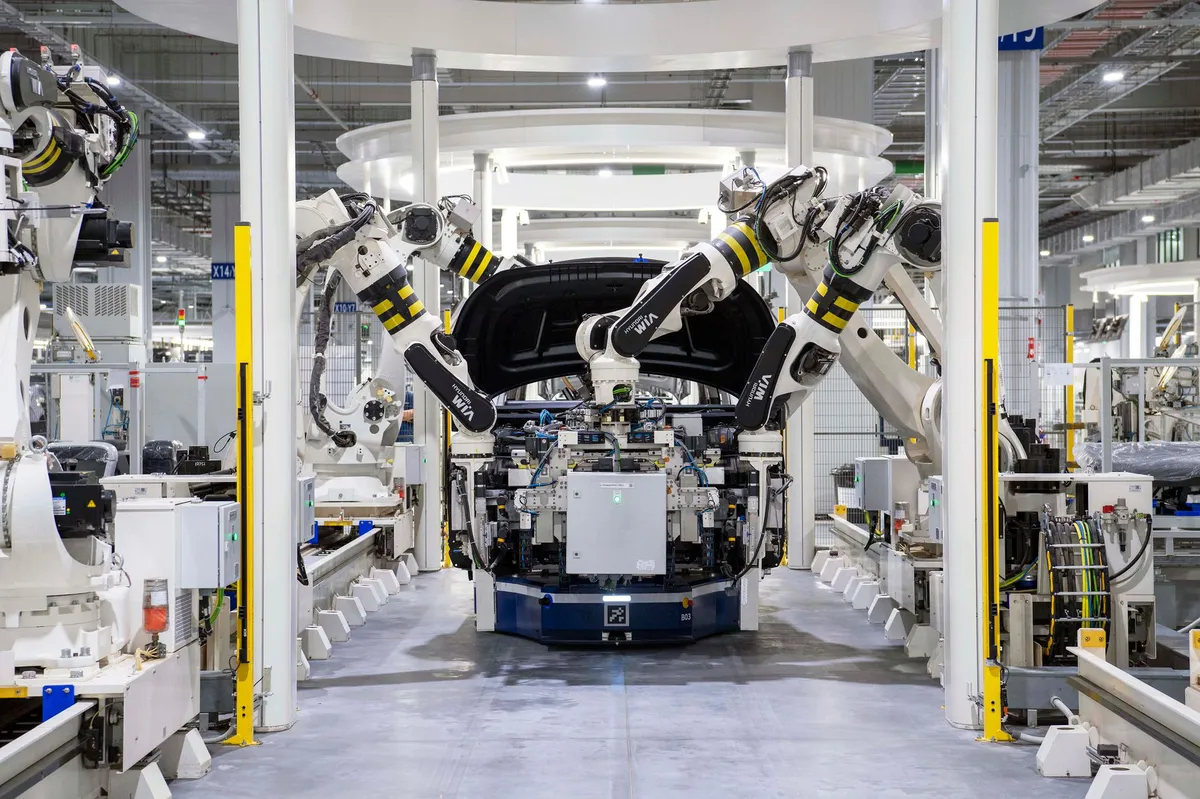
The implications of such technology are far-reaching. For instance, in a manufacturing context, a robot equipped with Generalist's AI could learn to assemble products based on visual guidance, significantly reducing training time and costs. Imagine a scenario where a factory could reconfigure its production line with minimal downtime, using robots that can learn new tasks on-the-fly.
Challenges Ahead for Generalist and the Robotics Industry
Despite the excitement surrounding Generalist's advancements, the company faces substantial challenges ahead. One primary concern is the limitations of current AI models when it comes to training robots. Unlike large language models (LLMs) that can leverage vast amounts of internet data to improve their learning, robotics often lacks access to such comprehensive datasets. This gap means that achieving a truly general-purpose robotic model may still be a distant goal.
Moreover, as the robotics market continues to grow, the potential for regulatory hurdles and ethical considerations will also come into play. As robots become more integrated into daily operations, issues surrounding safety, job displacement, and data privacy will require careful navigation.
Market Landscape: Competition and Collaboration
The robotics industry is witnessing a surge in competition, with companies like Physical Intelligence and Skild AI leading the charge. This competitive landscape presents both challenges and opportunities for Generalist.
- Physical Intelligence: Valued at $11 billion, it focuses on advanced robotics for various applications.
- Skild AI: Backed by SoftBank, it has a valuation of $14 billion, emphasizing AI-driven solutions.
- Genesis AI: Recently valued at $3 billion, it's also in discussions for further capital.
In such an environment, collaboration could become a key strategy. By partnering with established firms or tech giants, Generalist may leverage existing technologies and market presence to accelerate its growth trajectory.

Key Takeaways
- Generalist has achieved a $3 billion valuation following a $200 million funding round.
- The startup is focused on developing AI models that enable robots to learn tasks quickly.
- Competition in the robotics sector is intensifying, with several high-value players emerging.
- Challenges remain in creating truly general-purpose robotic models.
- Strategic partnerships may be essential for success in a competitive landscape.
Frequently Asked Questions
What is Generalist's main innovation in robotics?
Generalist's primary innovation lies in its AI foundation model, specifically the Gen 1.5 model, which enables robots to learn new tasks from short video demonstrations. This capability allows for rapid adaptation to new tasks, reducing the need for extensive programming and training.
How does Generalist's valuation compare to its competitors?
With a valuation of $3 billion, Generalist is positioned in a competitive landscape where companies like Physical Intelligence and Skild AI have valuations of $11 billion and $14 billion, respectively. This competitive pressure highlights the need for Generalist to innovate continually and differentiate itself in the market.
What are the potential applications of Generalist's technology?
Generalist's technology has potential applications in various industries, including manufacturing, logistics, and even healthcare. By enabling robots to learn tasks quickly, companies could streamline operations, reduce training costs, and improve efficiency across multiple sectors.
What challenges does Generalist face moving forward?
Generalist faces several challenges, including the difficulty of creating truly general-purpose robotic models and navigating potential regulatory and ethical issues as robots become more integrated into society. Addressing these challenges will be crucial for its long-term success in the robotics market.
Comments
Apple's New Desktops: Powering Local AI Development with M6 and M5 Ultra Chips
Apple's latest Mac mini and Mac Studio refreshes focus on local AI development, featuring the new M6 and M5 Ultra chips for enhanced performance. Discover how these updates cater to developers and researchers working with AI workloads.

Related articles
Popular in Developer Tools
- Why Greylock Partners Caps Fund Size in a Growing Industry
- Roblox Unleashes AI-Powered Game Creation for Mobile Users
- DeepSeek Launches Open Source Alternative to Claude Code, Ups API Pricing
- Cursor Launches Origin: A New Challenger to GitHub's Dominance
- Apple's Camera-Equipped AirPods: Innovation or Invasion?